




Understanding Round Hole Perforated Plates and Their Industrial Applications
Understanding Round Hole Perforated Plates and Their Industrial Applications
Round hole perforated plates are among the most widely used perforated metal products in industrial, architectural, transportation, and construction projects. Their popularity comes from a combination of strength, ventilation, drainage capability, weight reduction, and fabrication flexibility. Whether used as safety flooring, machine guards, architectural panels, filtration screens, or decorative facades, round hole perforated plates offer practical solutions for many engineering challenges.
Because round hole perforations distribute stress more evenly than many other hole patterns, they are often selected when both structural performance and appearance are important. Available in carbon steel, stainless steel, aluminum, galvanized steel, and other alloys, perforated plates can be customized with different hole diameters, pitches, thicknesses, and open area percentages to meet specific project requirements.
Why Perforated Surfaces Matter
Safety and functionality are two of the primary reasons perforated metal products are widely used. According to OSHA guidance on walking-working surfaces, safe access systems should consider drainage, slip resistance, visibility, and environmental conditions to reduce workplace hazards.
Reference:
https://www.osha.gov/walking-working-surfaces
Unlike solid metal sheets, perforated plates allow air, water, light, and sound to pass through the material. This characteristic improves drainage, reduces weight, and often lowers wind resistance in outdoor installations. In many industrial facilities, these benefits contribute to safer and more efficient operations.
Understanding Open Area and Its Impact
One of the most important design considerations for perforated metal is the percentage of open area.
Open area refers to the percentage of the sheet surface occupied by holes rather than solid metal.
Common open area ranges include:
- 30%–40% for balanced strength and airflow
- 40%–50% for improved ventilation and drainage
- 50%–75% for maximum airflow and visibility
As open area increases, airflow and drainage improve, but structural strength may decrease. Engineers must balance these factors based on project requirements.
For example:
- Acoustic panels often require higher open areas to improve sound absorption.
- Safety flooring may require lower open areas to maintain load capacity.
- Screening applications may prioritize visibility and airflow.
This flexibility is one reason round hole perforated plates remain one of the most versatile metal products available.
Common Materials and Their Advantages
Material selection significantly affects durability, maintenance requirements, and overall performance.
Mild Steel Perforated Plates
Mild steel offers:
- Good structural strength
- Cost-effective manufacturing
- Easy fabrication
- Excellent weldability
Typical applications include:
- Industrial platforms
- Machine guards
- Structural screens
- Construction projects
When corrosion resistance is required, protective coatings are often added.
Stainless Steel Perforated Plates
Stainless steel is commonly selected for environments exposed to moisture, chemicals, or high temperatures.
Popular grades include:
Stainless Steel 304
Used in:
- Architectural applications
- Food processing facilities
- Commercial buildings
- Decorative panels
Stainless Steel 316 and 316L
Used in:
- Offshore platforms
- Marine facilities
- Chemical plants
- Wastewater treatment facilities
Because of its higher molybdenum content, 316L provides improved corrosion resistance in chloride-rich environments.
ISO standards are frequently referenced when evaluating corrosion-resistant materials and protective systems.
Reference:
Aluminum Perforated Plates
Aluminum provides several advantages:
- Lightweight construction
- Corrosion resistance
- Easy fabrication
- Attractive appearance
Aluminum perforated panels are commonly used in:
- Ceiling systems
- Building facades
- Transportation equipment
- Decorative screens
Because aluminum weighs significantly less than steel, it is often preferred when reducing structural loads is important.
Galvanized Steel Perforated Plates
Galvanized steel combines the strength of carbon steel with zinc coating protection.
Benefits include:
- Improved outdoor durability
- Lower maintenance requirements
- Cost-effective corrosion protection
These plates are frequently used in industrial walkways, agricultural facilities, and construction projects.
Round Hole Perforated Plates in Safety Flooring
One of the most common industrial uses for perforated plates is safety flooring.
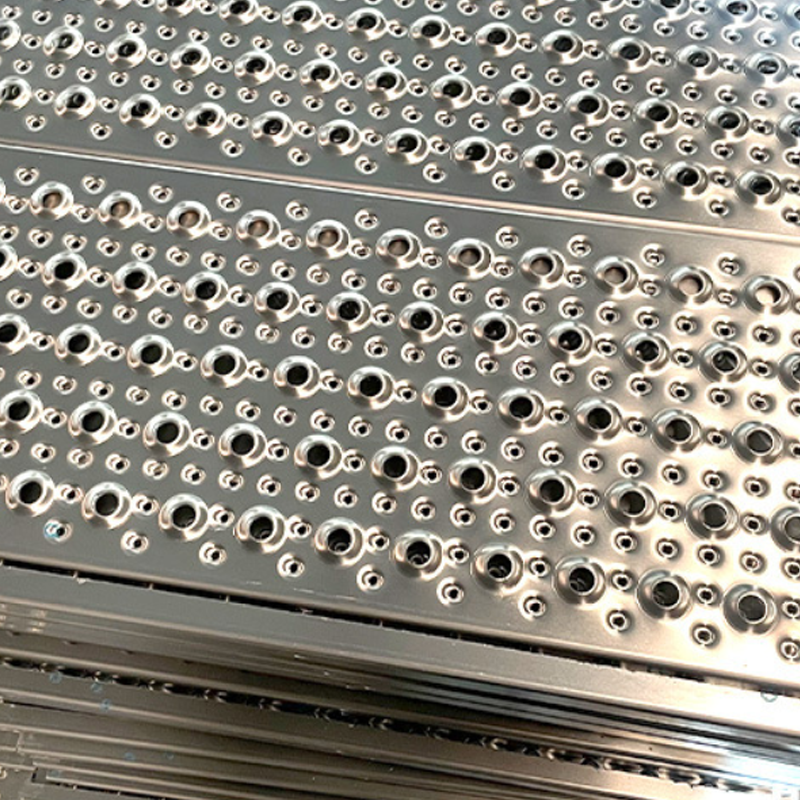
Perforated stair treads and walkway panels often incorporate serrated edges or raised hole patterns to improve traction.
NIOSH identifies slips, trips, and falls as a significant source of workplace injuries, particularly in environments where water, grease, or debris may accumulate on walking surfaces.
Reference:
Because perforated flooring allows liquids to drain through the surface rather than collect on top, it can help maintain safer walking conditions.
Common applications include:
- Industrial stairs
- Maintenance platforms
- Offshore access systems
- Factory walkways
- Utility platforms
Architectural Applications
Round hole perforated plates have become increasingly popular in modern architecture.
Architects often select perforated panels because they provide:
- Visual interest
- Ventilation
- Sun shading
- Acoustic control
- Privacy screening
Typical architectural applications include:
Ceiling Systems
Perforated ceiling panels improve airflow while providing a clean and modern appearance.
Acoustic Panels
When combined with insulation backing materials, perforated panels can help absorb sound and reduce noise levels.
Facade Cladding
Perforated facades help control sunlight while maintaining airflow and architectural aesthetics.
Balustrades and Railings
Perforated panels provide a balance between safety, visibility, and visual appeal.
Industrial Screening and Filtration
Beyond flooring and architectural applications, round hole perforated plates are widely used in screening and filtration systems.
Examples include:
- Grain processing equipment
- Mining screens
- Aggregate separation systems
- Wastewater treatment equipment
- Ventilation systems
The size and arrangement of the holes determine filtration efficiency and flow characteristics.
ASTM standards are commonly referenced when evaluating material performance and manufacturing quality for industrial metal products.
Reference:
Installation Considerations
Proper installation is essential for long-term performance.
For corrosive environments, many specifications recommend:
- Stainless steel 316 fasteners
- Corrosion-resistant mounting systems
- Compatible support materials
Using appropriate fasteners helps prevent galvanic corrosion and extends service life.
For architectural projects, concealed fastening systems may be used to improve appearance while maintaining structural integrity.
Compliance With Industrial Standards
Many industrial access systems are designed according to recognized international standards.
EN ISO 14122 provides guidance for permanent means of access to machinery, including:
- Platforms
- Walkways
- Stair systems
- Guardrails
Reference:
https://www.iso.org/standard/63563.html
Compliance with these standards helps improve worker safety and supports reliable long-term operation.
How to Choose the Right Perforated Plate
When selecting a round hole perforated plate, several factors should be considered:
Environment
Will the plate be exposed to:
- Moisture?
- Chemicals?
- Saltwater?
- High temperatures?
Load Requirements
Will the plate support:
- Pedestrian traffic?
- Equipment loads?
- Vehicle loads?
Open Area
Higher open areas improve:
- Airflow
- Drainage
- Visibility
Lower open areas improve:
- Strength
- Flatness
- Impact resistance
Appearance
Architectural applications often prioritize:
- Hole pattern consistency
- Surface finish
- Color coatings
- Decorative effects
Industrial applications typically focus more on durability and functionality.
Conclusion
Round hole perforated plates remain one of the most versatile perforated metal products available today. Their ability to combine strength, ventilation, drainage, weight reduction, and aesthetic appeal makes them suitable for a broad range of industrial and architectural applications.
Whether used for safety flooring, perforated stair treads, acoustic ceilings, screening systems, machine guards, or decorative facades, round hole perforated plates provide a practical balance between performance and cost. By selecting the appropriate material, open area, and perforation pattern, engineers and designers can optimize performance for virtually any environment.
SEO Keywords
Round Hole Perforated Plate, Stainless Steel Perforated Sheet, Perforated Metal Panel, Round Hole Metal Sheet, Perforated Stair Tread, Serrated Stair Tread, Perforated Safety Flooring, Stainless Steel Perforated Plate, Aluminum Perforated Panel, Galvanized Perforated Sheet, Architectural Perforated Metal, Acoustic Perforated Panel, Perforated Ceiling Panel, Industrial Walkway Plate, Perforated Metal Screen, Safety Access Flooring, Offshore Stair Tread, Industrial Platform Flooring, Perforated Cladding Panel, Decorative Metal Screen, Ventilation Perforated Panel, Machine Guard Perforated Plate, Perforated Filtration Sheet, Round Hole Screen Plate, Industrial Screening Panel, Perforated Facade Panel, Balustrade Infill Panel, Wastewater Treatment Screen, Metal Safety Flooring, Architectural Metal Panel, Industrial Stair Tread, Corrosion Resistant Perforated Plate, Open Area Perforated Sheet, Stainless Steel 316 Perforated Plate, Aluminum Decorative Panel, Heavy Duty Perforated Sheet, Industrial Access Platform, Perforated Walkway System, Safety Grating Panel, Perforated Metal Applications
Recommended Tag
Aluminum Anti-Slip Tread Plate with Serrated Perforations (Tag ID: 2)