




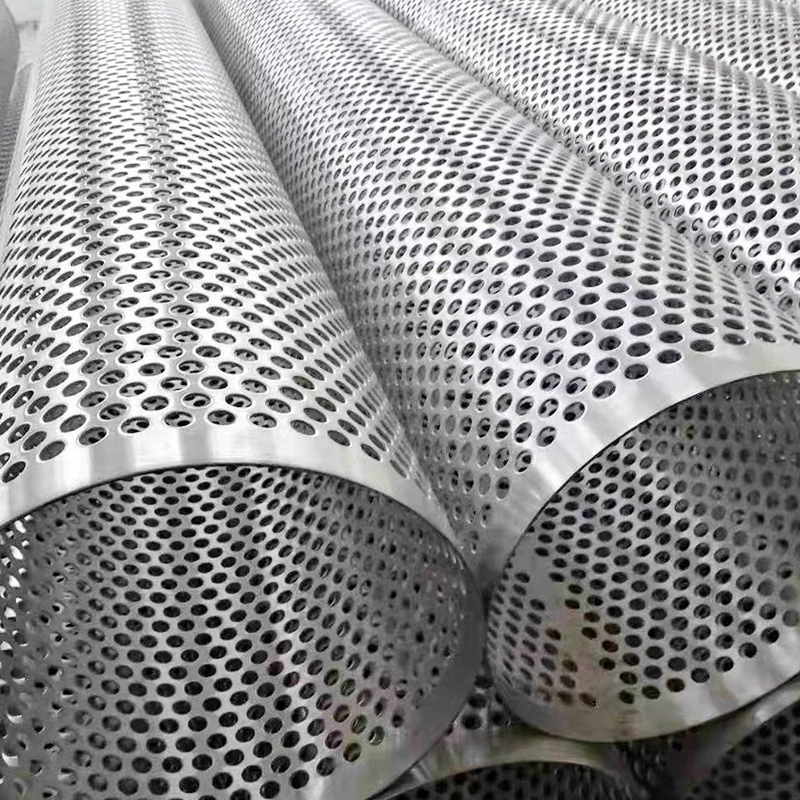
Corrosion-Resistant Stainless Steel Sheets for Wastewater Treatment Plants, Water Engineering and Environmental Equipment
Corrosion-Resistant Stainless Steel Sheets for Wastewater Treatment Plants, Water Engineering and Environmental Equipment
Wastewater-treatment plants operate in environments where moisture, sludge, chemical residues, microorganisms, hydrogen sulfide and fluctuating water chemistry can act on materials simultaneously.
A sheet installed beside a sedimentation tank may be exposed mainly to humidity and splashing. A trench cover near a sludge-processing area may experience standing liquid, biological deposits and repeated high-pressure cleaning. A platform inside an industrial wastewater plant may also encounter chlorides, acids, alkalis, dissolved metals or process chemicals.
For this reason, selecting a material only by the words stainless steel or corrosion-resistant sheet is not enough. A reliable wastewater-engineering specification must connect material grade, chemical environment, sheet thickness, support spacing, surface finish, drainage, sludge accumulation, anti-slip design, fabrication quality, cleaning method and inspection frequency.
This product system uses 304 and 316 stainless steel as the principal corrosion-resistant materials, with hot-dip galvanized steel and 430 stainless steel available for selected economical or sheltered applications.
Standard product options include 0.90 mm sheet for supported equipment enclosures, protective linings and wall cladding; 2 mm sheet for frame-supported platforms, walkways and trench-cover assemblies; 2500 × 1250 mm and 3000 × 1250 mm formats; and 2B industrial or satin-brushed finishes.
The objective is not to use 316 stainless steel in every part of a treatment plant. The objective is to identify the corrosion, structural and hygiene demands of each location and assign the most appropriate grade and panel design.
1. Core Product Specifications and Material Properties
304 stainless steel for general wastewater environments
304 stainless steel provides a practical balance of corrosion resistance, fabrication capability, availability and cost.
It is commonly considered for municipal wastewater platforms, equipment-access panels, control-building enclosures, sedimentation-area walkways, supported wall protection, inspection-station panels, indoor water-treatment equipment and general utility covers.
Its chromium content supports the formation of a thin passive surface film that helps resist ordinary atmospheric oxidation and many humid industrial environments.
However, 304 is not universally suitable for every sewage or industrial-wastewater condition. Performance can be reduced by high chloride concentrations, stagnant deposits, narrow crevices, elevated temperatures, aggressive industrial chemicals, unsuitable cleaning products, untreated weld heat tint and embedded carbon-steel contamination.
Material should be ordered against a recognized standard rather than only a commercial grade name. ASTM A240/A240M covers stainless steel plate, sheet and strip for pressure-vessel and general applications.
A controlled purchase order should specify grade designation, applicable standard and edition, nominal thickness, permitted thickness tolerance, sheet width and length, surface finish, edge condition, flatness, mill test certificate, heat or batch traceability, protective film, export packaging and inspection criteria.
A related stainless steel perforated-sheet engineering guide explains additional differences between 304, 316L and other grades used for perforated industrial panels.
316 and 316L for chloride-bearing or more aggressive wastewater
316 stainless steel contains molybdenum, which improves resistance to localized chloride attack compared with ordinary 304 stainless steel.
316 or 316L should be evaluated for coastal wastewater-treatment plants, desalination-related wastewater facilities, chloride-bearing industrial effluent, chemical-process wastewater, saline groundwater treatment, high-chloride cleaning areas and sheltered wet locations where deposits remain for long periods.
The difference between 304 and 316 should not be expressed as one universal service-life ratio. Actual performance depends on chloride concentration, temperature, oxygen availability, wet-dry cycling, surface roughness, crevice geometry, welding quality, deposit thickness and cleaning frequency.
Worldstainless corrosion-resistance guidance explains that pitting resistance decreases as chloride concentration and temperature increase, while chromium, molybdenum and nitrogen improve resistance.
316L may be preferred for extensively welded components because its lower carbon content reduces the risk of sensitization under certain welding thermal cycles. The lower-carbon designation does not eliminate the need to use compatible filler metal, control heat input, remove harmful weld discoloration, prevent iron contamination, provide drainage and avoid liquid-trapping joints.
430 stainless steel as an economical controlled-use option
430 stainless steel is a ferritic grade that can provide an economical metallic surface in dry or controlled areas.
Potential applications include sheltered electrical rooms, dry equipment cabinets, interior wall panels, non-critical equipment guards, office and laboratory utility panels and secondary components away from sewage splashing.
430 should not automatically replace 304 or 316 in continuously wet, chloride-bearing or chemically aggressive wastewater environments. Its forming and welding behaviour differ from common austenitic grades, and extensively welded 430 structures require careful procedure review.
Hot-dip galvanized steel for selected secondary components
Hot-dip galvanized steel can be used for certain economical wastewater-plant components where zinc is compatible with the environment.
Possible uses include sheltered equipment guards, secondary support frames, dry utility-area panels, non-immersed barriers and removable covers outside aggressive chemical zones.
Galvanized steel relies on a zinc coating. Its suitability depends on coating thickness, pH, chemical exposure, abrasion, wetness duration, cut-edge protection, welding damage and contact with stainless steel.
Galvanized material should not be assumed suitable for every acidic or alkaline wastewater environment. Zinc can be consumed rapidly under incompatible chemical conditions.
0.90 mm supported enclosure and lining sheet
The 0.90 mm option is intended mainly for supported, formed or non-self-spanning applications.
Typical uses include equipment-enclosure skins, wall-protection panels, supported corrosion-resistant linings, splash guards, machine covers, ventilation enclosures, sludge-area wall facings and control-panel surrounds.
Its lower weight simplifies fabrication and installation around environmental equipment.
A 0.90 mm flat sheet should not be treated as a self-supporting platform or trench cover. Its performance depends on continuous backing, folded edges, formed ribs, fastener spacing, adhesive coverage, support alignment and impact exposure.
2 mm platform and trench-cover sheet
The 2 mm option provides greater local stiffness and resistance to handling damage.
Typical applications include frame-supported operating platforms, maintenance walkways, sludge-transfer access routes, reinforced trench covers, equipment-service decks, folded stair components, drainage assemblies and inspection-platform skins.
A 2 mm sheet is not automatically rated for a particular structural load. The finished component must be assessed according to unsupported span, support-frame spacing, concentrated loads, maintenance carts, edge restraint, stiffeners, openings, perforation pattern, fastener layout, weld design, allowable deflection and fatigue.
Where drainage and traction are required, flat sheet can be coordinated with raised perforations or serrated openings rather than being used as a completely smooth walking surface.
Standard dimensions and modular fabrication
Standard sheet dimensions include 2500 × 1250 mm and 3000 × 1250 mm.
These formats support repeatable fabrication for environmental-equipment manufacturers, municipal contractors and wastewater EPC projects.
Standardization can help reduce repeated field measurement, inconsistent replacement sizes, excessive on-site cutting, finish damage during rework, material-identification errors and installation delays.
Actual cutting loss depends on panel dimensions, perforation patterns, folding allowances, edge trimming, grain direction and project quantity. A fixed low-waste percentage should only be promised after fabrication drawings have been nested.
2B and satin surfaces
The 2B finish provides a smooth, low-reflective industrial surface suitable for many functional wastewater applications. The satin finish provides a directional brushed appearance and can reduce the visibility of some handling marks.
Smooth stainless surfaces may retain less sludge and dirt than rough, damaged or heavily scaled surfaces. They are also generally easier to rinse.
However, it is not technically accurate to claim that a smooth stainless sheet can never retain sludge or support a biofilm. Actual fouling depends on surface orientation, water flow, sludge characteristics, biological activity, surface roughness, cleaning pressure, drying conditions and inaccessible joints.
The design should combine a cleanable surface with drainage, rounded transitions and access for high-pressure washing.
Flatness, cold rolling and residual stress
Cold rolling and precision finishing can produce controlled thickness and flatness. They do not guarantee that a sheet contains no residual stress.
Residual stress may remain from rolling and can also be introduced during laser cutting, punching, bending, welding, grinding and uneven fastening.
Large thin panels may distort when material is removed or welding heat is applied. Flatness requirements should therefore apply to the finished component, not only to the original mill sheet.
2. Core Application Scenarios
Municipal wastewater-treatment plants
Municipal facilities combine sewage, suspended solids, humidity, cleaning water and biological activity.
Stainless steel sheets may be used for tank-side operating platforms, aeration-area walkways, sedimentation-tank access, pump-station covers, inspection platforms, service-panel enclosures, wall-protection systems and drainage covers.
The U.S. EPA describes biosolids as the semi-solid material produced when liquids are separated from solids during wastewater treatment. Materials near sludge-processing areas should therefore be chosen according to the actual solids, chemicals, moisture and cleaning regime rather than the general word sludge.
Industrial wastewater-treatment stations
Industrial wastewater may be more chemically variable than municipal sewage. Possible sources include metal finishing, food processing, textile manufacturing, chemical production, paper manufacturing, pharmaceuticals, oil processing and mining.
The wastewater may contain chlorides, sulfates, acids, alkalis, solvents, oils or dissolved metals.
A grade suitable for municipal wastewater may not be suitable for a particular industrial effluent.
Before selecting 304 or 316, the project should document chemical identity, minimum and maximum pH, chloride concentration, operating temperature, suspended solids, cleaning products, immersion time, splash frequency and abnormal process conditions.
Reclaimed-water and water-reuse systems
Water-reuse projects may require equipment platforms, filtration-unit enclosures and inspection covers.
These areas often receive frequent washing and disinfectant exposure.
Selection should account for chloride-containing disinfectants, chemical-cleaning cycles, condensation, wet-dry concentration of salts, inaccessible crevices and rinse-water quality.
316 may be justified in higher-chloride or more aggressive zones, while 304 may remain suitable for controlled indoor equipment areas.
Sludge-treatment workshops
Sludge-processing facilities may include thickening equipment, dewatering presses, centrifuges, transfer conveyors, storage hoppers, drying systems and truck-loading areas.
Metal surfaces can be exposed to wet solids, biological residues, cleaning chemicals and impact from tools or equipment.
Stainless steel may be used for sludge-transfer walkways, machine-side platforms, wall protection, equipment covers, collection trays and access stairs.
Smooth surfaces simplify cleaning, but the design must prevent sludge from becoming trapped behind panel overlaps or inside support channels.
Wastewater platforms and maintenance walkways
Walking surfaces in treatment plants may be contaminated by water, sludge, biological film, oil, cleaning chemicals, grit and fine solids.
A smooth 2B or satin sheet should not be considered anti-slip merely because it is stainless steel.
Raised or serrated perforations can improve drainage and traction. A related 304 stainless steel crocodile-mouth anti-slip plate is designed for wet industrial walkways and includes raised openings that allow liquids and debris to pass through.
Walking surfaces must also be designed for their maximum intended load and maintained free from hazards such as corrosion, leakage and spills. See OSHA 29 CFR 1910.22.
The platform system should define support spacing, walking width, drainage, handrails, edge protection, anti-slip geometry, removable-panel restraint, inspection access and cleaning frequency.
Trench and drainage covers
Wastewater trenches require covers that protect workers while allowing inspection, drainage and cleaning.
A trench cover may need to resist pedestrian loads, maintenance carts, occasional equipment loads, impact, sludge accumulation and chemical splashing.
Open area and perforation geometry influence both drainage and strength.
The custom embossed perforated trench-cover guide discusses how dimensions, embossing, openings and expected loads should be coordinated in drainage-cover systems.
A cover should not be selected solely by sheet thickness. The design should define clear span, support ledge, stiffeners, edge folds and connection method.
Environmental-equipment enclosures
Environmental systems contain motors, pumps, instruments, electrical panels and ventilation equipment that may require protection.
Enclosures must balance splash resistance, ventilation, heat dissipation, dust control, maintenance access, electrical bonding, removable panels and corrosion resistance.
Completely sealing a panel may trap heat and condensation. Excessive perforation may allow sludge, spray or aggressive vapours to reach sensitive equipment.
The open-area ratio and hole orientation should therefore be based on the equipment’s actual ventilation and ingress requirements.
3. Industry Pain Points and Corresponding Solutions
Pain point: rapid corrosion of painted carbon steel
Carbon steel commonly depends on a paint or coating system. In humid wastewater areas, coating damage may begin at edges, welds, fasteners, scratches, impact zones and poorly prepared surfaces.
Once moisture reaches the base metal, rust can spread beneath the coating.
Repeated repair may require surface preparation, rust removal, repainting, temporary platform closure, replacement of perforated sections and treatment interruption.
Engineering solution: Use 304 stainless steel in suitable general wastewater environments, 316 in more chloride-bearing or aggressive areas, and galvanized material only where zinc is chemically compatible.
Stainless steel reduces dependence on a separate paint film, but it still requires inspection, cleaning and correct fabrication.
Pain point: hydrogen sulfide and wastewater corrosion
Hydrogen sulfide is a recognized problem in wastewater collection and treatment systems.
Under low-oxygen conditions, sulfides can form in sewage. Hydrogen sulfide gas may be released into humid spaces and contribute to severe deterioration of vulnerable materials.
EPA technical guidance describes how hydrogen sulfide can be biologically converted in moist environments into sulfuric acid, which attacks exposed concrete and unprotected iron, steel and copper surfaces.
Engineering solution: identify high-sulfide zones, improve ventilation, avoid moisture traps, select compatible alloys, separate panels from severely corroding substrates, inspect hidden supports, control process conditions where possible and avoid assuming stainless steel is immune to every sulfur-bearing environment.
Grade selection should consider whether the material is exposed to gas, condensation, immersion or concentrated deposits.
Pain point: microbiologically influenced corrosion
Microorganisms do not simply consume stainless steel as food. They can form biofilms and alter the local environment by changing oxygen concentration, pH, sulfide concentration, deposit chemistry and electrochemical conditions.
This can contribute to localized attack beneath deposits.
Engineering solution: prevent persistent sludge accumulation, provide drainage, clean hidden ledges, avoid narrow crevices, inspect beneath deposits, use 316 or a higher alloy where exposure requires it and perform localized-corrosion testing for critical applications.
ASTM G48 provides methods for comparing resistance to pitting and crevice corrosion in oxidizing chloride environments.
Pain point: sludge attachment and difficult cleaning
Rough, damaged or poorly drained panels can retain sludge and biological solids.
Accumulated deposits may increase cleaning time, create odour, hide corrosion, reduce drainage, increase slip risk and contaminate adjacent equipment.
Engineering solution: use smoother cleanable finishes, eliminate sharp internal corners, provide sloped surfaces, avoid unnecessary horizontal ledges, design removable covers, provide access for pressure washing, maintain drainage openings and clean in accordance with the plant’s hygiene plan.
A 2B or satin surface may be easier to rinse than a heavily corroded carbon-steel surface, but it should not be marketed as completely non-stick.
Pain point: rust particles entering process areas
Corroded carbon-steel covers, supports and platforms may release rust scale.
Rust debris can fall into channels, obstruct small openings, contaminate working areas, increase housekeeping demands and hide further material loss.
It is not scientifically accurate to claim that changing a walkway sheet alone will directly improve the treatment process or final water quality.
However, reducing loose corrosion products can support better housekeeping, equipment protection and plant reliability.
Engineering solution: use corrosion-resistant materials at critical interfaces and inspect the entire supporting system, including hidden carbon-steel frames, fasteners and anchors.
Pain point: chloride and pH fluctuations
Industrial wastewater chemistry can change during production, cleaning or process upset.
A material may perform well under normal pH but corrode during an abnormal concentrated discharge.
Engineering solution: document minimum pH, maximum pH, chloride concentration, temperature, oxidizing chemicals, cleaning-agent composition and abnormal discharge duration.
Where data are incomplete, conduct coupon testing or obtain specialist corrosion advice. 316 should not automatically be described as resistant to every acid or alkali.
Pain point: deformation of thin covers and platforms
A corrosion-resistant sheet can still fail structurally.
Deformation may result from excessive span, insufficient support, concentrated loads, uneven frames, heavy maintenance equipment, large openings, welding distortion and unsupported edges.
Engineering solution: calculate loads, define support spacing, add stiffeners, use folded edges, reinforce access openings, verify welds and fasteners and assess serviceability as well as strength.
A 2 mm sheet may be suitable for one short-span cover and unsuitable for another long-span opening.
Pain point: non-standard panels and excessive fabrication loss
Wastewater-equipment manufacturers often require repeated covers, trays, guards and enclosure panels.
Using inconsistent sizes can create cutting waste, installation errors, delayed replacement, mixed finishes and difficult inventory management.
Engineering solution: use standard 2500 × 1250 mm and 3000 × 1250 mm sheets as the manufacturing base, then prepare optimized nesting drawings for each equipment family.
All finished panels should be labelled according to their position and material grade.
Pain point: unsafe smooth walking surfaces
Wet sludge and biological film can make a smooth metal surface extremely slippery.
Engineering solution: use raised anti-slip geometry, provide drainage openings, specify cleaning intervals, prevent standing water, inspect worn traction features, use suitable footwear and maintain safe access and edge protection.
A satin-brushed finish is decorative and practical, but it is not a substitute for a tested anti-slip surface.
Pain point: unsupported lifetime claims
Statements such as 15-year life, no corrosion, no deformation or maintenance-free depend on conditions that must be defined.
Actual life depends on material grade, water chemistry, temperature, loads, supports, fabrication, crevices, welding, cleaning and inspection.
Engineering solution: treat long service life as a design target supported by material certificates, corrosion data, structural calculations, inspection records, coupon testing, field history and maintenance planning.
4. Supplier-Reported Cairo Municipal Wastewater Project Story
The original operating problem
A supplier-reported municipal wastewater-treatment plant upgrade project was located in Cairo, Egypt.
The plant handled a large and variable wastewater flow. Operating conditions included high year-round humidity around process areas, fluctuating wastewater chemistry, substantial sludge production, repeated washdown, wet trench systems and continuous maintenance traffic.
The original plant used painted carbon-steel sheets for several operating platforms, trench covers and sludge-transfer walkways.
The material was initially selected because it was locally available, easy to weld and relatively inexpensive.
What the customer experienced
According to the project account, the original carbon-steel panels required major repair or replacement approximately every three years.
The earliest problems appeared around welds, panel edges, fasteners, water-trapping joints, coating scratches and sludge-retaining areas.
Once the coating deteriorated, rust spread across the exposed steel.
Some trench covers became difficult to remove because corrosion affected edges and fixing points. Rough rusted surfaces retained sludge and required more aggressive cleaning.
The maintenance team faced a repeating cycle: isolate the working area, remove sludge and loose rust, repair or replace damaged panels, prepare the surface, apply a new coating, wait for curing and reopen the access route.
The customer’s problem was not simply the cost of replacement material. Platform closures and repeated maintenance complicated routine plant operation.
The replacement material system
The plant upgrade divided panels by function.
2 mm 304 stainless steel was selected for operating-platform skins, frame-supported trench covers, sludge-transfer walkways, maintenance stations and frequently cleaned access areas.
0.90 mm stainless steel was selected for supported equipment enclosures, wall-protection linings, machine covers, splash panels and non-load-bearing protective surfaces.
304 was selected as the principal grade for the reported conditions, while more aggressive or chloride-bearing locations were identified for separate 316 review.
The project did not treat every 2 mm sheet as a self-supporting cover. Support spacing, folded edges and reinforcement were adjusted according to the opening and expected traffic.
Cleaning and drainage improvements
The replacement programme also changed the panel detailing.
The earlier system contained horizontal ledges and overlapping joints where sludge and water accumulated.
The revised arrangement reportedly used fewer inaccessible overlaps, improved drainage, removable access panels, smoother transitions, more consistent panel modules, better access for pressure washing and anti-slip geometry in pedestrian areas.
This meant the performance improvement could not be attributed to alloy grade alone. Material, geometry, support and cleaning access were upgraded together.
Reported results after four years
According to the supplier-provided project record, the upgraded panels had been operating for approximately four years when reviewed.
The plant team reported no widespread rusting on the reviewed stainless panels, no reported perforation of the reviewed sheets, no widespread structural deformation, easier removal of ordinary sludge deposits, reduced repainting work, fewer panel-replacement activities and more consistent access for maintenance personnel.
Routine high-pressure washing was reportedly sufficient for much of the normal surface cleaning.
The supplier also reported a substantial reduction in annual sheet replacement and maintenance expenditure.
Interpreting the water-quality claim carefully
The broader plant upgrade reportedly improved operating stability and supported more consistent treated-water performance.
However, it would not be technically defensible to attribute improved effluent quality or sludge-capture efficiency solely to stainless-steel platform and enclosure sheets.
Water-treatment results depend on process design, hydraulic loading, aeration, chemical dosing, biological activity, filtration, sludge handling, operator control and maintenance.
The stainless-steel upgrade may have supported plant reliability, cleanliness and safer access, but it was one part of the complete treatment system.
Evidence required for independent verification
A fully documented engineering case would require original and replacement material certificates, wastewater chemistry records, chloride and pH data, operating temperatures, coating specifications, support spacing, load calculations, weld and fabrication records, corrosion inspections, pit-depth measurements, cleaning records, maintenance invoices and treatment-performance records.
The most useful lesson from the case is that replacing corroding carbon steel with a properly designed stainless system can reduce repeated coating repair and improve maintainability when the grade, support and cleaning design match the environment.
5. Suitable Regions, Key Markets and Buyer Profiles
Egypt
Egypt continues to develop and upgrade municipal wastewater, industrial-effluent and water-reuse infrastructure.
Potential applications include municipal treatment plants, sludge-processing workshops, pump stations, industrial wastewater facilities, reclaimed-water systems and drainage infrastructure.
Projects should consider heat, dust, water chemistry, chloride exposure and maintenance resources.
Algeria
Algerian projects may include coastal municipal plants, inland industrial facilities and desalination-related infrastructure.
Coastal areas require additional review of airborne chloride, condensation, sheltered deposits, dissimilar-metal connections and cleaning access.
316 may be justified for more exposed chloride-bearing locations.
Turkey
Turkey has municipal, industrial and food-processing wastewater projects across coastal and inland regions.
Material selection should distinguish between general municipal sewage, chemical wastewater, food-processing effluent, coastal installations and low-temperature outdoor facilities.
Malaysia
Malaysia’s high humidity and frequent rainfall create persistent wet conditions around wastewater equipment.
Typical applications include treatment-plant walkways, sludge equipment, industrial-effluent stations, drainage covers and equipment enclosures.
Drainage, ventilation and cleaning access remain essential even when stainless steel is used.
Indonesia
Indonesia’s wastewater projects may combine tropical humidity, coastal salt, biological deposits and industrial chemicals.
316 should be considered for coastal or higher-chloride environments, while 304 may be suitable for many controlled municipal applications.
Thailand
Thailand has demand from municipal wastewater plants, food-processing facilities, industrial estates, hotels and commercial developments, and water-reuse projects.
The exact wastewater composition should guide material choice rather than industry name alone.
Additional markets
The product system may also serve projects in Saudi Arabia, the United Arab Emirates, Morocco, South Africa, Vietnam, the Philippines, India and other municipal and industrial water markets.
Typical buyers and decision-makers
Relevant customers include municipal water authorities, wastewater EPC contractors, environmental-equipment manufacturers, industrial wastewater operators, water-treatment engineering consultants, sludge-equipment suppliers, steel fabricators, infrastructure procurement teams, maintenance contractors and environmental project developers.
Theme Keywords
wastewater treatment stainless steel, sewage plant corrosion resistant sheet, water engineering stainless steel, environmental equipment metal panel, wastewater platform material, sewage treatment walkway, sludge processing stainless steel, water treatment corrosion protection, municipal wastewater steel panel, industrial effluent stainless steel
Customer Keywords
wastewater EPC contractor, municipal water authority, environmental equipment manufacturer, sewage treatment plant operator, water engineering consultant, industrial wastewater contractor, sludge equipment supplier, stainless steel fabricator, infrastructure procurement manager, environmental project developer
Application and Object Keywords
wastewater operating platform, sewage trench cover, sludge transfer walkway, treatment equipment enclosure, sedimentation tank access panel, pump station cover, wastewater maintenance deck, drainage channel cover, water reuse equipment panel, sludge workshop wall lining
Product Keywords
304 wastewater stainless steel sheet, 316 sewage treatment steel plate, 316L wastewater equipment panel, galvanized environmental enclosure sheet, 430 utility stainless steel panel, 0.90mm stainless steel lining, 2mm stainless steel trench cover, 2500x1250 stainless steel sheet, 3000x1250 stainless steel plate, 2B satin wastewater panel
Project Hook
A wastewater-treatment project does not need the same stainless-steel grade in every location. It needs a material system matched to the actual chloride level, pH variation, sludge exposure, hydrogen sulfide risk, platform load and cleaning method.
Which problem is currently increasing your plant’s maintenance cost—rusted trench covers, sludge attachment, slippery walkways, corroded platforms, difficult cleaning or non-standard replacement panels?
Send the wastewater type, operating temperature, chloride level, panel dimensions, support spacing and application drawings. The sheet grade and fabrication design can then be matched to the actual failure risk.
perforatedmetalpanel.com
linkedin.com/in/andy-liu-36a033355
web.whatsapp.com
instagram.com/jintongperforatedmetal
facebook.com/me
WhatsApp:86 180 2733 7739
https://api.whatsapp.com/send?phone=8618027337739
SEO Keywords
wastewater treatment stainless steel, sewage plant corrosion resistant sheet, water engineering stainless steel, environmental equipment metal panel, wastewater platform material, sewage treatment walkway, sludge processing stainless steel, water treatment corrosion protection, municipal wastewater steel panel, industrial effluent stainless steel, wastewater EPC contractor, municipal water authority, environmental equipment manufacturer, sewage treatment plant operator, water engineering consultant, industrial wastewater contractor, sludge equipment supplier, stainless steel fabricator, infrastructure procurement manager, environmental project developer, wastewater operating platform, sewage trench cover, sludge transfer walkway, treatment equipment enclosure, sedimentation tank access panel, pump station cover, wastewater maintenance deck, drainage channel cover, water reuse equipment panel, sludge workshop wall lining, 304 wastewater stainless steel sheet, 316 sewage treatment steel plate, 316L wastewater equipment panel, galvanized environmental enclosure sheet, 430 utility stainless steel panel, 0.90mm stainless steel lining, 2mm stainless steel trench cover, 2500x1250 stainless steel sheet, 3000x1250 stainless steel plate, 2B satin wastewater panel.