




How to Specify Multi-Purpose Infrastructure Panels for Urban-Rural Renewal and Factory Waterproof Enclosures
How to Specify Multi-Purpose Infrastructure Panels for Urban-Rural Renewal and Factory Waterproof Enclosures
Infrastructure renewal projects rarely fail because a contractor cannot find a sheet of metal. They fail because a material is selected as a commodity instead of as part of a system. A panel may look acceptable on the day of installation yet begin to rust at cut edges, loosen around fasteners, buckle under heat, trap water behind a partition, or become too expensive to replace across a large site. These problems are especially common in old-neighborhood renovation, factory refurbishment, temporary site enclosures, equipment shields, rural walkways, roof-edge protection, and small trench-cover applications where budgets are tight but exposure conditions are severe.
This guide explains how to evaluate a general-purpose infrastructure panel system built around hot-dip galvanized steel and 430 or 304 stainless steel, with 0.90 mm lightweight enclosure panels and 2 mm structural-duty panels in standard 2500 × 1250 mm and 3000 × 1250 mm formats. The goal is not to promote one material for every job. The goal is to show how engineers, contractors, procurement teams, and facility owners can match exposure, load, fabrication method, expected service life, and maintenance capacity to a practical panel specification. That broader approach is consistent with the way UN-Habitat discusses urban regeneration: renewal should improve services, affordability, public space, and long-term local value rather than simply replace visible surfaces.
For related material-selection notes, see our infrastructure material selection library. The sections below focus on the reasoning that turns a panel purchase into a durable enclosure, waterproof barrier, protective cover, or light structural component.
1. Begin With the Failure Mechanism, Not the Material Name
A purchasing request often starts with a phrase such as “galvanized sheet,” “stainless panel,” or “waterproof cladding.” Those labels are too broad to support an engineering decision. A useful specification begins by describing what can go wrong. In infrastructure enclosures, the dominant failure mechanisms usually include atmospheric corrosion, water entry at joints, fastener pull-out, edge deformation, thermal movement, abrasion, impact, and local overloading. The material grade matters, but so do thickness, surface condition, panel size, support spacing, connection detail, and drainage.
Consider an outdoor factory partition. If the panel is exposed to rain but has generous drainage and little chemical contamination, a properly selected hot-dip galvanized sheet may provide a better lifecycle cost than stainless steel. If the same partition is near acidic process fumes, saline washdown, or persistent condensation, the zinc coating can be consumed faster than expected, and a more corrosion-resistant stainless grade may be justified. If the panel is used as a trench cover, the primary question is not whether it is “waterproof.” The primary questions are whether the plate can carry the anticipated point load, whether it is continuously supported, whether its edges are restrained, and whether the walking surface provides adequate slip resistance.
This is why procurement should translate site conditions into measurable questions:
- Is the panel a non-load-bearing enclosure, a protective skin, or a load-carrying element?
- Will it be exposed to standing water, wind-driven rain, condensation, dust, salt, chemicals, or abrasive cleaning?
- How often can the owner inspect and maintain it?
- Will the sheet be cut, folded, drilled, welded, or joined on site?
- What support spacing and fastener pattern will be used?
- What is the acceptable replacement interval?
Once these questions are answered, material selection becomes much clearer. The panel is no longer treated as a generic sheet; it becomes a defined part of the enclosure or protection system.
2. Match Thickness to Function: 0.90 mm Is Not a Substitute for 2 mm
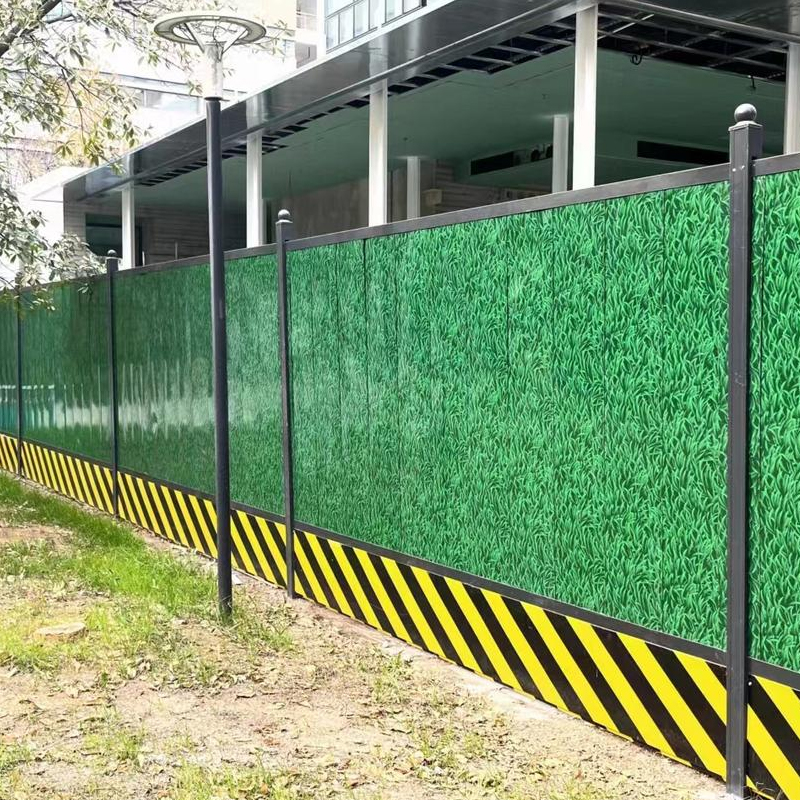
The two most useful thickness categories in this product family serve different roles. A 0.90 mm panel is suited to lightweight enclosure duties: wall liners, temporary site fencing, equipment dust shields, rain screens, waterproof protection panels, corridor guards, and other applications where the sheet is supported by a frame and is not expected to carry concentrated pedestrian or equipment loads. Its advantages are lower weight, easier handling, faster cutting, and reduced supporting-frame demand.
A 2 mm panel is better suited to applications where local stiffness and resistance to denting matter: small trench covers, protective floor plates, heavy-duty equipment shields, walkway repairs, low-span covers, and structural enclosure zones. Yet “2 mm” alone does not prove structural adequacy. Span, support condition, edge fixing, steel grade, expected load, dynamic impact, and deflection limit still require engineering review. A 2 mm sheet supported continuously around its perimeter behaves very differently from the same sheet spanning a wide opening on two edges.
The common mistake is to specify one thickness across an entire project for convenience. This may reduce the number of purchase orders but increase total cost. Using 2 mm material for every wall panel wastes weight and money. Using 0.90 mm material where workers will step, lean equipment, or drag loads creates deformation and safety risk. A better approach is to divide the project into zones: lightweight enclosure, impact-prone enclosure, maintenance-access surface, and load-bearing cover. Each zone receives a thickness and support detail appropriate to its actual function.
Standard panel sizes of 2500 × 1250 mm and 3000 × 1250 mm make this zoning easier because the sheets can be coordinated with common framing modules. Standardization reduces the number of irregular cuts, simplifies nesting plans, and improves installation speed. It also reduces the temptation to bridge an opening with an undersized offcut simply because it is available.
3. Choose Between Galvanized Steel, 430 Stainless, and 304 Stainless by Exposure
Hot-dip galvanized steel is usually the economic starting point for general infrastructure enclosure work. The zinc layer protects the steel substrate by acting as a barrier and, within limits, by providing sacrificial protection to small exposed areas. It is well suited to dry or moderately wet atmospheric service when drainage is good, cut edges are managed, and aggressive chemical contamination is absent. The main purchasing variable is not merely “galvanized or not,” but coating mass, coating uniformity, base-sheet quality, forming requirements, and post-fabrication treatment.
430 stainless steel is a ferritic stainless grade often selected where improved corrosion resistance, cleanability, stiffness, and cost control are needed but the environment is not highly chloride-rich. It can be practical for interior industrial protection, sheltered external components, walkway or cover applications, and dry-region infrastructure where the design avoids water traps. Its corrosion behavior is not identical to 304, and it should not be presented as a universal replacement for 304 in wet, saline, or chemically aggressive locations.
304 stainless steel offers broader corrosion resistance and generally better formability for many fabrication operations. It is often the safer choice where repeated wetting, hygiene, cleaning, or moderate chemical exposure is expected. However, even 304 is not immune to pitting, crevice corrosion, contamination, or poor detailing. Stainless steel performance depends on surface condition, oxygen access, contamination control, and the avoidance of tight wet crevices. The ISO framework for measuring uniform corrosion of stainless steels is a useful reminder that corrosion testing is always tied to a defined environment; a grade label alone cannot predict every site condition.
A practical selection hierarchy is therefore:
- Use galvanized steel for cost-sensitive, general enclosure work in dry to moderate atmospheric conditions with good drainage and accessible maintenance.
- Use 430 stainless steel where a more durable, cleanable, and abrasion-resistant surface is needed in relatively mild environments.
- Use 304 stainless steel where wetting, cleaning, condensation, or moderate chemical exposure raises the corrosion requirement.
Do not make the choice from country name alone. A dry inland factory in one country may be less corrosive than a coastal warehouse in another. Site microclimate, process emissions, cleaning chemicals, and water-retention details are more important than a broad regional label.
4. Surface Finish, Cold Rolling, and Fabrication Determine Whether the Specification Survives Installation
2B and satin finishes are often described as appearance options, but they also affect handling, cleaning, scratch visibility, and fabrication quality. A 2B finish is a smooth, low-reflective mill finish commonly used where a clean, functional surface is required. A satin or brushed finish can visually mask light handling marks and provide a consistent directional appearance, but it must be oriented consistently across adjacent panels. Neither finish replaces correct corrosion-grade selection.
Cold rolling improves dimensional control, thickness consistency, surface quality, and sheet flatness. Those properties help panels fit frames, align at joints, and remain stable during fabrication. Still, flat sheet can distort if it is welded without a controlled sequence, fastened to an uneven frame, or forced into alignment. The installed result therefore depends on workshop and site practice as much as on the incoming sheet.
Cut edges are a critical detail. Galvanized sheet loses part of its barrier protection where the coating is removed. Small edges may receive some sacrificial protection from adjacent zinc, but large damaged zones, ground edges, and drilled areas should not be ignored. The installation method should include edge protection compatible with the exposure and the selected coating system. Guidance from the Association for Materials Protection and Performance reinforces a lifecycle view of corrosion control: protection should be planned across design, fabrication, installation, inspection, and maintenance rather than added only after rust appears.
Stainless steel requires a different discipline. Carbon-steel grinding dust, dirty tools, and iron-contaminated worktables can leave particles that later rust on the stainless surface. Dedicated or properly cleaned tools, controlled storage, and post-fabrication cleaning are therefore part of the specification. Weld heat tint and rough crevices can also reduce local corrosion resistance. A purchaser who pays for stainless but accepts contaminated fabrication has bought the grade without securing the performance.
For detailed product configuration, use the panel specification page to align finish, grade, thickness, and sheet size with the intended fabrication route.
5. Waterproofing Comes From the Assembly, Not From the Sheet Alone
A metal sheet does not absorb water like timber, but that does not automatically make a wall or roof waterproof. Water enters through laps, fastener holes, poorly sealed penetrations, open corners, reverse falls, and capillary gaps. It can also condense on the rear face when warm humid air meets a cooler panel. A technically accurate specification should therefore separate material water resistance from assembly water management.
For wall and enclosure applications, vertical joints should shed water rather than trap it. Horizontal laps should face away from the direction of runoff. Sealants and tapes must be compatible with the metal finish and expected movement. Fasteners should include suitable washers, and holes should not be oversized or positioned too close to edges. Frames must be straight enough that panels do not rock or pull away when tightened. Drainage paths should remain open at the base.
For roof-edge protection and small roof enclosures, thermal expansion deserves attention. Long metal sheets move as temperature changes. If every point is rigidly restrained, movement can appear as buckling, fastener-slot enlargement, sealant tearing, or noise. The correct solution may involve shorter panel lengths, slotted fixing points, sliding clips, expansion joints, or a fastener pattern that restrains the sheet while allowing controlled movement.
For equipment shields, “waterproof” often means preventing direct spray and dust entry rather than creating a pressure-tight enclosure. The shield should include drip edges, offset joints, protected ventilation paths, and access panels that can be opened without destroying the seal. A completely sealed metal box placed around heat-generating equipment can solve a rain problem while creating a thermal problem. Good engineering preserves both protection and ventilation.
For trench covers and walkway panels, drainage is again central. Water should not remain beneath a flat plate where hidden corrosion can develop at supports. Bearing surfaces should be continuous and easy to inspect. A removable cover should include a safe lifting method so workers do not pry at edges and permanently deform the sheet.
6. Case Study: Sana’a Renewal Project—From Repeated Failure to a Zoned Material Strategy
The Sana’a, Yemen, urban-rural infrastructure refurbishment project provides a useful example because the original problem was not a single dramatic collapse. It was repeated small-scale failure across old residential areas and small industrial sites. According to the project records supplied for this article, existing enclosure elements were mainly ordinary thin steel sheet and timber boards. Under intense sunlight, dry wind, dust abrasion, occasional rain, and limited maintenance capacity, the materials deteriorated faster than owners could economically replace them.
Accident and Failure Phenomena
The visible symptoms included rust perforation at lower sheet edges, loose fasteners around enlarged holes, bent corners, split timber panels, open joints, and local water entry after rain. Dust passed through damaged seams and accumulated around equipment. In several areas, workers repeatedly patched the same enclosure with mismatched offcuts. The repairs solved the immediate opening but created more joints and irregular overlaps, which then trapped dust and moisture. Small trench covers also deformed because thin sheet had been used without sufficient support.
These were not isolated cosmetic defects. Each defect increased operational burden. A rusted lower edge allowed wind to lift the panel. A loose corner created vibration and noise. A broken timber section admitted dust. A deformed cover created a trip hazard. Maintenance teams spent time on recurring repairs instead of planned work. The real cost was therefore not the price of one replacement panel; it was the repeated cycle of inspection, emergency patching, labor, shutdown coordination, and material waste.
Root Causes
The first root cause was material mismatch. Ordinary unprotected steel was used in exposed locations where abrasion and intermittent wetting accelerated coating breakdown or direct corrosion. Timber was used where repeated sun exposure, moisture cycling, and limited sealing maintenance made splitting and decay predictable.
The second root cause was thickness mismatch. Thin enclosure sheet had migrated into applications that experienced foot traffic, concentrated loads, or impact. The material had not suddenly become defective; it had been assigned a structural function it was never meant to perform.
The third root cause was non-standard sizing. Replacement pieces were sourced in inconsistent dimensions, which increased cutting, created narrow strips, and produced poorly supported joints. The site accumulated multiple repair patterns, so every future intervention required new measurement and improvisation.
The fourth root cause was connection and drainage detail. Low edges sat close to dust and water accumulation zones. Fasteners were irregularly spaced. Some overlaps faced the weather. Once a panel loosened, wind-induced movement enlarged holes and accelerated failure.
The fifth root cause was procurement based on initial price. Materials were compared by sheet cost rather than by installed function and replacement frequency. A cheaper sheet appeared economical at purchase but was expensive across repeated repair cycles.
Engineering Judgment
The project team did not respond by specifying the most expensive stainless steel everywhere. Instead, it divided the works into exposure and duty zones. Lightweight walls, partitions, and waterproof protective shields were treated as supported enclosure systems. They required economical corrosion protection, dimensional consistency, and easy replacement, but not structural plate performance. These zones received 0.90 mm hot-dip galvanized panels.
Walkway repair zones and small trench covers were treated as higher-duty components. They required greater stiffness, better resistance to local deformation, and a more durable surface. These areas received 2 mm 430 stainless steel panels, together with closer attention to support and edge bearing. This was a functional allocation rather than a blanket material upgrade.
Standard 2500 × 1250 mm and 3000 × 1250 mm sheets simplified cutting plans and made replacement modules more predictable. The team could produce repeatable panel layouts instead of creating a new geometry for every repair. Fewer irregular cuts meant fewer unsupported narrow strips and less scrap.
The project logic aligns with principles behind published ASCE infrastructure resilience resources: resilience is not simply maximum strength. It is the ability of a system to continue functioning, recover, and be maintained under realistic hazards and resource constraints.
Procurement Lessons
The first procurement lesson is to buy by duty zone. A tender should identify enclosure panels, impact-resistant shields, pedestrian-access covers, and structural-duty covers as separate line items. This prevents suppliers from offering one nominally similar sheet for all uses.
The second lesson is to define evidence. Purchase documents should state grade, thickness tolerance, sheet size, surface finish, coating requirement where applicable, and inspection method. Relevant steel-sheet standards can be reviewed through the ASTM steel standards catalogue, but the project specification must still identify which standard, edition, product form, and acceptance criteria apply. Merely writing “ASTM quality” is not sufficient.
The third lesson is to evaluate installed cost. The cost model should include sheet price, cutting loss, frame modification, fasteners, sealants, labor, lifting, replacement frequency, and downtime. Standardized panels can be more economical even when their unit price is slightly higher because installation is faster and waste is lower.
The fourth lesson is to control substitutions. A lower-cost alternative is acceptable only when it meets the same functional requirements. Substituting thinner sheet, a lower coating mass, or a less suitable stainless grade may reduce purchase price while reintroducing the original failure mechanism.
Implemented Solution and Reported Outcome
The implemented system used 0.90 mm hot-dip galvanized panels for enclosure partitions and waterproof protective shields, while 2 mm 430 stainless panels were used for walkway upgrades and small trench covers. The project records report two years of service without rusting, cracking, or deformation in the installed panels, together with improved resistance to water and wind-driven dust. Installation time was reduced because the sheets were standardized and could be cut through repeatable layouts.
This outcome should be interpreted correctly. It is a project-specific field report, not a universal guarantee and not a substitute for independent testing. The value of the case lies in the decision process: identify the failure phenomena, trace them to material and detailing causes, divide the site by functional duty, choose a proportional material, standardize dimensions, and control installation. That logic can be transferred to other projects even when the final grade or thickness changes.
7. Turn the Case Study Into a Repeatable Specification
A strong specification should be readable by the owner, engineer, supplier, fabricator, and installer. It should avoid vague claims such as “weatherproof,” “heavy duty,” or “high quality” unless they are tied to measurable requirements. A practical schedule can include the following fields:
- Application: external partition, equipment shield, corridor guard, walkway repair, or trench cover.
- Material: hot-dip galvanized steel, 430 stainless steel, or 304 stainless steel.
- Nominal thickness: 0.90 mm or 2.00 mm, with stated tolerance.
- Panel size: 2500 × 1250 mm or 3000 × 1250 mm.
- Finish: 2B or satin, with grain direction where relevant.
- Exposure: indoor dry, outdoor sheltered, outdoor exposed, washdown, chemical, coastal, or abrasive dust.
- Fabrication: cut, folded, drilled, welded, or supplied flat.
- Support condition: frame spacing, bearing width, edge restraint, and allowable deflection.
- Connection: fastener material, washer type, spacing, hole type, and isolation from dissimilar metals.
- Water management: lap direction, sealant, drip edge, drainage, and condensation strategy.
- Inspection: incoming thickness check, finish inspection, coating verification, dimensional tolerance, and installation acceptance.
For structural-duty use, the project engineer should verify loads and support details. For corrosion-critical work, the exposure should be classified and the coating or alloy choice documented. ISO 12944 provides a recognized framework for corrosion protection of steel structures by protective paint systems; its general scope and terminology can help teams communicate exposure and durability concepts, even when the selected product is galvanized sheet rather than a painted structural member.
Another useful step is to require a sample panel or mock-up before bulk production. The mock-up can reveal problems that a datasheet cannot: visible waviness, inconsistent brush direction, poor corner folding, sealant incompatibility, fastener over-tightening, or difficult access for installation. A modest mock-up cost can prevent large-scale rework.
8. Country and Climate Fit: Why “Developing Market” Is Not a Technical Specification
The panel family is well suited to cost-sensitive infrastructure renewal in Yemen, Iraq, Syria, Ethiopia, Ghana, Pakistan, and similar markets because it supports graded material selection. However, these countries contain very different climates and operating conditions. A useful regional strategy combines local exposure mapping with standardized product options.
In dry inland locations, ultraviolet exposure, thermal cycling, dust abrasion, and wind loading may dominate. Galvanized sheet can be economical, but joints, supports, and cut edges must be detailed for movement and abrasion. In humid tropical locations, frequent wetting and condensation may justify higher corrosion resistance and better rear-face ventilation. In coastal zones, airborne chlorides increase risk, and 304 may still require careful assessment; more resistant alloys may be necessary for severe exposure. In industrial zones, process chemistry can override the general climate.
Local maintenance capacity also changes the correct answer. A coating system that performs well with periodic cleaning and touch-up may be unsuitable where access is difficult and maintenance budgets are uncertain. Conversely, specifying premium stainless everywhere can consume funds that would deliver greater resilience if spent on better supports, drainage, fasteners, or coverage area.
The most resilient solution is often a balanced one: use economical galvanized panels for accessible, moderate-exposure enclosures; use 430 stainless where surface durability and stiffness are needed in mild environments; use 304 where wetting and cleaning demand more corrosion resistance; and reserve specialized materials for genuinely severe zones.
9. A Procurement Checklist That Prevents the Next Failure Cycle
Before issuing a purchase order, the buyer should be able to answer ten questions. What exactly will the panel do? What will touch it? What will load it? How will water leave it? How will it move with temperature? How will it be cut and joined? What happens at the edges? How will dissimilar metals be isolated? How will quality be checked on delivery? Who will inspect it after installation?
These questions are more valuable than a long list of unsupported marketing adjectives. They convert “multi-purpose panel” into a controlled set of applications. They also make supplier comparisons fairer because each offer is measured against the same duty, not against an ambiguous request.
Buyers should ask suppliers for material certificates appropriate to the order, confirm thickness rather than relying on visual appearance, inspect sheet flatness and finish, and agree packaging that prevents water staining and transit damage. Sheets should be stored dry, off the ground, and protected from contamination. Stainless and carbon-steel products should be separated during handling where cross-contamination is a concern.
During installation, supervisors should check support alignment before panels are fixed. They should confirm fastener spacing, avoid over-driving washers, protect cut edges, clean stainless surfaces, and verify that laps shed water. After installation, a simple water-spray or visual drainage check can identify open joints before the area is handed over.
Finally, the owner should record where each material was installed. A basic location schedule makes future inspection more efficient and helps the team compare performance across exposure zones. That information turns one project into evidence for the next purchase.
Conclusion: The Best Panel Is the One Whose Role Is Clearly Defined
A general-purpose infrastructure panel system can reduce cost and simplify renewal work only when “general purpose” means a coordinated family of options, not a single sheet forced into every application. The Sana’a case demonstrates the difference. The project moved away from repeated patching with ordinary thin steel and timber, identified why those materials failed, separated enclosure duties from higher-load duties, standardized sheet sizes, and assigned galvanized or stainless material according to function.
For an owner, the practical benefit is fewer emergency repairs and clearer maintenance. For a contractor, it is faster cutting, predictable installation, and lower waste. For a procurement team, it is a specification that can be compared across suppliers. For an engineer, it is a traceable decision that connects exposure, thickness, grade, support, and connection detail.
The next useful step is not to ask, “Which panel is cheapest?” It is to mark one drawing with four items: exposure zone, panel function, support spacing, and expected maintenance interval. That simple exercise usually reveals whether 0.90 mm galvanized steel, 2 mm 430 stainless, 304 stainless, or another solution is appropriate.
Discussion hook: Which failure is costing your project the most today—rust at the lower edge, water entry at joints, denting, repeated timber replacement, or non-standard cutting waste? Share the application, environment, span, and maintenance constraints, and the material decision can be evaluated against the actual failure mechanism rather than a generic product label.
Explore more guidance in our infrastructure engineering articles, or review the project specification contact page for a duty-based panel schedule.
SEO Keywords
multi-purpose infrastructure panel hot-dip galvanized sheet 430 stainless steel panel 304 stainless steel sheet 0.90 mm enclosure panel 2 mm structural panel waterproof wall panel factory enclosure sheet urban renewal cladding rural infrastructure panel temporary site hoarding equipment dust shield roof enclosure panel trench cover plate infrastructure panel supplier custom sheet fabrication panel cutting service metal enclosure design waterproof partition solution factory renovation materials corrosion-resistant cladding infrastructure procurement support sheet metal specification galvanized panel installation stainless steel fabrication service industrial waterproofing panel maintenance replacement panel civil engineering contractor factory facility manager municipal procurement team urban renewal developer rural infrastructure builder industrial maintenance company construction material importer government infrastructure buyer warehouse renovation contractor site enclosure installer public works department engineering consulting firm developing market infrastructure