

Decorative Perforated Panel Flatness Comparison by Material: Post-Punching Distortion, Residual Stress & Architectural Specification Guide
Decorative Perforated Panel Flatness Comparison by Material: Post-Punching Distortion, Residual Stress & Architectural Specification Guide
Overview
Decorative perforated metal panels are widely used for curtain walls, suspended ceilings, feature walls and supermarket fascia. Punching releases internal residual stress, which causes varying degrees of warping and undulation on finished panels. This guide compares residual stress and post-punch distortion across aluminum, galvanized steel and stainless steel. It covers material ranking, influencing factors, leveling processes and specification controls to prevent warping for perforated cladding and screens.
1. Application Scenarios
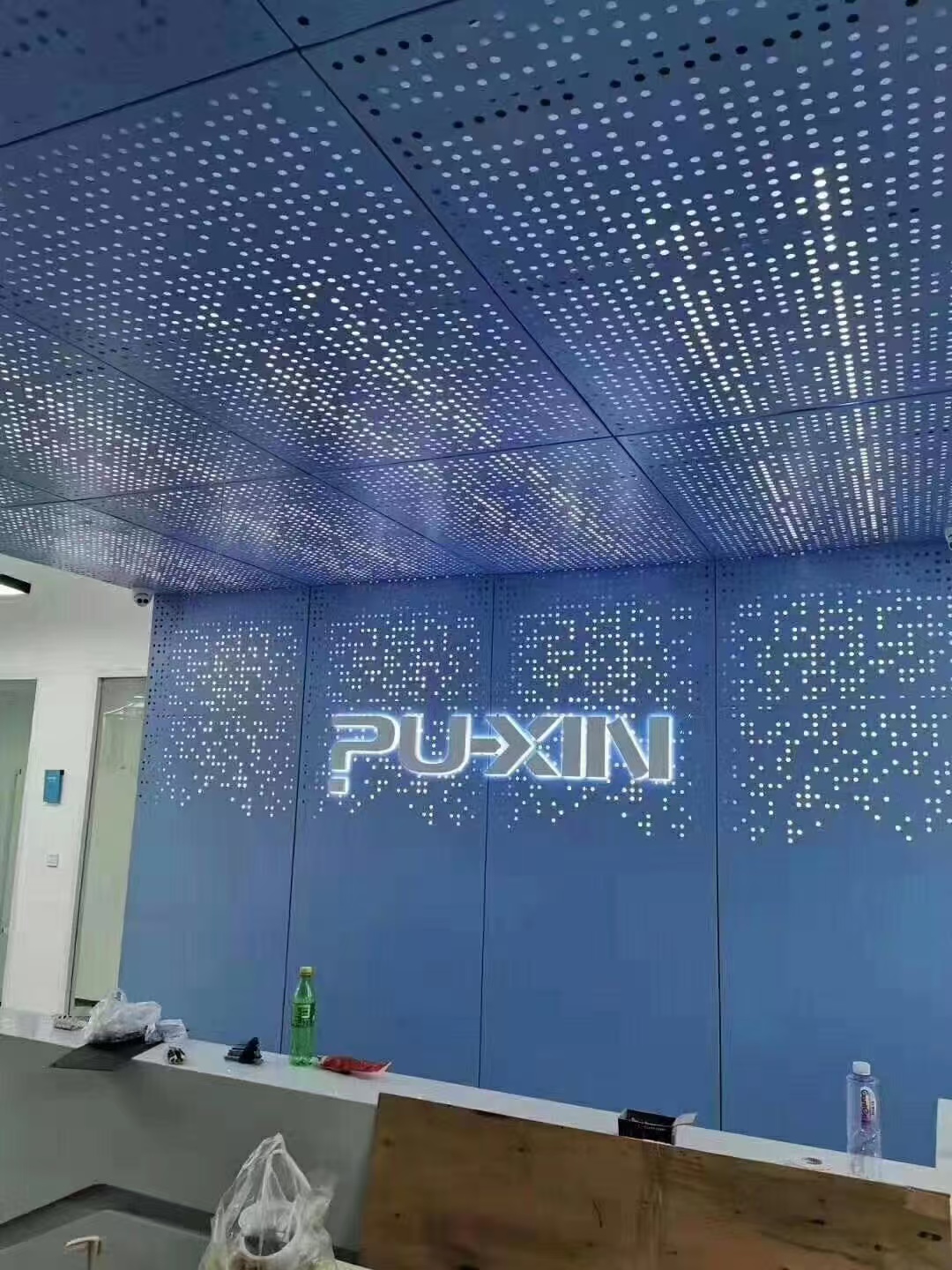
Decorative perforated panels are a mainstream architectural finishing material for both commercial and public projects. Building curtain walls, interior feature screens, lobby backdrop walls and supermarket suspended fascia are the most common applications. Many architects match decorative panels with Acoustic Perforated Panels for spaces that require noise reduction alongside visual aesthetics, such as shopping malls and office atriums.
For high-visibility facades and exhibition hall partitions, designers prioritize consistent hole alignment and smooth surface effect, selecting premium-grade Decorative Perforated Panels. If panels will be installed on walkable maintenance platforms or access edges where personnel may step on them, Anti-Slip Perforated Panels are recommended instead for safety.
Different projects hold different tolerance standards for flatness. Indoor decorative backgrounds usually demand strict visual control; slight waves are easily spotted under spotlights. Exterior curtain walls have looser visual requirements yet still need to meet installation tolerance to avoid uneven seams. Large continuous ceiling panels are more sensitive to deformation, as stress accumulation over a big span amplifies subtle warping.
Humid coastal environments also add extra considerations. Material corrosion resistance and thermal expansion characteristics interact with punching stress. Aluminum expands more under temperature fluctuation, which may worsen distortion after punching if support frames are not properly designed. Clarify lighting condition, panel size and exposure environment early to select suitable base material.
2. Specification Parameters & Flatness Ranking
Under identical thickness, hole pattern, open area and punching process, the comprehensive flatness ranking after punching is: galvanized Q235 steel > 304 stainless steel > 201 stainless steel > aluminum alloy. This sequence comes from inherent material rigidity, residual stress level and ductility differences.
Galvanized Q235 steel features high structural rigidity. When punching releases internal stress, its deformation amplitude stays relatively small. After roller leveling, it can achieve excellent flatness, which makes it ideal for large-area decorative screens and exterior fascia. Even 0.6–0.8mm thin galvanized sheets may show minor ripples at high open area, but secondary leveling can greatly improve the surface condition.
304 stainless steel has a smooth original surface and balanced toughness. It delivers premium visual texture after leveling, favored for high-end interior decoration. However, thin stainless steel below 1.0mm tends to form fine wavy marks around perforation zones. Its material cost is higher than galvanized steel, so it is usually reserved for projects requiring corrosion resistance and metallic finish.
201 stainless steel is a budget stainless option. Its ductility is inferior to grade 304. After punching, residual stress releases unevenly, and warping is more obvious. It can be used for low-visibility decorative areas, but extra leveling inspection is necessary before delivery.
Aluminum alloy is lightweight and easy to bend, but its low rigidity is the main drawback. Even moderate open area can trigger obvious arching and sagging after punching. Aluminum panels need denser reinforcing frames and stricter stress relief treatment for large-size decorative applications.
ASTM A653 defines mechanical properties for galvanized carbon steel, while ASTM A240 sets specification standards for stainless steel plate. Aluminum sheet properties follow ASTM B209. These standards are widely referenced by architects and third-party inspectors for raw material acceptance.
3. Design Key Points
Open area is one dominant factor affecting flatness. Higher open area removes more base material, weakening the panel’s integral rigidity and accelerating stress release. If the design requires an open area over 35%, thicker substrate or back reinforcing frames should be adopted in advance. Staggered hole layouts distribute stress more uniformly than straight rows and reduce localized buckling.
Sheet thickness must match single panel dimensions. Wide, long panels with thin gauges are far more prone to distortion after punching. When the single panel width exceeds 1000mm, simply increasing thickness or adding folded edges helps lock flatness. Edge folding acts as a stiffener and offsets part of the punching stress.
Punching sequence and mold clearance also impact final flatness. Uneven mold clearance creates inconsistent tearing stress around holes, forming irregular ripples. Progressive punching with optimized sequence helps release stress gradually, rather than concentrating deformation in one zone. Many unqualified batches are caused by worn molds or poorly adjusted clearance.
Post-processing selection directly decides final surface quality. Roller leveling is the standard process for general decorative fascia and wall panels. For high-spec projects with strict flatness requirements, stress relief annealing or precision leveling can be arranged. Designers should reserve flatness tolerance clauses in technical specifications to avoid disputes during site acceptance.
Thermal expansion gaps deserve attention for exterior decorative panels. Different metals have different expansion coefficients. Temperature changes will add extra stress on top of punching residual stress, and gaps can prevent arching after installation. ASCE material property guides provide thermal expansion reference data for metal cladding design.
4. Industry Standards
A series of international standards control material performance, cladding tolerance and metal panel fabrication. ASTM A653 covers galvanized steel mechanical and coating requirements, ASTM A240 regulates stainless steel for architectural use, and ASTM B209 governs aluminum alloy sheets. ISO 7784 specifies coating and surface inspection methods for architectural metal panels.
For building cladding installation tolerance, ASCE engineering documents provide deflection and flatness limits for exterior metal facades. When acoustic performance is combined with decoration, Acoustical Society of America standards support sound absorption testing of perforated assemblies. Architectural Digest regularly publishes perforated metal facade projects, showing mature material selection practices in high-end architecture.
On-site acceptance checks cover raw material certificate, hole position tolerance, panel flatness deviation, burr condition and leveling record. Visual inspection under uniform lighting is required for decorative panels. Panels with unqualified warping cannot be corrected easily after cutting to size, which will cause seam misalignment and delay construction progress.
Flatness tolerance should be clearly written into tender documents. Vague descriptions such as “flat surface” often lead to inconsistent judgment between fabricators and construction teams. Quantitative deviation limits measured by straightedge and feeler gauge are recommended.
5. Case Analysis
A shopping mall fascia project first selected 0.8mm aluminum perforated panels with 32% open area. After punching, most panels arched obviously. Our team revised the scheme: switch to 1.2mm galvanized steel with folded edge reinforcement and roller leveling. The finished panels kept stable flatness and passed site acceptance.
An office lobby backdrop used 0.9mm 201 stainless steel perforated sheets. The open area reached 38%, and no leveling process was arranged. Fine wavy distortion appeared after delivery. We reprocessed the panels through precision leveling and adjusted mold clearance for follow-up batches to control residual stress.
A coastal curtain wall project chose 1.0mm 304 stainless steel decorative perforated panels. The design adopted staggered hole layout and reserved 5mm expansion gaps. After punching and leveling, the panels maintained good flatness for more than two years under marine temperature cycles.
These cases reflect three common pitfalls: choosing low-rigidity aluminum for large panels without reinforcement, ignoring leveling for 201 stainless steel, and neglecting thermal stress on exterior cladding. Early material comparison and process confirmation can avoid rework and budget loss.
📞 Tel/WhatsApp: +86 180 2733 7739
📧 Email: jtsw58@gmail.com
🌐 Website: perforatedmetalpanel.com
📸 Instagram: instagram.com/jintongperforatedmetal
💬 WhatsApp: shorturl.at/jdI6P
🔗 LinkedIn: Andy Liu
▶ YouTube: Jintong-n7d
🌐 Web WhatsApp: web.whatsapp.com
👍 Facebook: facebook.com/me
📱 Direct WhatsApp Chat: https://api.whatsapp.com/send?phone=8618027337739
If you are designing decorative perforated cladding, screens or supermarket fascia, share your target material, panel size, open area and flatness tolerance. We can offer material recommendation, leveling plan and formal quotation. This guide helps architects and contractors select suitable perforated panels and control post-punching distortion.
#decorativeperforatedpanel#perforatedpanelflatness#postpunchdistortion#residualstressmetalpanel#galvanizedperforatedpanel#304stainlessperforatedsheet#201stainlessperforatedpanel#aluminumperforatedpanel#architecturalperforatedcladding#perforatedfascia#curtainwallperforatedpanel#interiorscreenpanel#staggeredholeperforation#openareaeffect#metalpanelleveling#rollerlevelingprocess#astma653#astma240#astmb209#iso7784#metalcladdingtolerance#perforatedceilingpanel#supermarket 吊楣 perforatedpanel#architecturalmetalfinish#perforatedpanelwarping#punchingstresscontrol#buildingfacadedesign#highenddecorativemetal#perforatedpanelfactory#jintongperforatedmetal#customperforatedsheet#metalbackdropwall#perforationmoldclearance#thermalexpansiongap#stiffenerdesign#perforatedpaneltender#claddingacceptance#metaldecorationpanel#perforatedscreendesign#antiwarpperforatedpanel