



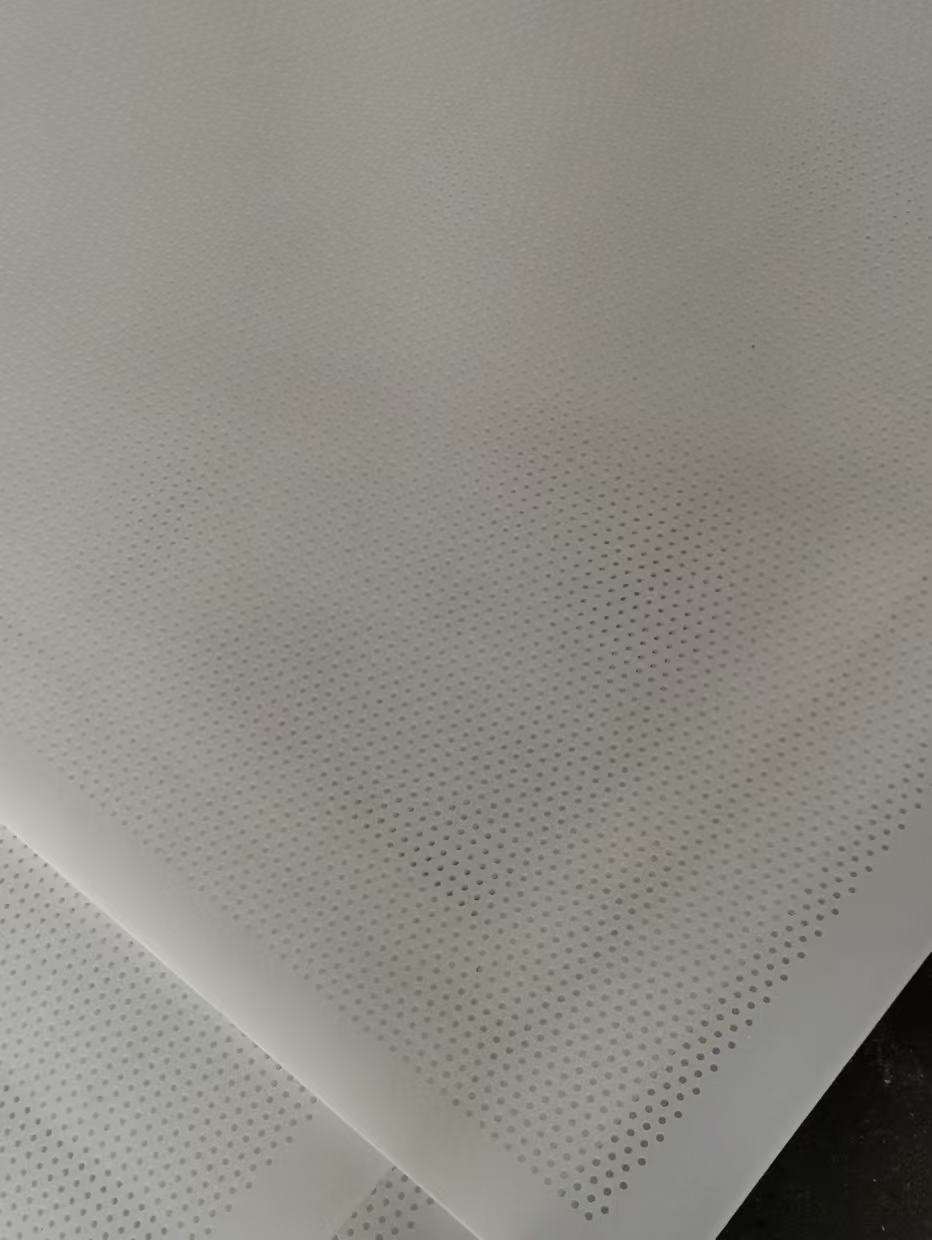
How to Choose Between PVC and PP Perforated Sheets? Master Core Differences to Avoid Engineering Mistakes
How to Choose Between PVC and PP Perforated Sheets? Master Core Differences to Avoid Engineering Mistakes
Overview
Plastic perforated panels are widely used for filtration, ventilation barriers, equipment isolation, aquaculture and chemical processing. Many buyers confuse PVC and PP sheets, and wrong selection often triggers cracking, deformation or premature aging. This guide compares weight, rigidity, temperature tolerance, creep performance and chemical resistance. Learn temperature limits, creep risk, chemical compatibility and punching differences to avoid brittle cracking and thermal sagging of plastic perforated panels.
1. Application Scenarios
PVC and PP perforated sheets are two dominant plastic perforated options for corrosive, wet industrial environments. Filtration tanks, workshop partition guards, ventilation baffles, aquaculture sorting grilles and chemical solution trough liners are common application scenarios. When projects require both ventilation and noise attenuation, designers often pair these plastic panels with Acoustic Perforated Panels for combined functional partitions.
For clean rooms, exhibition tank facades and decorative barriers requiring consistent hole aesthetics, specifiers can match the hole pattern with Decorative Perforated Panels to maintain unified visual effects. If the surface will be accessed by technicians for regular inspection and foot traffic, Anti-Slip Perforated Panels are recommended for operator safety.
Each material fits distinct working conditions. Rigid PVC suits normal-temperature wastewater filtration, static isolation shields and indoor ventilation enclosures where high rigidity is needed. PP performs better for frequent temperature fluctuation and weak alkaline liquid contact. Aquaculture systems usually prioritize PP for its good resistance to seawater and organic waste.
It is critical to separate static indoor use and continuous submerged service. Static dry partitions mainly test rigidity and anti-cracking performance, while submerged filter plates must resist long-term hydrostatic load and creep deformation. Many engineering failures happen when designers simply replace PVC with PP or vice versa without reviewing the full operating environment.
Some projects also involve cyclic wet-dry switching. Alternating immersion and air exposure accelerates material aging. UV exposure in semi-outdoor settings adds another layer of complexity; standard PVC and plain PP both degrade gradually under direct sunlight unless UV stabilizers are added during extrusion.
2. Specification Parameters & Core Performance Comparison
Density, weight and stiffness form the first obvious difference. PVC perforated sheet has higher density, heavier unit weight and superior inherent rigidity. It holds shape well when laid flat and resists soft collapse under moderate static load. Rigid PVC also delivers stable low-temperature toughness and rarely turns brittle quickly under mild cold conditions, and transparent or semi-transparent variants are available with rich custom color options.
PP perforated sheet is lightweight, roughly 35% lighter than PVC with identical dimensions. It features excellent ductility and impact resistance, tolerates bending and local impact better than rigid PVC. The main weakness is lower rigidity; large single panels tend to arch or warp after punching. Most standard PP sheets are milky white, and high-transparent grades are difficult to produce and carry a high price premium.
Continuous service temperature range is a decisive index for material selection. Rigid PVC is suitable for long-term operation below 60–70°C. Once the temperature exceeds this threshold, PVC will gradually soften, creep rate rises, and thermal deformation becomes visible. PP can tolerate higher working temperatures; stable service up to 80–90°C is achievable, which makes it the preferred choice for heated circulation filtration tanks.
Creep behavior differs greatly between the two. PVC creep rate stays low under normal temperature, but its brittleness increases after long-term aging. PP, as a typical thermoplastic, shows obvious time-dependent creep under sustained load, especially when temperature rises. Thin PP sheets with large unsupported spans are prone to slow sagging, while PVC is less likely to sag but may crack under repeated impact or thermal cycling.
Chemical compatibility also diverges. PVC resists most acids and neutral water, yet it reacts with strong solvents, ketones and certain esters. PP has outstanding resistance to weak alkalis and many organic solutions, but it is vulnerable to strong oxidizing agents. ISO 10350-1 and ASTM D543 provide standardized test protocols for plastic chemical resistance and long-term mechanical performance.
Punching manufacturability is another practical factor. PVC is stiffer, so punching produces clean cut edges with less ductile tearing, but improper mold clearance can cause edge chipping. PP is more ductile; holes are less likely to chip, yet burrs and stretched hole edges appear easily if punching speed and clearance are not calibrated properly.
3. Design Key Points
Rigidity requirement should be confirmed before material locking. If the panel is a freestanding partition without dense rear supports, rigid PVC is usually more reliable thanks to its higher stiffness. If the panel needs frequent disassembly, transportation or bears accidental knocking, PP’s impact resistance reduces the risk of brittle fracture.
Working temperature must be the top filter rule. Any system with steady temperature above 70°C should avoid rigid PVC. Even short heat spikes can trigger permanent soft deformation and dimensional shift. For low-temperature environments below 5°C, modified impact-resistant PVC is preferred over standard PP, which may lose ductility in extreme cold.
Creep risk assessment is mandatory for submerged filter plates. Even at room temperature, continuous hydrostatic pressure will drive PP creep over months and years. If PP is selected, reduce unsupported span, add back reinforcing ribs or upgrade to GFPP. PVC has lower creep tendency at ambient temperature, but designers must watch out for stress cracking around punched holes after years of chemical exposure.
Open area and sheet thickness interact with material performance. High open area removes more substrate material and weakens overall stiffness. For PVC, high open area raises the risk of crack propagation from hole edges under impact. For PP, high open area significantly accelerates creep sagging. When high flow throughput is required, segmented panels and intermediate supports are better solutions than simply raising hole size and open ratio.
Punching post-treatment requirements vary. PVC panels used for visible decorative applications benefit from light sanding to remove tiny edge chips. PP panels for submerged filtration often require deburring to eliminate stress concentration points, which are potential starting locations for creep cracks.
Support frame design cannot be overlooked. PVC frames match PVC sheets in thermal expansion coefficient and reduce assembly stress. PP paired with PP or GFPP supports avoids differential thermal expansion, which may pull panels and generate residual stress at fixing points. ASCE non-metallic component design notes offer deflection and stress evaluation guidance.
4. Industry Standards
A set of international standards governs plastic sheet performance, chemical compatibility and fabrication acceptance. ASTM D543 outlines test methods for evaluating plastic resistance to chemical reagents. ISO 10350-1 covers tensile creep testing of thermoplastics, supporting long-term deformation prediction for PP and PVC. ISO 14509 specifies requirements for plastic components used in aquaculture and water treatment systems.
For projects combining filtration with noise control, the Acoustical Society of America publishes testing standards for perforated composite sound-absorbing assemblies. Architectural Digest regularly showcases corrosion-resistant plastic perforated partition cases for industrial facilities, presenting mature material matching schemes for wet chemical workshops.
Factory acceptance must include raw material certification verification. Visual inspection alone cannot judge long-term chemical aging or creep risk. For high-risk heated or chemically aggressive tanks, suppliers should provide material resistance reports matching the actual medium and service temperature.
Technical specifications in tender documents should clearly mark allowable deflection and failure modes. PVC failure mode is mostly brittle cracking; PP failure mode is gradual creep sagging. Acceptance clauses should distinguish these two failure types and define inspection cycles for long-term submerged installations.
Long-term accelerated aging testing is recommended for critical projects. Accelerated thermal and chemical aging tests help engineers forecast service life, instead of relying only on short sample trials that may hide delayed material degradation after commissioning.
5. Case Analysis
A normal-temperature sewage filtration project selected 4 mm rigid PVC perforated sheets as filter baffles. Working temperature stayed between 20–40°C, and the unsupported span was controlled below 450 mm. After 24 months of continuous operation, panels maintained good flatness without cracking, perfectly matching PVC’s advantages at room temperature.
A heated alkaline cleaning tank initially adopted 5 mm rigid PVC perforated sheets. The circulating liquid ran steadily at 75°C. Within 3 months, panels softened and showed uneven sagging. We switched to modified PP sheets, shortened the single span and added intermediate support beams. The revised setup remained dimensionally stable in the high-temperature alkaline environment.
An outdoor aquaculture sorting grille project first chose standard PP sheets without UV stabilizer. After 8 months of sunlight and seawater splash, the surface became chalky and impact resistance dropped. The upgraded solution was UV-stabilized PP with optimized hole layout and reinforced edge frames.
These three typical cases reveal frequent engineering mistakes: using PVC in sustained high-temperature systems, ignoring PP creep risk for long-span submerged plates, and omitting UV stabilizer for outdoor plastic perforated panels. Early material comparison and working condition review prevent unexpected breakdowns and costly site replacement.
Many buyers only compare initial material price. PVC may cost less upfront, yet replacement cost rises fast when applied outside its temperature limit. PP delivers longer service life under heat and alkaline conditions, bringing better overall economic value over the whole project lifecycle.
📞 Tel/WhatsApp: +86 180 2733 7739
📧 Email: jtsw58@gmail.com
🌐 Website: perforatedmetalpanel.com
📸 Instagram: instagram.com/jintongperforatedmetal
💬 WhatsApp: shorturl.at/jdI6P
🔗 LinkedIn: Andy Liu
🌐 Web WhatsApp: web.whatsapp.com
👍 Facebook: facebook.com/me
📱 Direct WhatsApp Chat: https://api.whatsapp.com/send?phone=8618027337739
If you are selecting plastic perforated sheets for filtration, aquaculture or chemical tanks, share working temperature, liquid medium, single panel span and whether the panel will be submerged. We can recommend PVC or PP, suggest proper thickness and support layout, and provide formal quotation. This guide helps engineers pick the correct plastic perforated sheet and avoid brittle cracking and thermal sagging.
#pvcperforatedsheet#ppperforatedsheet#plasticperforatedpanel#pvcvsppplastic#chemicalresistantperforatedplate#watertreatmentfilterbaffle#aquacultureperforatedgrille#ventilationbarrierpanel#thermoplasticcreep#rigidpvcperforated#polypropyleneperforated#iso10350#astmd543#iso14509#plasticpunchingfabrication#hightemperatureplasticpanel#plasticpartitionguard#perforatedsheetrigidity#plasticchemicalcompatibility#filtrationtankcomponent#industrialplasticbaffle#perforatedpanelfactory#jintongperforatedmetal#customplasticperforatedsheet#submergedfilterplate#thermaldeformationcontrol#plasticimpactresistance#uvstabilizedpp#plasticfilterdesign#chemicalworkshoppartition#perforatedopenareadesign#plasticpanelsupportframe#plasticagingtest#plasticperforationcrack#wastewaterfiltrationplate