

Stamped Louvered Panels: Raised Flange Height & Suitable Application Scenarios
Stamped Louvered Panels: Raised Flange Height & Suitable Application Scenarios
Overview
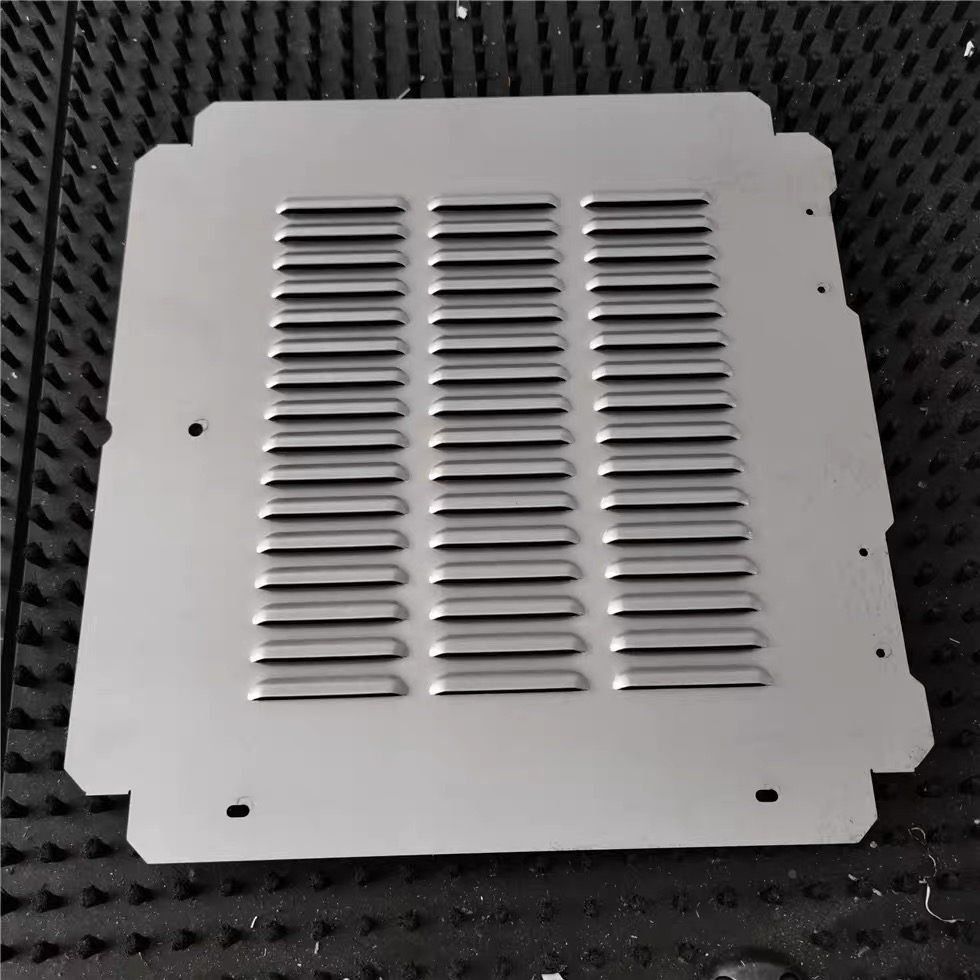
Stamped louvered panels, also known as pressed louver metal sheets, combine ventilation, rain deflection, visual screening and mechanical guarding. One coastal engineering contractor previously ordered deep 10mm stamped louvers on thin 1.0mm galvanized sheet for cooling tower guards. After stamping trials, the louvers cracked at folded edges, and rain penetration tests failed. Our factory reviewed their rainfall data, adjusted the specification to 7mm louver height with 1.5mm aluminum, produced pre-production samples and helped them pass third-party inspection. This guide covers application scenarios, specification parameters, design tips, global industry standards and real engineering cases. It also helps designers integrate Acoustic Perforated Panels, Decorative Perforated Panels and Anti-Slip Perforated Panels for complete building enclosure systems.
1. Application Scenarios
Stamped louvered panels serve indoor ventilation and outdoor weatherproof projects across HVAC, municipal construction, power generation and agricultural storage. When mechanical rooms require ventilation plus noise attenuation, designers often pair louver assemblies with Acoustic Perforated Panels. Acoustical Society of America technical notes confirm louver geometry directly alters airflow resistance and sound transmission loss for outdoor noise barriers.
For service platforms, maintenance walkways adjacent to louvered facades, engineers select Anti-Slip Perforated Panels to satisfy workplace slip-resistance codes. Architectural Digest regularly features slim stamped louvers alongside Decorative Perforated Panels in modern retail and commercial facade schemes.
Different exposure levels set distinct performance priorities. Indoor decorative ventilation targets low wind resistance, while fully exposed coastal openings demand deep flanges to intercept wind-driven rain. Many buyers simply pick the deepest louver for all outdoor jobs, which creates forming fracture risk and unnecessary cost waste. The Air Movement and Control Association (AMCA) publishes application guidance separating decorative louvers from weather-rated storm louvers.
2. Specification Parameters & Standard Raised Flange Heights
The raised flange height refers only to the protruding depth of stamped louver folded edges, not overall panel waviness. Four mainstream louver heights dominate global fabrication, paired with matched sheet thickness ranges.
3mm raised louver: Compatible with 0.8–1.2mm aluminum or galvanized steel sheets. It delivers moderate airflow, leans toward decorative purposes, maintains low wind resistance and rarely traps debris. It fits indoor equipment housings, electrical box vent covers, server cabinet ventilation, accent walls and air conditioner outer unit shields. This profile is widely selected for light-duty indoor mechanical ventilation.
5mm raised louver is the highest-volume engineering option, matched to 1.0–1.5mm metal sheets. It balances rain diversion, ventilation capacity and sight obstruction. Existing standard moulds keep lead times short and unit costs stable. Typical applications include municipal louver fencing, machine room exterior walls, generator rain hoods, parking lot facades and general mechanical guards. Wind load design follows structural guidance published by ASCE Engineering ASCE 7-22.
7mm raised louver is optimized for heavy rain defence, using 1.2–2.0mm thick substrates. Deeper folded flanges improve water drainage and rain blocking, while the open area ratio drops slightly and wind resistance rises. It suits fully exposed outdoor zones, highway sound barriers, cooling tower enclosures, grain bin ventilation panels and seaside equipment covers. ASTM International corrosion standards should be enforced for coastal aluminum or galvanized substrates.
10mm deep custom louver delivers the strongest rain shielding for locations without overhead canopies. Custom tooling is normally required, which raises mould expense and production lead time. Thin sheets cannot support this deep forming; excessive stretching will create tearing along bend lines. It is reserved for high-rainfall exterior air inlets and large industrial unit ventilation hoods.
Common stamping tilt angles are 30° and 45°. Peer-reviewed findings in the Journal of Building Engineering verify that the 45° tilt provides optimal rain-shedding performance, as the combined angle and flange depth reduce water penetration under wind pressure. EN 13030 sets standardized test methods for rain penetration of building ventilation louvers.
Quick Selection Cheat Sheet
Indoor heat dissipation and decoration: choose 3mm raised louver.
General outdoor fencing and facade ventilation for most commercial projects: choose 5mm raised louver.
Rain-prone exposed sites requiring heavy rain protection: select 7mm or custom 10mm deep louvers.
3. Design Key Points
The core design principle is matching louver raised height, sheet thickness and material ductility. Thin substrates cannot safely support deep louver forming; over-stretching creates microcracks at fold lines. Aluminum possesses superior ductility compared to carbon steel, so it is better suited for deep raised louver stamping. The International Journal of Advanced Manufacturing Technology has published experimental research on localized tensile stress during cold stamping of thin perforated and louvered sheets.
Wind pressure and water ingress performance must be validated before finalizing fabrication drawings. ISO Standards ISO 16890 defines particulate filtration and airflow testing frameworks for ventilation components. AMCA 500-L sets laboratory rating protocols for louver airflow, pressure drop and water penetration testing.
Surface finishing must align with service environments. Powder-coated galvanized panels work for inland urban projects, while coastal installations need aluminum with fluorocarbon coating to resist salt spray corrosion. Avoid over-specifying deep custom louvers when standard 5mm or 7mm profiles satisfy performance targets, which cuts mould investment and shortens delivery cycles.
4. Industry Standards
Multiple international standards regulate stamped louvered panel fabrication, rain tightness, substrate material and structural safety. ASTM B209 sets specifications for architectural aluminum alloy sheets used for louver stamping. ASTM A653 covers hot-dip galvanized carbon steel substrates. ISO 10630 defines flatness and dimensional tolerances for industrial perforated and stamped metal plates.
ASCE 7-22 governs wind load calculation for exterior louvered cladding. The MDPI Buildings Journal publishes numerical simulation studies analysing wind pressure distribution and structural deflection of stamped louver arrays, widely cited by facade and fit-out engineers. The National Association of Architectural Metal Manufacturers (NAAMM) releases cold forming guidelines for architectural stamped metal louvers, addressing fracture risk and post-forming flatness control.
AMCA 550-15 establishes test protocols for high-velocity wind-driven rain resistant louvers, critical for hurricane and monsoon zone projects. All project acceptance documents should separate cosmetic visual tolerances for interior decorative louvers from weather tightness performance requirements for outdoor rainproof louvers to avoid handover disputes.
5. Case Analysis & Core Takeaways with Interactive Hook
One municipal contractor client purchased stamped louver panels for seaside cooling tower guard enclosures. Their initial drawing specified 10mm deep louvers formed on 1.0mm galvanized steel sheet. Our technical team warned that thin galvanized steel would crack during deep stamping, and the 10mm profile exceeded the actual rain protection requirement for their site.
We proposed switching to 7mm raised louvers with 1.5mm aluminum sheets, supplied stamping trial samples and ran simulated rain penetration tests per AMCA 500-L. We also recommended a 45° louver tilt angle to maximize drainage efficiency. The revised specification eliminated forming defects, lowered total project budget and passed third-party weather tightness inspection successfully.
A second equipment manufacturer client previously used 1.0mm aluminum for 7mm louvers on outdoor generator hoods. Batch samples showed consistent edge cracking. We upgraded their sheet thickness to 1.4mm, adjusted stamping clearance and optimized the bend radius. The revised process removed fracture issues and kept their original mould set, avoiding extra custom tooling fees.
These two projects reveal four frequent engineering traps: blindly selecting ultra-deep louvers, mismatching sheet thickness with stamping height, ignoring ductility differences between steel and aluminum, and skipping pre-production sample verification. Our factory delivers more than cut-to-size stamped louvered panels; we provide airflow simulation, rain performance evaluation and forming risk assessment for each drawing. We maintain a full inventory of standard louver moulds and support custom angle, height and blank sizing services.
Here are the five core elements:
- Real Pain Point: Buyers often select ultra-deep louvers for outdoor ventilation projects without reviewing sheet thickness limits, resulting in cracked, deformed panels and failed rainproof performance tests.
- Counterintuitive Fact: A deeper louver flange does not automatically deliver better value; oversized deep louvers raise material and mould cost while increasing stamping failure risk if the base plate is too thin.
- Industry Expert Explanation: Deep stamping stretches metal at fold lines. Aluminum’s superior ductility tolerates deeper flanges than steel. Rain defence performance relies on the matched combination of louver height, tilt angle and substrate thickness, not flange depth alone.
- Conclusion: Select 3mm for indoor decoration, 5mm for most general outdoor works, and 7mm or custom 10mm deep louvers only for heavily exposed, high-rainfall locations. Sheet thickness must increase in line with louver raised height.
- Action Direction: Send us your site photos, local rainfall conditions, airflow demand and preferred material, and our engineering team will provide a free louver specification recommendation and forming risk review.
If you are sourcing stamped louvered panels for electrical enclosures, municipal fencing, sound barriers or exterior ventilation facades, share your project location, rainfall exposure and thickness constraints. Our technical team can evaluate deflection risk, recommend the optimal raised flange height, arrange pre-production samples and offer factory-direct pricing.
This article helps you solve louver cracking, poor rain shielding, excessive wind resistance and unnecessary custom mould charges for stamped louvered panels, helping you select the correct specification and reduce production rework.
📞 Tel/WhatsApp: +86 180 2733 7739
📧 Email: jtsw58@gmail.com
🌐 Website: https://perforatedmetalpanel.com
📸 Instagram: https://instagram.com/jintongperforatedmetal
💬 WhatsApp: https://shorturl.at/jdI6P
🔗 LinkedIn: https://linkedin.com/in/andy-liu-36a033355
▶ YouTube: https://youtube.com/@Jintong-n7d
🌐 Facebook: https://facebook.com/me
WhatsApp Direct Link: https://api.whatsapp.com/send?phone=8618027337739
#stampedlouveredpanel#louverperforatedsheet#louverflangeheight#rainprooflouverpanel#ventilationlouverboard#3mmlouverpanel#5mmlouverpanel#7mmlouverpanel#10mmdeeplouver#aluminumstampedlouver#galvanizedlouverpanel#electricalcowlouver#generatorshroudlouver#coolingtowerlouver#soundbarrierlouver#municipallouverfencing#exteriorventilationlouver#airconditionerlouvercover#machineryguardlouver#louverstampingfabrication#louverangle45degree#rainsheddinglouver#jintongperforatedmetal#louverpanelfactory#customstampedlouver#louverventcover#grainbinventilationlouver#coastalweatherlouver#servercabinetlouver#facadelouvercladding#stampedlouverformingguide#louverairflowcontrol#buildingenclosurelouver#decorativelouverpanel#mechanicalventlouver#louverprototypesample#louverwindresistancedesign#metalstampedventlouver#rainpenetrationlouver#louveredfencepanel#amcalouvertesting