



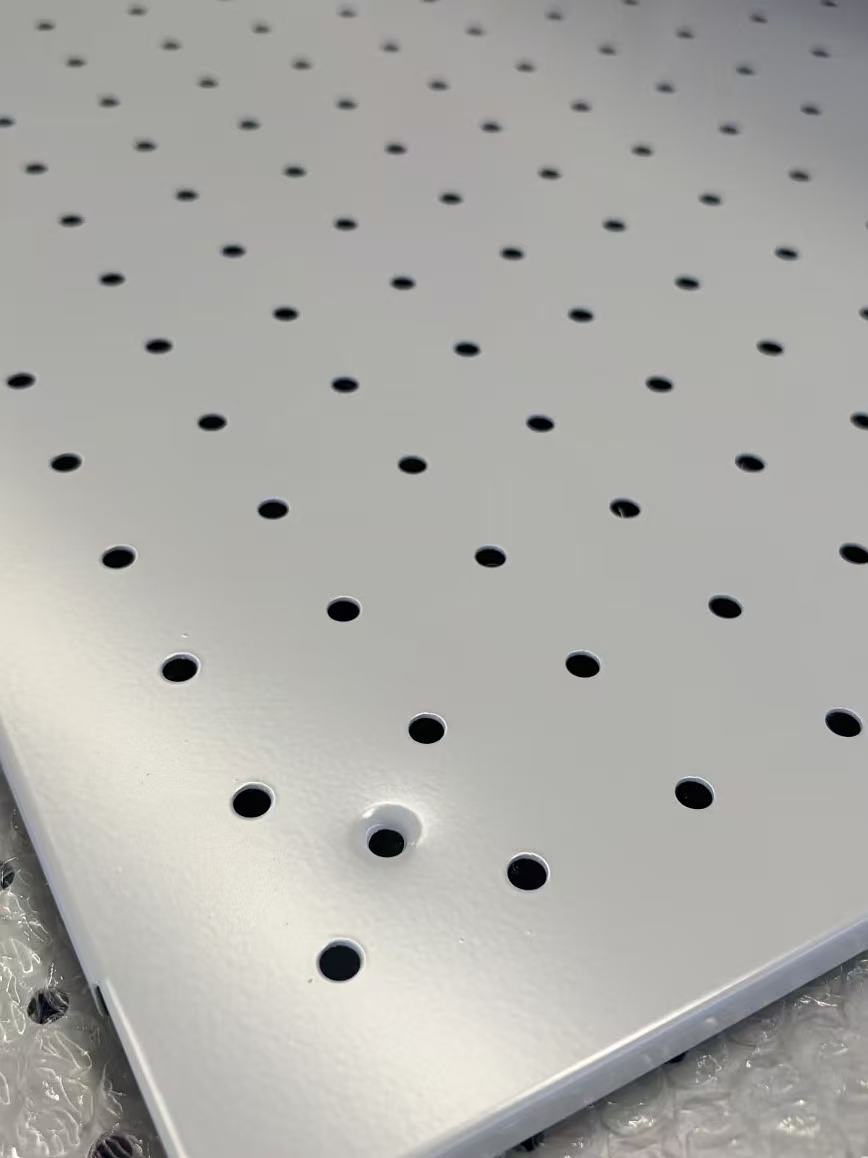
How to Choose the Hole Pitch for Perforated Pegboards
How to Choose the Hole Pitch for Perforated Pegboards
Overview
Many overseas buyers and retail purchasers confuse hole pitch with the narrow leftover strip between holes. This misunderstanding often leads to incompatible pegboard hooks, unusable panels, delayed sea shipments and extra logistics expenses. A cross-border ornament showroom client encountered this costly issue after ordering non-standard perforated pegboards. Our engineering team clarified core definitions, matched the proper hole pitch specification according to her existing hook set and display layout, arranged priority CNC punching production and delivered the panels on schedule. Our factory maintains in-stock moulds for mainstream sizes, and we flag compatibility risks upfront before confirming custom orders. If you also need decorative metal panels for other projects, view our Decorative Perforated Panels series for reference.
Main Content
Application Scenarios of Perforated Pegboards
Perforated pegboards serve a wide range of commercial and industrial display and storage purposes. Small-pitch pegboards are widely adopted for boutique retail displays, jewelry showrooms, live-stream backdrop walls and sample exhibition zones. Standard 30mm center pitch pegboards are the top pick for factory tool walls, workshop storage stations, hardware sample displays and warehouse picking areas. Large pitch perforated sheets are rarely used for hook mounting; they are mostly manufactured for ventilation covers, machine guards and exterior facade decoration.
When you need sound-absorbing wall cladding for office or studio renovation, our Acoustic Perforated Panels can meet your acoustic design requirements. For industrial walkway and platform safety flooring, check our Anti-Slip Perforated Panels.
Architectural designers often reference guidance from the National Association of Architectural Metal Manufacturers (NAAMM) to select perforated metal products for commercial fit-out and industrial storage systems.
Specification Parameters for Pegboard Hole Pitch
First, we clarify the industry definition: hole pitch is the center-to-center distance between adjacent holes, not the residual web width separating two openings. This definition follows testing frameworks laid out in ASTM E674, the standard specification for industrial perforated plates and round opening screens.
Two mainstream standard specifications dominate the global pegboard market. The first option is 25mm center hole pitch paired with 6mm hole diameter. It normally matches sheet thickness from 0.8mm to 1.0mm. Dense hole layouts deliver abundant hanging positions for lightweight ornaments and tiny hardware samples.
The second mainstream specification is 30mm center hole pitch with an 8mm hole diameter, our best-selling heavy-duty pegboard configuration. The sheet thickness range for this variant runs from 1.2mm to 2.0mm. Wider web sections between holes greatly improve structural rigidity and load capacity, supporting hand tools, heavy hardware and bulky workpiece samples.
Special non-standard options carry notable limitations. The 40mm oval-hole IKEA-style pegboard only works with proprietary hook fittings, while custom pitches such as 28mm, 32mm and 38mm require separately manufactured hooks, raising after-sales complexity. Hole pitches of 50mm and above are engineered for airflow and shielding rather than retail display storage.
ISO 10630 (ISO) establishes consistent testing and dimension rules for industrial perforated plate screens, helping international buyers verify dimensional accuracy before shipment.
Design Considerations
The balance between hole pitch, open area ratio and mechanical strength is the core design rule for perforated pegboards. A research paper published in the ASCE Journal of Structural Engineering (ASCE) notes that higher open area reduces the effective modulus and bending resistance of perforated metal sheets.
Many buyers intuitively assume denser holes equal better usability, which is the most common misconception. Denser holes create more hanging spots, yet they weaken the panel’s rigidity and maximum load weight. Wider hole spacing delivers stronger load performance and better ventilation, but it reduces the number of adjustable hook mounting points.
Our design workflow always prioritizes the client’s existing hook hardware. We ask customers to provide hook dimension drawings or physical samples first, then match the hole pitch and sheet thickness accordingly. For thin decorative display panels, we recommend 25mm pitch; for heavy tool storage, 30mm pitch is our default recommendation.
The Metal Construction Association (MCA) suggests that specifiers reserve safety margins for perforated metal storage panels, especially when panels will support repeated dynamic loading in busy workshops.
Industry Standards & Acceptance Guidance
International buyers frequently request compliance with globally recognized standards for cross-border shipments. ASTM, ISO and ASCE standards define dimension tolerance, material yield strength and flatness requirements for perforated metal sheets.
When preparing export packing documents, our factory clearly marks center hole pitch, hole diameter, sheet thickness, raw material grade and open area ratio on labels and packing manifests. This aligns with inspection guidance shared by Architectural Digest (Architectural Digest) for architectural metal component procurement.
We refuse to produce orders based on vague descriptions such as “small holes” or “strong pegboards”. Every technical parameter must be confirmed in writing before punching starts. This strict pre-production check avoids costly specification mismatches and rework.
For architects designing integrated display walls combining storage and decoration, we can provide combined quotation solutions for pegboards and decorative perforated facade panels.
Case Analysis: Resolving a Retail Client’s Pegboard Mismatch Crisis
A jewelry retail importer from Singapore contacted us with an urgent project problem. She previously sourced perforated pegboards from another supplier without confirming hole pitch definitions. She thought hole pitch meant the gap between holes, so she selected a 28mm non-custom pitch panel. After receiving the shipment, none of her bulk purchased display hooks could lock into the perforations. Her boutique showroom opening was only two weeks away, and returning the goods would cost high ocean freight and miss the launch schedule.
We walked through the definition of center-to-center hole pitch with her, measured her existing hook set, and recommended the 25mm center pitch, φ6mm hole, 0.9mm aluminum pegboard. Our factory pulled the ready 25mm punching mould immediately, arranged priority production, powder coating and QC inspection. We also supplied a small test sample panel before mass production for hook fitting verification.
The finished pegboards arrived before her showroom opening date. The dense hole layout allowed flexible arrangement of necklaces, earrings and metal craft samples, delivering the clean premium retail aesthetic she wanted. She reordered twice within six months for her new store branches.
This real case proves that parameter communication at the very beginning prevents expensive specification errors, and standard 25mm and 30mm hole pitch pegboards remain the safest, most accessory-compatible choice for global retail buyers.
Key Takeaway & Interactive Hook
One real pain point: buyers buy hooks and pegboards separately without cross-checking the center hole pitch, ending up with batches of unusable panels.
One counter-intuitive point: more holes do not always make a better pegboard; dense holes sacrifice load capacity.
One professional explanation: hole pitch selection must match your hook hardware first, then pair with suitable sheet thickness. Non-standard pitch means custom hook tooling and longer lead times.
One conclusion: stick to 25mm for lightweight retail display and 30mm for heavy-duty industrial storage.
One action step: send us your hook dimensions or photos, and our engineering team will complete a free compatibility check for you.
If you are uncertain which hole pitch fits your project, share your application, target load weight and existing hook specs with our sales engineer now.
📞 Tel/WhatsApp: +86 180 2733 7739
📧 Email: jtsw58@gmail.com
🌐 Website: https://perforatedmetalpanel.com
📸 Instagram: https://instagram.com/jintongperforatedmetal
💬 WhatsApp: https://shorturl.at/jdI6P
🔗 LinkedIn: https://linkedin.com/in/andy-liu-36a033355
▶ YouTube: https://youtube.com/@Jintong-n7d
💬 WhatsApp Direct Link: https://api.whatsapp.com/send?phone=8618027337739
📘 Facebook: https://facebook.com/me
#perforatedpegboard#metalpegboard#pegboardholepitch#pegboardhooks#toolwallpegboard#displaypegboard#ornamentdisplaypegboard#pegboardforexport#customperforatedpegboard#perforatedmetalsheet#metalperforatedpanel#perforatedmetalmanufacturer#jintongperforatedmetal#pegboardsourcing#pegboardspecification#heavydutypegboard#thinpegboard#sampledisplaywall#toolstoragepegboard#livestreambackgroundpegboard#warehousepegboard#pegboardsupplier#cncperforatedsheet#aluminumpegboard#galvanizedsteelpegboard#retaildisplaypanel#hardwaresampleboard#perforatedstoragepanel#pegboardbuyingguide#commercialdisplaypegboard#industrialpegboard#pegboardmould#perforatedsheetforsale#showroomdisplayboard#metalstoragesheet#lightdutypegboard#exportmetalpegboard#perforatedpanelfactory#pegboarddimensionguide#perforatedmetalsolution