





google-site-verification: google2a17834f09d42e23.html
Heavy Duty Galvanized Perforated Steel Sheet for Industrial Screening: Why Many Screening Systems Fail Long Before the Machinery Does

Heavy Duty Galvanized Perforated Steel Sheet for Industrial Screening: Why Many Screening Systems Fail Long Before the Machinery Does

Modern industrial screening systems are operating under increasingly aggressive conditions involving continuous vibration, abrasive material flow, airflow pressure, thermal expansion, corrosion exposure, and dynamic stress cycling. This article explores why heavy duty galvanized perforated steel sheets are becoming critical engineering components across mining operations, aggregate processing facilities, cement plants, recycling systems, coal screening infrastructure, and bulk material handling environments. The article explains how many industrial screening failures originate not from the machinery itself, but from poorly engineered perforated screening plates that gradually develop fatigue cracking, uneven material flow, airflow imbalance, clogging buildup, corrosion expansion, and structural instability long before catastrophic equipment failure occurs. Traditional procurement methods focused mainly on low pricing, thicker steel, larger hole sizes, or rapid delivery are increasingly proving insufficient for modern heavy-duty industrial environments. Through real-world mining and industrial case studies, the article demonstrates how hot-dip galvanized round-hole perforated screening systems with reinforced bridge spacing, CNC punching precision, balanced open-area ratios, secondary deburring, and optimized staggered perforation layouts significantly improve screening efficiency, vibration stability, abrasion resistance, material separation accuracy, and long-term operational reliability. Special attention is given to the engineering advantages of round-hole perforation geometry, which distributes stress more evenly and reduces fatigue concentration compared to angular or slotted perforation systems under continuous vibration loading conditions. The content also highlights the growing importance of hot-dip galvanized steel in screening environments exposed to abrasive dust, moisture, chemical contamination, outdoor weather cycling, and heavy dynamic loading. Proper zinc coating consistency, flatness control, airflow optimization, and structural fatigue engineering are becoming essential for extending service life while reducing maintenance shutdowns and production interruptions. In addition, the article explores how modern industrial facilities increasingly evaluate screening systems through the lens of vibration engineering, airflow dynamics, structural resonance, fatigue mechanics, and long-term production stability rather than simply material thickness or open-area percentage. As a result, perforated screening sheets are evolving from replaceable consumable materials into critical operational-engineering systems that directly influence industrial efficiency, maintenance performance, and long-term production reliability.

Why Industrial Buyers Are Demanding More from Industrial Galvanized Round Hole Perforated Metal Panels Suppliers

Why Industrial Buyers Are Demanding More from Industrial Galvanized Round Hole Perforated Metal Panels Suppliers

Modern industrial environments are placing far greater demands on perforated metal systems than ever before. No longer viewed as simple punched steel sheets for ventilation or protection, galvanized round hole perforated metal panels are now critical engineering components that directly influence airflow stability, corrosion resistance, vibration durability, dust control, acoustic performance, thermal dissipation, and long-term operational reliability. This article explores why industrial buyers are fundamentally changing how they evaluate perforated metal panel suppliers across industries such as mining, HVAC systems, wastewater treatment, petrochemical plants, generator enclosures, dust extraction systems, and industrial ventilation infrastructure. The article explains how many industrial perforated metal projects begin failing gradually through vibration fatigue, airflow imbalance, corrosion expansion, coating weakness, and structural instability long before visible system failure occurs. Traditional procurement methods focused mainly on price, delivery speed, and sheet dimensions are increasingly inadequate for modern industrial operating environments exposed to continuous vibration, thermal cycling, abrasive particles, airborne chemicals, and moisture accumulation. Through real-world industrial case studies, the article demonstrates how advanced hot-dip galvanized round hole perforated panels with CNC punching precision, staggered perforation geometry, balanced open-area ratios, reinforced flatness control, and improved zinc coating consistency significantly improve airflow efficiency, dust extraction stability, acoustic control, corrosion durability, and maintenance performance. Special attention is given to the engineering advantages of round-hole perforation geometry, which distributes stress more evenly and improves fatigue resistance compared to angular perforation layouts under continuous industrial loading conditions. The content also highlights the critical importance of hot-dip galvanizing in harsh industrial environments where perforated systems are continuously exposed to humidity, abrasive dust, pressure fluctuation, thermal expansion, and corrosive chemicals. Proper zinc coating thickness, deburring quality, SGCC/SPCC certification, and manufacturing consistency are increasingly essential for extending operational lifespan and reducing maintenance downtime. In addition, the article explores how modern industrial ventilation and acoustic systems are driving demand for engineered perforated panel solutions that combine airflow management, thermal control, structural durability, safety performance, and environmental efficiency into one integrated system. As a result, industrial buyers are no longer simply purchasing perforated steel sheets—they are investing in long-term engineering stability and operational reliability.

Galvanized Perforated Metal Panels for Airflow and Ventilation: Why Many Modern Ventilation Systems Lose Efficiency Long Before Equipment Failure Appears

Galvanized Perforated Metal Panels for Airflow and Ventilation: Why Many Modern Ventilation Systems Lose Efficiency Long Before Equipment Failure Appears

Modern ventilation systems are becoming increasingly complex as industrial and commercial buildings demand higher airflow efficiency, energy optimization, acoustic comfort, humidity regulation, thermal stability, and environmental performance. This article explores why galvanized perforated metal panels are rapidly becoming essential engineering components across HVAC systems, manufacturing plants, transportation terminals, data centers, parking structures, and industrial ventilation environments. The article explains how many airflow and ventilation failures begin long before visible equipment breakdown occurs. Problems such as airflow turbulence, pressure imbalance, thermal hotspots, dust accumulation, condensation formation, and excessive acoustic reflection are often caused not by fans or HVAC equipment, but by poorly engineered perforated ventilation panel systems. Traditional airflow designs focused primarily on fan capacity and airflow volume are increasingly proving inadequate for modern environmental control systems. Through real-world industrial case studies, the article demonstrates how hot-dip galvanized round-hole perforated ventilation panels with optimized open-area ratios, balanced airflow geometry, CNC punching precision, and reinforced structural design significantly improve airflow stability, thermal control, noise reduction, dust management, and energy efficiency. Special attention is given to the engineering advantages of round-hole perforation geometry, which distributes airflow more evenly and reduces turbulence compared to angular perforation patterns under continuous ventilation loading conditions. The content also highlights the growing importance of hot-dip galvanized steel in ventilation systems exposed to humidity, condensation, thermal cycling, dust contamination, chemical exposure, and long-term airflow vibration. Proper zinc coating thickness, deburring quality, perforation consistency, and airflow-engineering precision are increasingly essential for reducing maintenance costs and improving long-term ventilation reliability. In addition, the article explores how modern architecture and industrial engineering increasingly integrate perforated ventilation systems into broader environmental-design strategies involving acoustic control, airflow facades, solar shading, cooling systems, parking ventilation, and sustainable building performance. As a result, galvanized perforated ventilation panels are evolving from simple airflow covers into intelligent environmental-engineering systems that directly influence operational stability, energy consumption, and long-term building performance.

Why Round Hole Galvanized Perforated Steel Panels Are Replacing Traditional Factory Fencing Systems

Why Round Hole Galvanized Perforated Steel Panels Are Replacing Traditional Factory Fencing Systems

Modern industrial facilities are rapidly rethinking the role of factory fencing systems as traditional barriers increasingly struggle to meet the demands of automated production, outdoor exposure, airflow management, and long-term operational durability. This article explores why round hole galvanized perforated steel panels are becoming the preferred solution for factory fencing applications across manufacturing plants, logistics centers, automated warehouses, conveyor systems, and industrial security infrastructure. The article explains how conventional fencing systems such as welded mesh barriers, expanded metal fencing, and solid steel enclosures often create operational problems over time, including restricted airflow, reduced visibility, accelerated corrosion, vibration deformation, dust accumulation, and inefficient maintenance access. As industrial environments become more automated and environmentally demanding, fencing systems are no longer expected to provide physical separation alone—they must also support airflow continuity, operational monitoring, corrosion resistance, structural stability, and workplace safety. Through real-world industrial case studies, the article demonstrates how hot-dip galvanized round hole perforated steel fencing systems significantly improve visibility, airflow circulation, vibration resistance, corrosion durability, and long-term maintenance stability compared to traditional fencing materials. Particular attention is given to the engineering advantages of round-hole perforation geometry, which distributes mechanical stress and wind pressure more evenly than angular perforation patterns under continuous industrial loading conditions. The content also highlights the critical importance of hot-dip galvanizing for outdoor factory fencing exposed to humidity, airborne chemicals, UV radiation, abrasive dust, thermal cycling, and environmental corrosion. Proper zinc coating thickness, CNC perforation precision, flatness control, deburring consistency, and export-grade manufacturing standards are increasingly essential for extending service life and reducing operational maintenance costs. In addition, the article explores how modern industrial facilities are integrating perforated fencing systems into broader environmental-engineering strategies involving airflow optimization, visibility enhancement, acoustic control, safety management, and automated operational monitoring. As a result, round hole galvanized perforated steel fencing is evolving from a simple perimeter barrier into a multifunctional engineering system that directly influences industrial efficiency, safety performance, and long-term infrastructure reliability.

Why Custom Round Hole Galvanized Perforated Steel Panels Are Becoming Critical in Modern Industrial Engineering

Why Custom Round Hole Galvanized Perforated Steel Panels Are Becoming Critical in Modern Industrial Engineering

Modern industrial environments are becoming increasingly complex as factories operate under continuous vibration, thermal cycling, airflow pressure, corrosive exposure, acoustic reflection, and high-load automated production conditions. This article explores why custom round hole galvanized perforated steel panels are rapidly becoming essential engineering solutions across industries such as HVAC systems, petrochemical facilities, mining operations, wastewater treatment plants, generator enclosures, machine guarding systems, and industrial acoustic infrastructure. The article explains how traditional standardized perforated panels often fail in demanding industrial environments because they are designed around generic dimensions rather than real operational conditions. Problems such as airflow instability, vibration deformation, corrosion expansion, thermal stress accumulation, and acoustic inefficiency frequently emerge when perforation geometry, open-area ratios, and structural support systems are not customized to the application itself. Through multiple real-world industrial case studies, the article demonstrates how customized hot-dip galvanized round hole perforated steel systems significantly improve airflow stability, corrosion resistance, vibration durability, thermal management, acoustic control, and long-term operational reliability. Special attention is given to the engineering advantages of round-hole perforation geometry, which distributes mechanical stress more evenly and improves airflow consistency under continuous industrial loading conditions compared to angular perforation layouts. The content also highlights the growing importance of hot-dip galvanizing in customized industrial projects exposed to humidity, chemical contamination, abrasive dust, thermal expansion, and environmental corrosion. Proper zinc coating thickness, CNC punching precision, deburring quality, flatness control, and application-specific airflow engineering are becoming critical for extending service life and reducing maintenance costs in complex industrial environments. In addition, the article explores how modern industrial facilities increasingly integrate customized perforated systems into broader environmental-engineering strategies involving airflow optimization, acoustic management, energy efficiency, corrosion protection, and operational safety. As a result, custom perforated steel manufacturing is evolving from simple sheet-metal production into highly specialized industrial engineering that directly influences long-term system performance and infrastructure reliability.

Galvanized Perforated Steel Sheet Supplier for Industrial Equipment Covers: Why Modern Factories Are Quietly Replacing Traditional Equipment Enclosures

Galvanized Perforated Steel Sheet Supplier for Industrial Equipment Covers: Why Modern Factories Are Quietly Replacing Traditional Equipment Enclosures

Modern industrial facilities are increasingly discovering that traditional equipment-cover systems are no longer sufficient for high-demand operating environments involving continuous vibration, thermal cycling, airflow turbulence, humidity accumulation, abrasive dust exposure, and 24-hour automated production. This article explores why galvanized perforated steel sheets are becoming essential components in modern industrial equipment-cover and enclosure systems across compressor stations, HVAC infrastructure, mining operations, petrochemical plants, generator rooms, and automated manufacturing facilities. The article explains how many industrial cooling and ventilation failures originate not from the machinery itself, but from poorly engineered equipment-cover systems that create airflow turbulence, heat accumulation, acoustic reflection, vibration instability, dust buildup, and cooling inefficiency. Traditional procurement methods focused mainly on steel thickness, ventilation hole quantity, or low pricing are increasingly inadequate for today’s complex industrial airflow environments. Through real-world industrial case studies, the article demonstrates how advanced hot-dip galvanized perforated steel covers with airflow-balanced round-hole geometry, CNC punching precision, reinforced bridge spacing, and optimized airflow resistance significantly improve cooling stability, thermal dissipation, acoustic performance, vibration control, and long-term operational reliability. It highlights the engineering advantages of round-hole perforation geometry, which distributes airflow pressure and mechanical stress more evenly than angular perforation systems under continuous industrial loading conditions. The content also emphasizes the growing importance of hot-dip galvanized steel in protecting industrial equipment enclosures exposed to humidity, oil residue, airborne chemicals, dust contamination, and thermal expansion. Proper zinc coating thickness, secondary deburring, structural engineering precision, and corrosion-resistant manufacturing standards are becoming essential for extending equipment lifespan while reducing maintenance frequency and operational downtime. In addition, the article explores how modern factories increasingly integrate perforated equipment covers into broader environmental-engineering systems involving airflow optimization, acoustic management, thermal control, worker safety, and industrial energy efficiency. As a result, galvanized perforated equipment enclosures are evolving from simple protective shells into intelligent airflow-management systems that directly influence the long-term performance, cooling efficiency, and operational stability of industrial machinery.

Why Hot Dip Galvanized Perforated Metal Sheets Are Becoming Essential for Outdoor Industrial Applications

Why Hot Dip Galvanized Perforated Metal Sheets Are Becoming Essential for Outdoor Industrial Applications

Modern outdoor industrial environments are becoming increasingly demanding as exposed infrastructure must continuously withstand humidity, salt air, UV radiation, thermal cycling, vibration loading, airflow pressure, abrasive dust, and chemical exposure. This article explores why hot dip galvanized perforated metal sheets are rapidly becoming essential engineering materials across outdoor industrial applications such as HVAC systems, wastewater treatment plants, offshore facilities, mining operations, logistics terminals, generator enclosures, industrial fencing, and acoustic barrier systems. The article explains how many outdoor industrial failures begin gradually through corrosion expansion, structural fatigue, airflow instability, coating deterioration, and vibration stress long before visible system failure occurs. Traditional procurement methods that focus only on steel thickness, hole size, or low pricing are increasingly inadequate for modern outdoor operating conditions where environmental stress continuously attacks exposed metal structures. Through real industrial case studies, the article demonstrates how hot dip galvanized round hole perforated metal systems significantly improve corrosion resistance, ventilation stability, structural durability, acoustic performance, and long-term operational reliability compared to low-grade electro-galvanized alternatives. Special attention is given to the engineering advantages of round-hole perforation geometry, which distributes wind pressure, thermal expansion stress, and vibration loading more evenly across the metal structure under continuous outdoor exposure. The content also highlights the critical role of heavy hot dip galvanizing in protecting perforated systems operating in harsh environments exposed to moisture, salt air, airborne chemicals, and outdoor thermal fluctuation. Proper zinc coating thickness, CNC perforation precision, deburring quality, flatness control, and application-specific structural engineering are increasingly essential for extending service life and reducing long-term maintenance costs. In addition, the article explores how modern outdoor industrial infrastructure is integrating engineered perforated metal systems into broader environmental-engineering strategies involving airflow management, acoustic control, industrial cooling, corrosion prevention, and operational safety. As a result, hot dip galvanized perforated metal sheets are evolving from simple outdoor steel products into critical environmental-performance systems that directly influence the long-term reliability and operational stability of industrial infrastructure worldwide.

Galvanized Round Hole Perforated Sheet Metal for Architectural Facades: Why Modern Buildings Are Quietly Replacing Traditional Cladding Systems

Galvanized Round Hole Perforated Sheet Metal for Architectural Facades: Why Modern Buildings Are Quietly Replacing Traditional Cladding Systems

Modern architectural design is undergoing a major transformation as facade systems are increasingly expected to deliver far more than visual aesthetics alone. Today’s building envelopes must simultaneously manage thermal regulation, airflow optimization, acoustic comfort, corrosion resistance, solar shading, environmental sustainability, and long-term structural durability. This article explores why galvanized round hole perforated sheet metal is rapidly becoming one of the preferred solutions for modern architectural facades across commercial buildings, transportation hubs, urban developments, and high-rise projects. The article explains how many traditional cladding systems begin failing prematurely due to heat accumulation, airflow stagnation, coating deterioration, vibration fatigue, corrosion expansion, and poor environmental-load management. Through real-world architectural case studies, it demonstrates how poorly engineered perforated facade systems often prioritize appearance while neglecting critical environmental-engineering performance factors such as airflow behavior, thermal movement, structural stability, and corrosion resistance. Special attention is given to the engineering advantages of round-hole perforation geometry, which distributes wind pressure, thermal stress, and vibration loading more evenly than angular perforation systems. The article highlights how optimized staggered layouts, reinforced bridge spacing, balanced open-area ratios, and CNC punching precision significantly improve facade durability, airflow consistency, and long-term environmental performance under continuous outdoor exposure. The content also emphasizes the growing importance of hot-dip galvanized steel in architectural applications exposed to coastal humidity, UV radiation, airborne pollution, acid rain, condensation, and thermal cycling. Proper zinc coating thickness, deburring quality, and environmental-load engineering are becoming essential for reducing maintenance costs and extending facade lifespan. In addition, the article explores how modern buildings increasingly integrate perforated facade systems into broader environmental-engineering strategies involving acoustic management, natural ventilation, energy efficiency, sustainable design, and urban thermal control. As a result, galvanized perforated architectural facades are evolving from decorative exterior panels into intelligent environmental-control systems that directly influence how buildings perform, age, and operate over decades of real-world exposure.

Why Galvanized Perforated Metal Screen Panels Are Becoming Essential Across Modern Industrial Systems

Why Galvanized Perforated Metal Screen Panels Are Becoming Essential Across Modern Industrial Systems

Modern industrial environments are placing increasing pressure on screening, ventilation, filtration, and protective metal systems to perform under continuous vibration, airflow pressure, corrosion exposure, abrasive loading, and thermal cycling. This article explores why galvanized perforated metal screen panels are rapidly becoming essential engineering components across industrial sectors including mining, wastewater treatment, HVAC infrastructure, petrochemical facilities, food processing plants, conveyor systems, and acoustic engineering applications. The article explains how many industrial screening failures begin long before visible structural collapse occurs. Problems such as unstable airflow, uneven dust accumulation, corrosion spread, vibration fatigue, and declining ventilation efficiency often originate from poorly engineered perforated screen panels rather than from the surrounding equipment itself. Traditional procurement methods focused mainly on steel thickness, hole size, and low pricing are increasingly proving insufficient for modern industrial operating conditions. Through real-world industrial case studies, the article demonstrates how advanced hot-dip galvanized round hole perforated screen panels significantly improve airflow stability, corrosion resistance, vibration durability, acoustic control, and long-term operational reliability. Special attention is given to the engineering advantages of round-hole perforation geometry, which distributes mechanical stress more evenly and improves airflow continuity compared to angular perforation layouts under continuous industrial loading conditions. The content also highlights the critical role of hot-dip galvanizing in harsh industrial environments exposed to humidity, airborne chemicals, abrasive dust, moisture retention, and thermal expansion. Proper zinc coating consistency, CNC perforation precision, flatness control, and structural engineering standards are becoming essential factors for extending service life and reducing maintenance costs across industrial infrastructure. In addition, the article explores how modern industrial systems increasingly integrate perforated screen panels into broader environmental-engineering strategies involving acoustic management, industrial cooling, ventilation optimization, corrosion control, and operational safety. As a result, galvanized perforated metal screen systems are evolving from simple punched steel barriers into intelligent industrial infrastructure components that directly influence long-term system stability and operational performance.

Round Hole Perforated Galvanized Steel Sheet for Filtration Systems: Why Modern Industrial Filtration Failures Often Begin Before Filters Stop Working

Round Hole Perforated Galvanized Steel Sheet for Filtration Systems: Why Modern Industrial Filtration Failures Often Begin Before Filters Stop Working

Modern industrial filtration systems are becoming increasingly complex as facilities demand higher airflow stability, pressure consistency, corrosion resistance, operational durability, and long-term filtration efficiency. This article explores why round hole perforated galvanized steel sheets are now considered a critical engineering component within modern filtration infrastructure rather than simple metal support materials. The article explains how many industrial filtration failures are not caused by the filter media itself, but by poorly engineered perforated support structures that create airflow turbulence, uneven pressure distribution, vibration fatigue, accelerated clogging, and structural instability. Across industries such as cement processing, chemical manufacturing, wastewater treatment, pharmaceutical cleanrooms, HVAC systems, and industrial dust collection, unstable perforation geometry and inconsistent airflow management are increasingly recognized as hidden causes of filtration inefficiency and rising maintenance costs. Through real industrial case studies, the article demonstrates how upgrading to airflow-balanced round-hole perforated galvanized steel with CNC punching precision, optimized open-area ratios, reinforced bridge spacing, and hot-dip galvanizing significantly improves pressure stability, filter lifespan, airflow consistency, and overall operational reliability. It highlights the engineering advantage of round-hole perforation geometry, which distributes airflow and mechanical stress more evenly than angular perforation systems under continuous industrial loading conditions. The article also emphasizes the growing importance of hot-dip galvanized steel in harsh filtration environments exposed to humidity, chemical contamination, abrasive dust, thermal cycling, and continuous airflow pressure. Proper zinc coating thickness, corrosion-resistant engineering, and precision manufacturing standards are becoming essential for reducing downtime and extending filtration system lifespan. In addition, the content explores how modern industrial facilities are integrating perforated filtration structures into broader environmental-engineering strategies involving airflow optimization, acoustic control, energy efficiency, maintenance reduction, and worker safety. As a result, perforated galvanized filtration systems are evolving from passive support sheets into active airflow-management infrastructure that directly influences industrial environmental performance and operational stability.

Why Galvanized Perforated Metal Panels Are Transforming Modern Decorative Wall Cladding Design

Why Galvanized Perforated Metal Panels Are Transforming Modern Decorative Wall Cladding Design

Modern architectural projects are redefining the role of decorative wall cladding systems. No longer limited to visual aesthetics alone, today’s façade solutions must also deliver airflow management, thermal stability, corrosion resistance, acoustic control, structural durability, and long-term environmental performance. This article explores why galvanized perforated metal panels are rapidly becoming a preferred material for decorative wall cladding across commercial buildings, transportation hubs, industrial facilities, and urban infrastructure projects. The article examines how many traditional solid façade systems eventually develop problems such as heat accumulation, trapped moisture, thermal distortion, coating deterioration, and structural instability because they were designed primarily for appearance rather than environmental engineering performance. Through multiple real-world case studies, the content demonstrates how galvanized perforated wall cladding systems improve ventilation efficiency, reduce thermal pressure, enhance weather durability, and maintain long-term structural reliability under harsh environmental exposure. Special attention is given to the engineering advantages of round-hole perforation geometry, including improved stress distribution, better airflow continuity, reduced vibration concentration, and enhanced façade lifespan compared to angular perforation patterns. The article also explains why hot-dip galvanizing has become essential in modern exterior architectural applications exposed to humidity, UV radiation, salt air, pollution, and continuous thermal cycling. In addition, the article highlights how modern architects increasingly integrate perforated façade systems into larger environmental-engineering strategies involving acoustic optimization, natural ventilation, sustainable building performance, and contemporary architectural aesthetics. As a result, galvanized perforated metal wall panels are evolving from simple decorative materials into critical building-envelope engineering systems that directly influence how modern structures perform and age over time.

Industrial Round Hole Galvanized Perforated Metal Sheet Factory: Why Manufacturing Precision Determines Long-Term Industrial Stability

Industrial Round Hole Galvanized Perforated Metal Sheet Factory: Why Manufacturing Precision Determines Long-Term Industrial Stability

Modern industrial environments are placing increasingly complex demands on perforated metal systems, far beyond the traditional purchasing standards of low cost, fast delivery, and thicker steel. This article explores why manufacturing precision has become the defining factor in the long-term performance of industrial round hole galvanized perforated metal sheets used in mining, HVAC, filtration, petrochemical, transportation, and architectural engineering systems. The article explains how many industrial failures—including airflow instability, vibration fatigue, structural cracking, coating separation, and corrosion expansion—often originate not from machinery defects or installation issues, but from poor perforated sheet manufacturing quality. Inconsistent hole spacing, unstable bridge geometry, inaccurate punching tolerances, and uneven galvanizing thickness can gradually create severe operational instability under continuous industrial loading conditions. Through real industrial case studies, the article demonstrates that increasing steel thickness alone cannot solve long-term structural problems if the perforation engineering itself lacks precision. Modern industrial buyers are therefore shifting their focus toward CNC punching accuracy, balanced airflow geometry, galvanizing consistency, reinforced bridge spacing, and advanced deburring treatment rather than relying solely on production capacity or low quotations. The article also highlights the growing importance of hot-dip galvanized perforated systems in improving corrosion resistance, operational durability, airflow efficiency, thermal stability, and maintenance reduction across harsh industrial environments. As industrial facilities continue pursuing energy efficiency, environmental compliance, and operational reliability, perforated metal systems are evolving from simple punched steel products into critical components of environmental-engineering infrastructure. Ultimately, the article concludes that the future competitiveness of an industrial round hole galvanized perforated metal sheet factory depends not on how fast it can produce perforated sheets, but on how intelligently it can engineer long-term operational stability under real industrial conditions.

Galvanized Perforated Steel Panels for Modern Agricultural Screening Applications

Galvanized Perforated Steel Panels for Modern Agricultural Screening Applications

This article explains why engineered hot-dip galvanized perforated panels are critical for modern agricultural processing, analyzing real farm failure cases caused by poor galvanization, unstable airflow and low structural rigidity in harsh farming environments.

 Custom Galvanized Round Hole Perforated Metal Sheet for OEM Industrial Manufacturing

Custom Galvanized Round Hole Perforated Metal Sheet for OEM Industrial Manufacturing

This article explains why modern OEM manufacturers require engineered galvanized round hole perforated sheets rather than standard punched plates, analyzing real ventilation equipment failure cases caused by poor perforation tolerance, unstable hole spacing and inconsistent galvanization.

1mm/2mm/3mm Thick Galvanized Round Hole Perforated Steel Sheet: Engineering Selection Guide

1mm/2mm/3mm Thick Galvanized Round Hole Perforated Steel Sheet: Engineering Selection Guide

This article focuses on guiding buyers to select the appropriate thickness (1mm/2mm/3mm) of galvanized round hole perforated steel sheets by analyzing the application scenarios, structural characteristics, and engineering principles of the products. It breaks the one-sided cognition of only focusing on price and thickness in procurement, and clarifies the core logic of choosing the right thickness based on actual project needs. The article takes real engineering cases (subway ventilation, petrochemical platforms, coastal facades, grain storage, etc.) as the starting point, and points out that the selection of 1mm, 2mm, and 3mm thick galvanized round hole perforated steel sheets should be closely combined with the actual use environment: 1mm sheets are suitable for lightweight ventilation covers, decorative cladding, and indoor partitions; 2mm sheets balance stiffness and operability, suitable for industrial ventilation, acoustic panels, and medium-duty screening; 3mm sheets are used for heavy-duty walkways, petrochemical platforms, and outdoor harsh environments that require high corrosion resistance and load-bearing capacity. At the same time, the article emphasizes that the selection of galvanized round hole perforated steel sheets cannot be separated from the matching of hole diameter, open area ratio, and installation method. It references authoritative standards such as ASTM A653 and ISO 9227 to verify the corrosion resistance and structural stability of the products, and cites industry-leading suppliers such as McNICHOLS and Hendrick to illustrate the wide application of staggered round hole designs in engineering projects. The core reminder is that the choice of thickness is not about being thicker the better, but about matching the actual engineering needs, ventilation efficiency, load-bearing requirements, and corrosion environment. Only by comprehensively considering thickness, hole design, zinc coating quality, and support span can we avoid maintenance problems caused by improper selection, and truly realize the cost-saving and efficiency-increasing value of galvanized round hole perforated steel sheets in industrial production and architectural applications.

Staggered Pattern Round Hole Galvanized Perforated Metal Panel: Why Engineers Prefer It for Ventilation, Strength, and Long-Term Durability

Staggered Pattern Round Hole Galvanized Perforated Metal Panel: Why Engineers Prefer It for Ventilation, Strength, and Long-Term Durability

This article focuses on staggered pattern round hole galvanized perforated metal panels, explaining why they are the preferred choice of engineers for industrial, architectural, and ventilation projects—thanks to their unique balance of airflow efficiency, structural strength, and long-term durability. Unlike procurement teams that only prioritize thickness and price, experienced engineers emphasize the staggered hole design’s ability to optimize open area ratio, distribute stress evenly, enhance drainage, and boost corrosion resistance, setting it apart from traditional straight-hole layouts. The article uses real-world case studies to illustrate these advantages: a subway ventilation renovation project where staggered galvanized perforated panels replaced corroded, inefficient welded mesh—improving airflow consistency and reducing maintenance; a petrochemical platform project where staggered panels with anti-corrosion coatings solved slip hazards and drainage issues, aligning with OSHA Walking-Working Surfaces safety standards and ISO 9227 corrosion testing principles; and an Australian coastal facade project where staggered round hole panels with PVDF coating withstood salt spray and UV exposure, delivering ventilation, heat reduction, and long-term durability. Key insights include: the staggered hole arrangement (offset rows of round holes) eliminates linear stress points, allowing higher open area without sacrificing structural integrity; for ventilation, this means better airflow; for facades, improved light diffusion and visual balance; for industrial use, enhanced drainage and screening efficiency. The article also highlights authoritative references, such as industry leaders McNICHOLS and Hendrick (whose staggered perforated metal systems are widely adopted), architectural guidance from Architectural Digest, and acoustic principles from the Acoustical Society of America for sound control applications. The article concludes with practical guidance for buyers: to select staggered pattern panels, prioritize material thickness, hole diameter, pitch, open area, zinc coating, support span, and installation environment—avoiding the mistake of focusing solely on upfront cost, which often leads to higher long-term maintenance, replacement, and safety risks. Ultimately, a well-designed staggered pattern round hole galvanized perforated metal panel is an engineering solution, not just a commodity, solving core challenges of airflow, strength, and durability.

Why Standard Round Hole Galvanized Perforated Metal Sheets Fail Early in Construction Facades

Why Standard Round Hole Galvanized Perforated Metal Sheets Fail Early in Construction Facades

English Article Summary + SEO Keyword Groups Article Summary This article analyzes a real engineering case where standard round hole galvanized perforated metal facade panels began vibrating, developing water stains, white rust and fastener loosening just 18 months after installation at a coastal parking structure. All material indicators — steel thickness, galvanized coating thickness, ASTM A653 compliance, hole size and open area — fully met standard specifications, ruling out poor galvanizing quality as the root cause. Engineers confirmed the rust was only a symptom, not the source of failure. The core problem lay in flawed structural design: an excessively high open-area ratio for maximum airflow, paired with overly long unsupported spans. Coastal wind pressure created continuous micro-vibration; thermal expansion and rainfall concentrated stress and moisture around fixing points. Repeated tiny stress cycles gradually damaged the galvanized coating, and coastal salt air quickly accelerated corrosion. The article points out a common industry misunderstanding: perforated metal sheet performs differently from flat galvanized steel. Punching holes changes structural rigidity, wind load response, thermal expansion and drainage behavior. Simply treating it as a standard decorative commodity leads to hidden long-term risks. The redesigned solution did not just use thicker material; it optimized support spacing, balanced open area and structural stability, improved framing and drainage, and reduced wind vibration and stress concentration. The key takeaway: perforated facade systems need engineering design balancing airflow, wind resistance, thermal movement and durability, not just procurement based on price, thickness and coating standards. Low-cost standard sheets often turn into high long-term maintenance costs without professional structural engineering.

Custom Size Round Hole Galvanized Perforated Metal Sheet Wholesale Engineering Guide

Custom Size Round Hole Galvanized Perforated Metal Sheet Wholesale Engineering Guide

This article centers on custom size round hole galvanized perforated metal sheet wholesale, using a real parking lot ventilation facade construction case to explain why seemingly correct sheet dimensions can still cause major project delays. It reveals the core mistake: buyers only ordered cutting sizes according to frame measurements, without considering engineering factors such as non-perforated edge borders, installation allowances, thermal expansion gaps, fixing position layout, and structural stress distribution. Even if the sheets met production tolerance and passed ASTM A653 galvanized standard and ISO 9227 salt spray testing, improper custom sizing led to tight fitting, misaligned mounting holes, on-site re-cutting, damaged zinc coating, higher labor costs and schedule delays. The article emphasizes that custom perforated metal size is not just length and width. It must include hole pitch, open area, solid border width, diagonal tolerance, support spacing, burr direction and shipping deformation prevention. It also points out that bulk wholesale orders should learn from top industry manufacturers’ engineering logic instead of relying only on quotations and product photos. The revised solution separated facade visible size from installation size, widened solid edges, adjusted hole arrangement and optimized packing method, making installation smooth and protecting galvanized integrity. The final takeaway: The costliest error is not wrong dimensions, but technically correct sizes that ignore real installation mechanics, structural durability and corrosion protection.

Galvanized Perforated Metal Sheet Round Pattern for Ventilation & Industrial Airflow Systems

Galvanized Perforated Metal Sheet Round Pattern for Ventilation & Industrial Airflow Systems

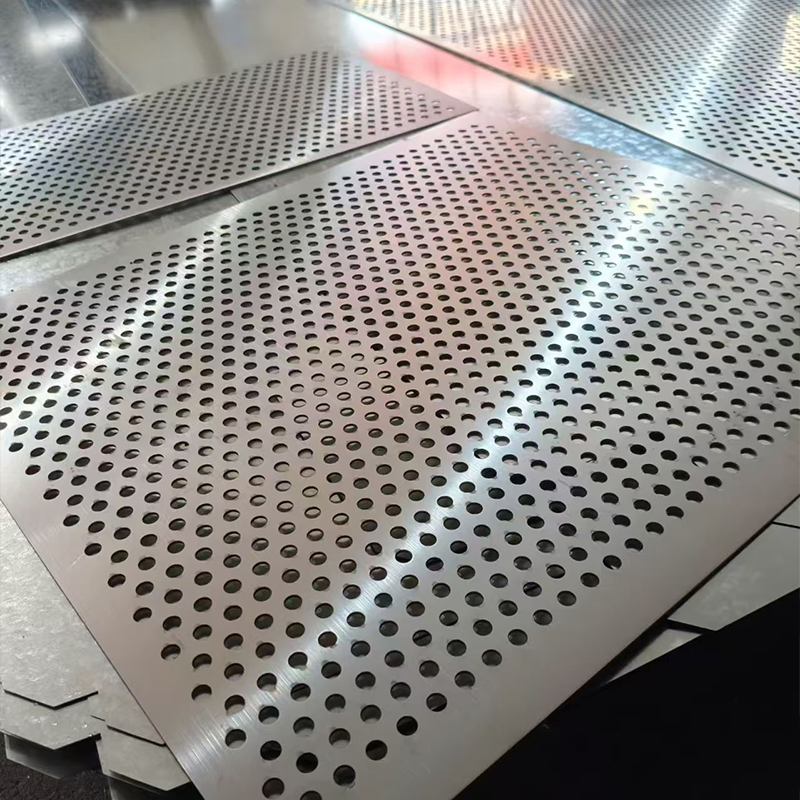
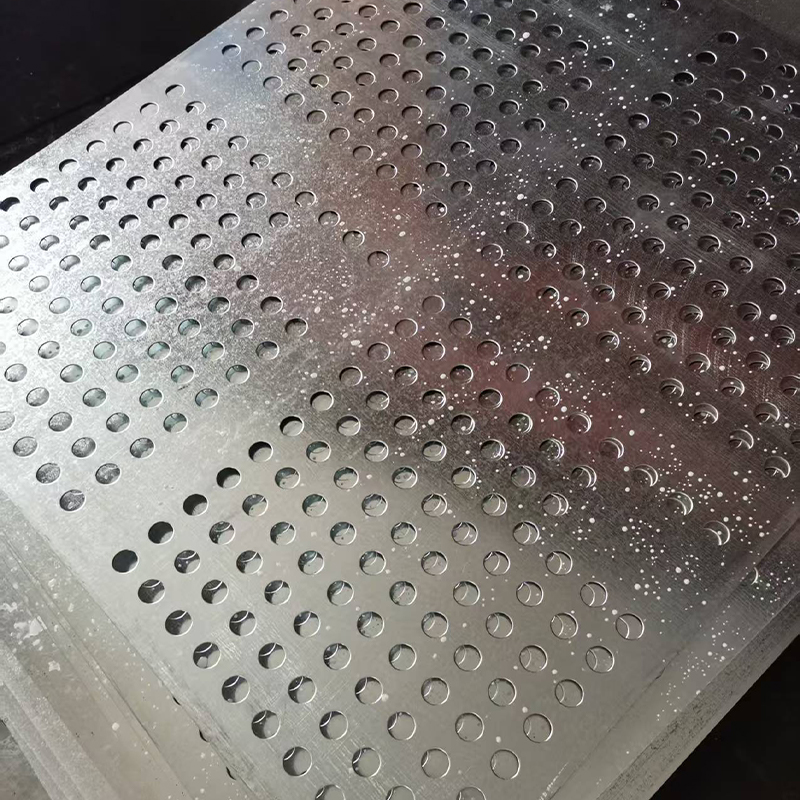
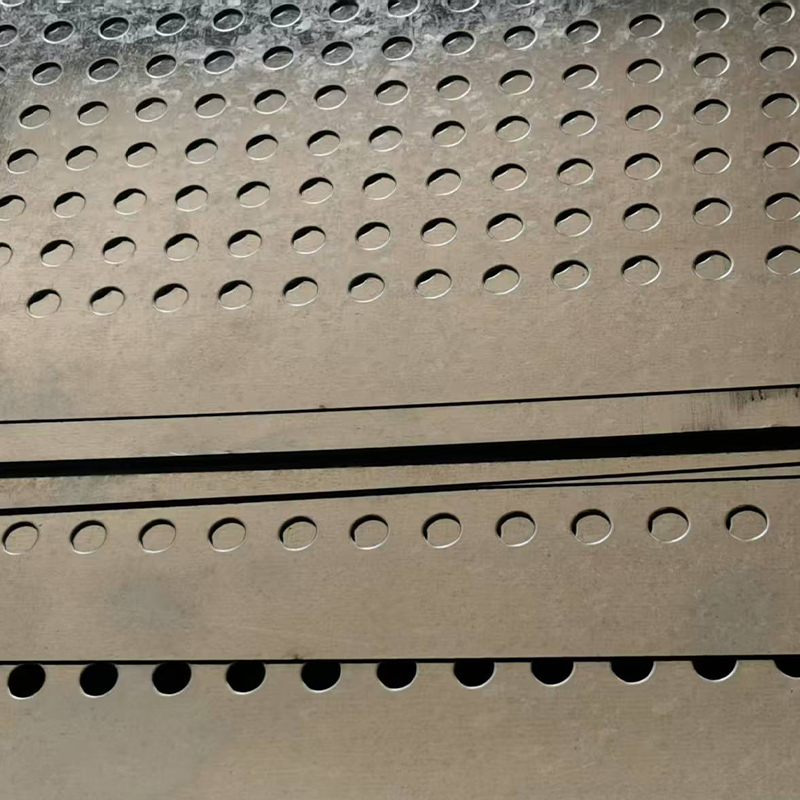
Galvanized round hole perforated metal sheet serves as a critical solution for controlled airflow in industrial applications. The round hole configuration enhances uniform air distribution while minimizing resistance, making it ideal for ventilation panels, air filtration systems, and equipment enclosures. The zinc coating protects the steel substrate from corrosion, extending service life in humid or chemically exposed environments. More than just a perforated sheet, its effectiveness lies in optimized design parameters such as staggered patterns, balanced open area, and proper thickness selection, all of which contribute to improved system performance and long-term reliability.

Galvanized Perforated Metal Sheet Round Pattern for Ventilation & Industrial Airflow Systems

Galvanized Perforated Metal Sheet Round Pattern for Ventilation & Industrial Airflow Systems

Galvanized perforated metal sheet with a round pattern is widely used in ventilation and industrial airflow systems due to its ability to balance airflow efficiency and structural durability. The circular hole design allows smoother air passage, reducing turbulence and improving distribution compared to other perforation types. Combined with a galvanized coating, the material offers strong corrosion resistance, making it suitable for demanding environments such as factories, HVAC systems, and outdoor installations. Its performance depends not only on open area but also on the interaction between hole size, spacing, and sheet thickness, making it a functional engineering component rather than just a basic material.

Total 205 items,Page 10 of 11
0
Inquire for more cooperation or product information.
We will contact you within 1 working day, please check your email.
Name
Mail
Mobile phone
Message
Send

JINTONG

We reply immediately
Welcome to our website. Ask us anything 🎉

Start Chat with: