


Stamped Louvered Panels: Raised Flange Height & Suitable Application Scenarios
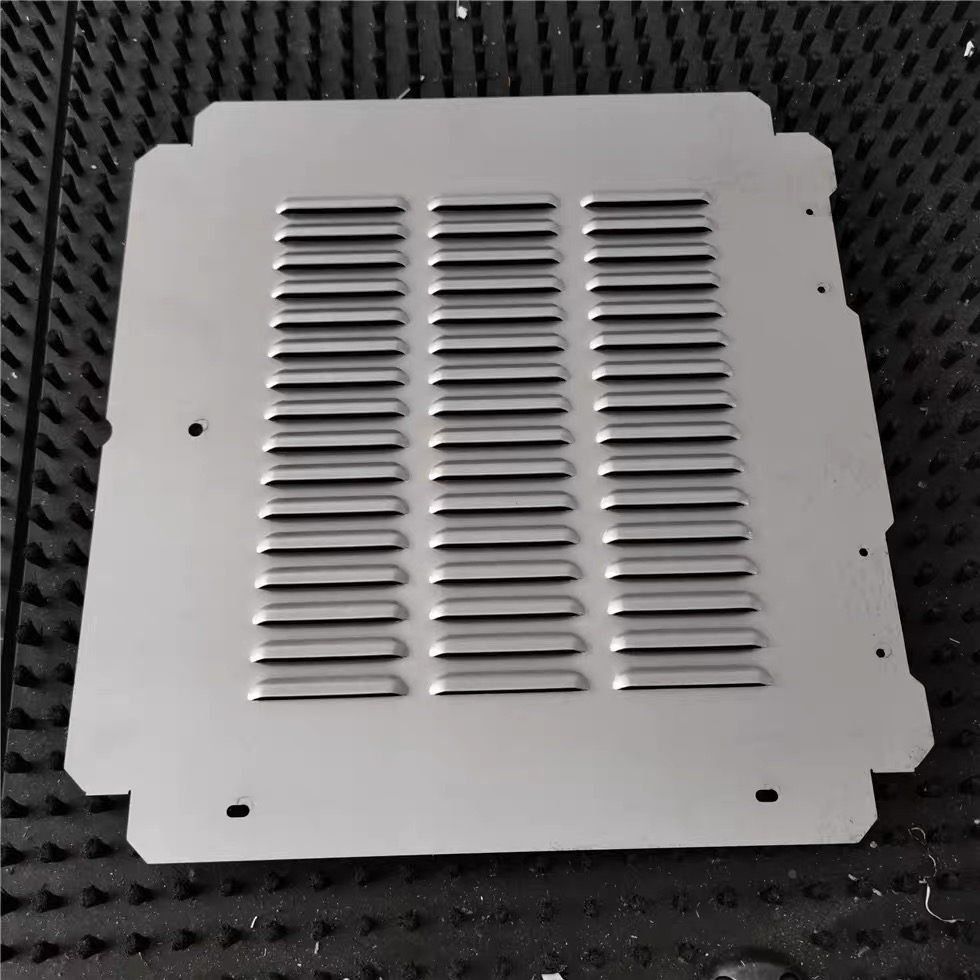
Stamped louvered panels, also known as pressed louver metal sheets, combine ventilation, rain deflection, visual screening and mechanical guarding. One coastal engineering contractor previously ordered deep 10mm stamped louvers on thin 1.0mm galvanized sheet for cooling tower guards. After stamping trials, the louvers cracked at folded edges, and rain penetration tests failed. Our factory reviewed their rainfall data, adjusted the specification to 7mm louver height with 1.5mm aluminum, produced pre-production samples and helped them pass third-party inspection. This guide covers application scenarios, specification parameters, design tips, global industry standards and real engineering cases. It also helps designers integrate [Acoustic Perforated Panels](https://perforatedmetalpanel.com/acoustic-perforated-panels), [Decorative Perforated Panels](https://perforatedmetalpanel.com/decorative-perforated-panels) and [Anti-Slip Perforated Panels](https://perforatedmetalpanel.com/anti-slip-perforated-panels) for complete building enclosure systems.
How to Install Metal Perforated Pegboards
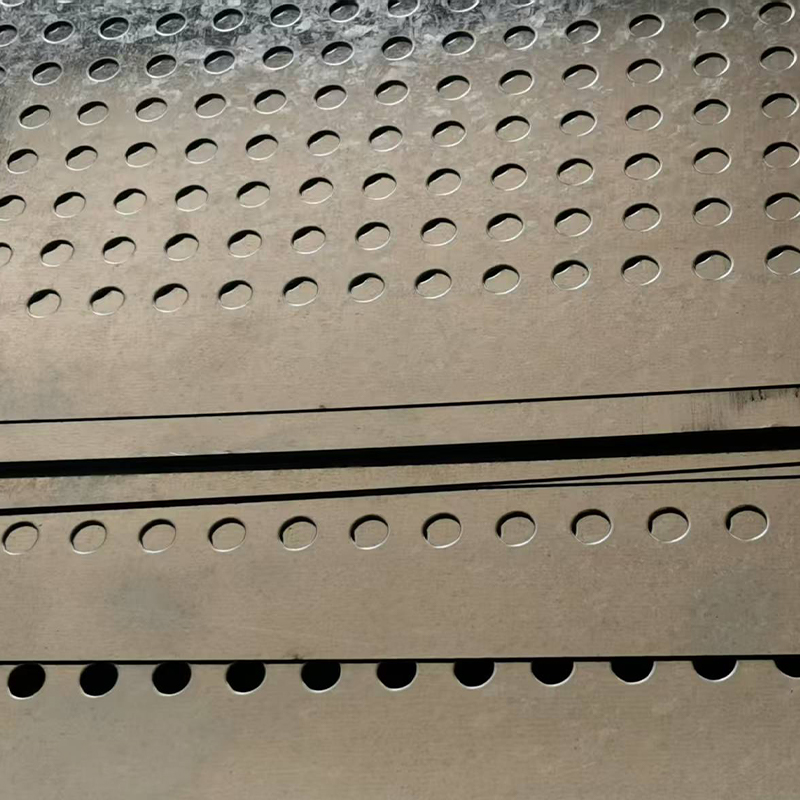
Metal perforated pegboards, also known as metal hole boards, serve versatile commercial and industrial display and storage purposes. A boutique retail client once ordered galvanized perforated pegboards for accessory display walls. Their construction team mounted panels flush directly against drywall without reserved rear clearance. All standard pegboard hooks failed to lock securely, and merchandise kept slipping off just days before opening. Our factory’s technical team helped them disassemble the panels, supplied matched spacers and toggle bolts, reworked the mounting layout, and delivered a stable display wall before their launch date. This guide covers application scenarios, specification parameters, core design tips, global industry standards and real engineering cases. It also helps specifiers combine [Acoustic Perforated Panels](https://perforatedmetalpanel.com/acoustic-perforated-panels), [Decorative Perforated Panels](https://perforatedmetalpanel.com/decorative-perforated-panels) and [Anti-Slip Perforated Panels](https://perforatedmetalpanel.com/anti-slip-perforated-panels) in integrated fit-out schemes.

How to Select the Thickness of Decorative Perforated Wall Panels
Decorative perforated wall panels are widely adopted for interior fit-outs, feature walls, suspended ceilings and commercial fascia. Many architects, contractors and procurement teams encounter recurring failures caused by improper thickness selection and falsely marked substrate thickness. A recent retail exhibition client purchased panels labelled as 1.5 mm, but the actual base metal was only 1.0 mm, with thickness padded by laminated film. After punching and powder coating, large panels sagged and waved, threatening the whole project timeline. Our factory reviewed their panel layout, open area ratio and keel structure, provided optimized thickness segmentation and delivered genuine solid substrate panels on schedule. This guide covers application scenarios, specification parameters, core design tips, global industry standards and real project cases to help you pick suitable thickness for [Acoustic Perforated Panels](https://perforatedmetalpanel.com/acoustic-perforated-panels), [Decorative Perforated Panels](https://perforatedmetalpanel.com/decorative-perforated-panels) and [Anti-Slip Perforated Panels](https://perforatedmetalpanel.com/anti-slip-perforated-panels). All thickness values refer to raw substrate thickness, not coating or film thickness.
Advantages of Crocodile Mouth Anti-Slip Plate VS Standard Checkered Plate
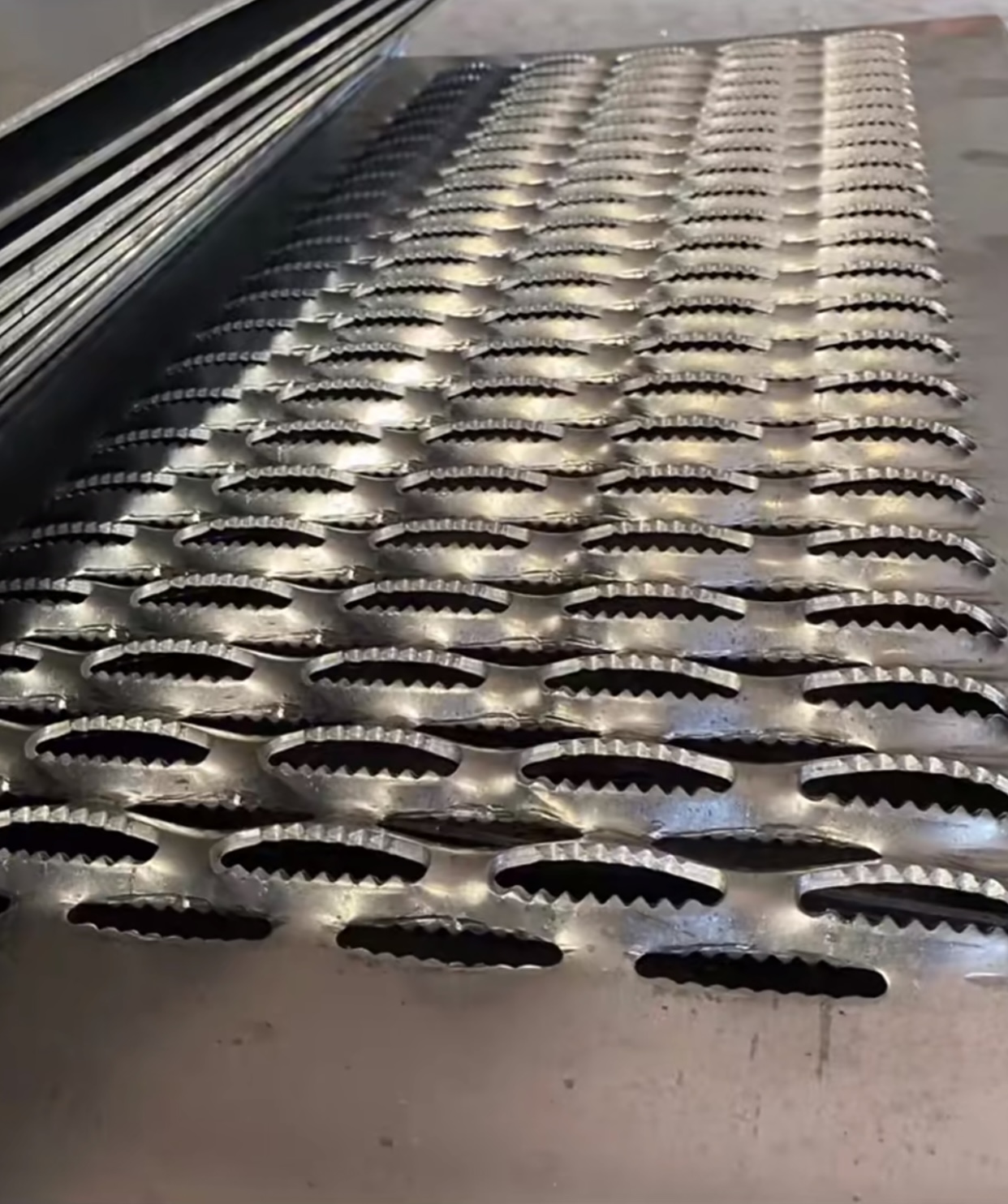
Industrial walkways, stair treads and ship decks require reliable slip resistance. Many buyers pick standard checkered plate for low upfront cost, ignoring its weakness in wet, oily environments. Crocodile mouth anti-slip plate, also called grip strut perforated sheet, outperforms checkered plate in traction, drainage, wear life and structural rigidity. This technical guide compares their friction mechanism, drainage performance, wear characteristics, load capacity and maintenance cost. It includes a real oily workshop retrofit case, ISO/ASTM standards and scenario-based selection advice. For noise-control metal panels, view our [Acoustic Perforated Panels](https://perforatedmetalpanel.com/acoustic-perforated-panels). For architectural cladding, check [Decorative Perforated Panels](https://perforatedmetalpanel.com/decorative-perforated-panels).
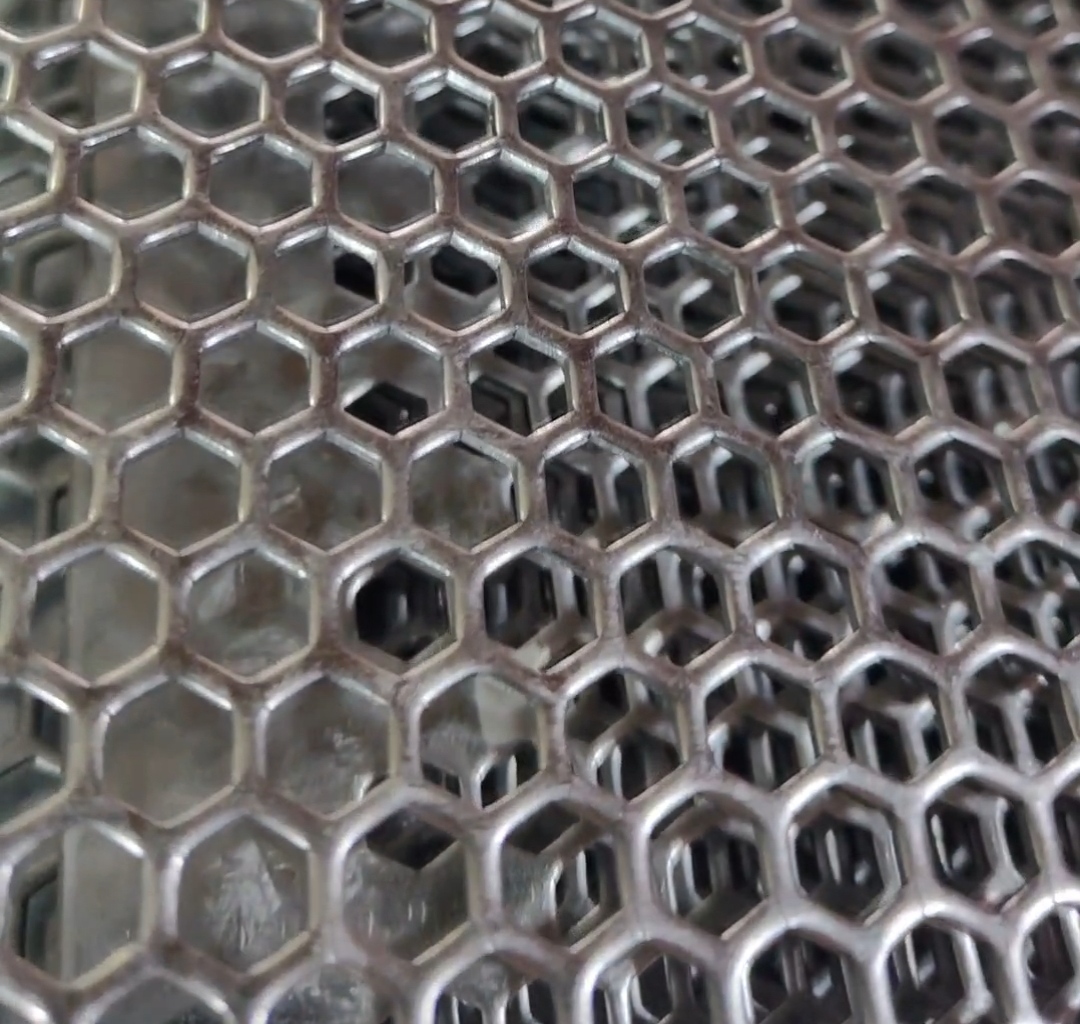
Do Hexagonal Perforated Sheets Produce Burrs?
exagonal perforated metal sheets are widely used for supermarket fascia, decorative screens, hoarding panels, display boards and filtration components. Unlike round holes, hexagonal holes have sharp angular corners that are prone to burr formation during punching. This guide explains where burrs appear, key influencing factors, two common deburring processes, and ISO/ASTM quality standards for decorative fascia, screens and guard panels.
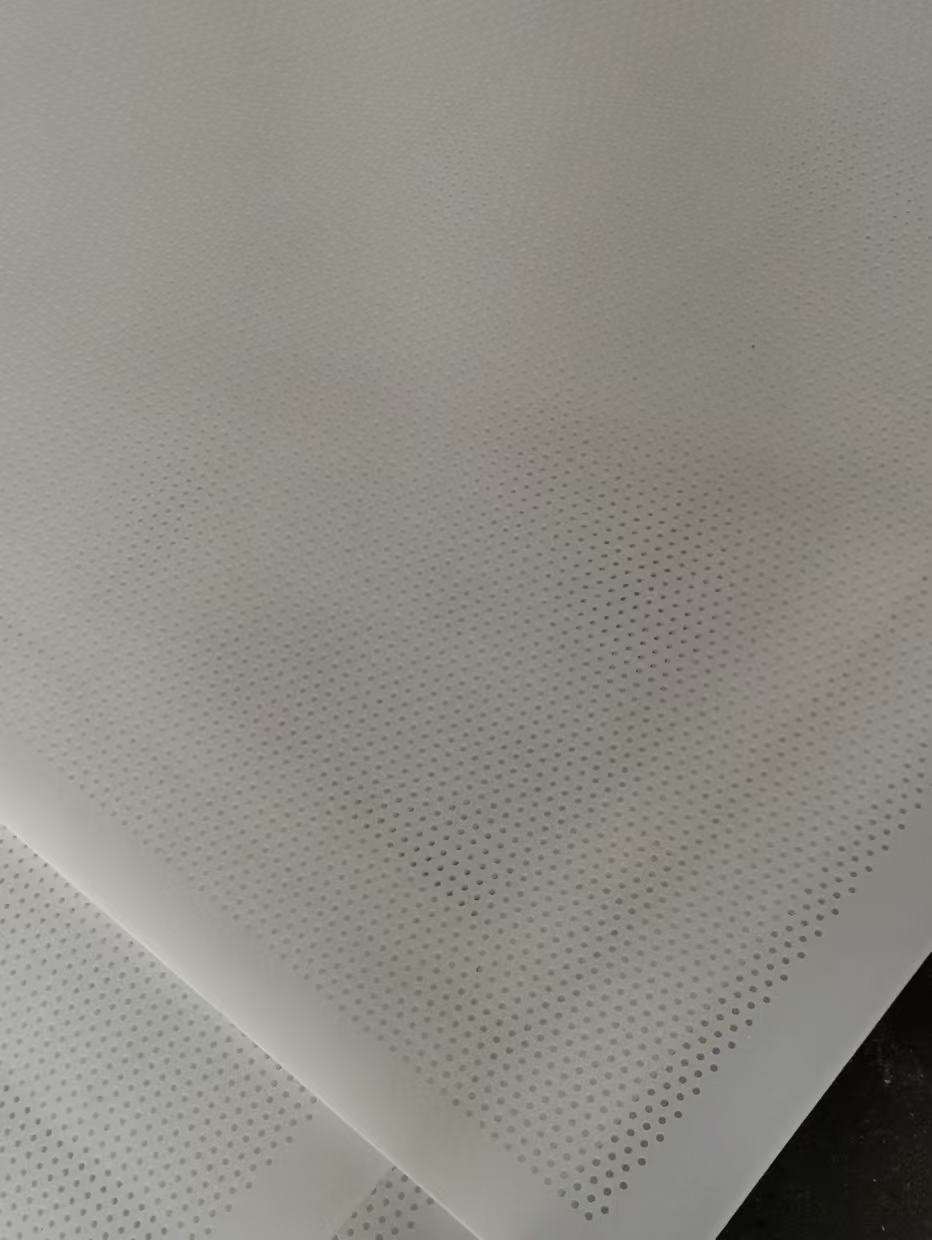
How to Choose Between PVC and PP Perforated Sheets? Master Core Differences to Avoid Engineering Mistakes
Plastic perforated panels are widely used for filtration, ventilation barriers, equipment isolation, aquaculture and chemical processing. Many buyers confuse PVC and PP sheets, and wrong selection often triggers cracking, deformation or premature aging. This guide compares weight, rigidity, temperature tolerance, creep performance and chemical resistance. Learn temperature limits, creep risk, chemical compatibility and punching differences to avoid brittle cracking and thermal sagging of plastic perforated panels.
Will PP Plastic Perforated Sheets Sag from Creep Under High Temperature or Long-Time Water Immersion?
Polypropylene (PP) perforated panels are widely used for filtration tanks, chemical tanks, ventilation barriers, equipment partitions and aquaculture. PP is a thermoplastic material with inherent creep characteristics. Continuous load, elevated temperature and long-term immersion accelerate slow plastic deformation, causing sagging and hole distortion. This guide sorts temperature risk grades, contrasts plain PP and GFPP, and shares span design rules to avoid creep failure of submerged perforated filter plates.
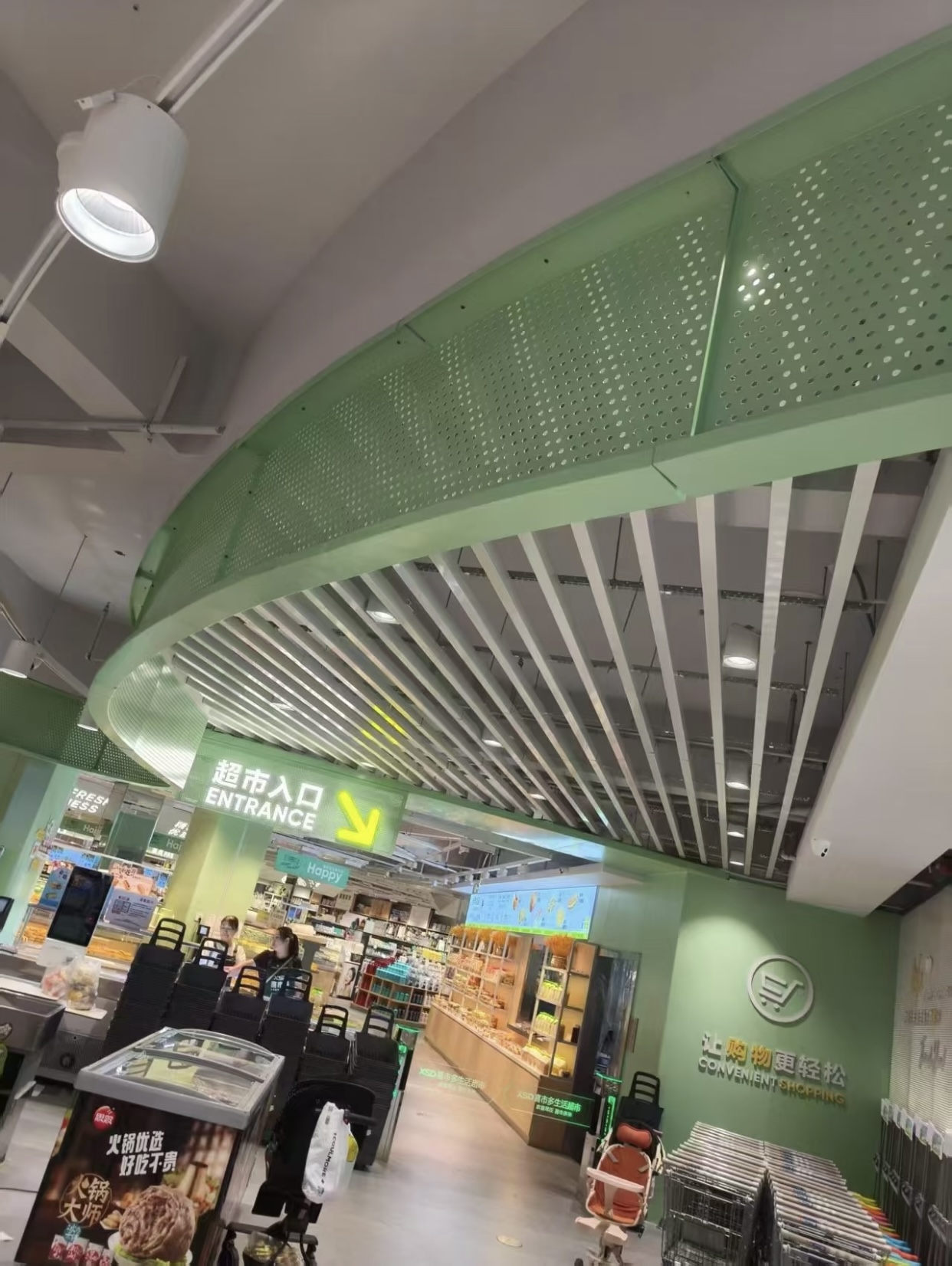
How to Choose Sheet Thickness for Supermarket Perforated Fascia Panels
Supermarket perforated fascia panels are widely installed above checkout counters, aisle signage, fresh food and grocery zones. These suspended header panels face high risks of sagging and bending caused by self-weight and punching residual stress. This practical selection guide is built for retail shopfitters. Learn how span, open area and edge folding affect sagging of backlit aluminum perforated header panels, with structural tips for checkout, aisle and fresh zone fascia.
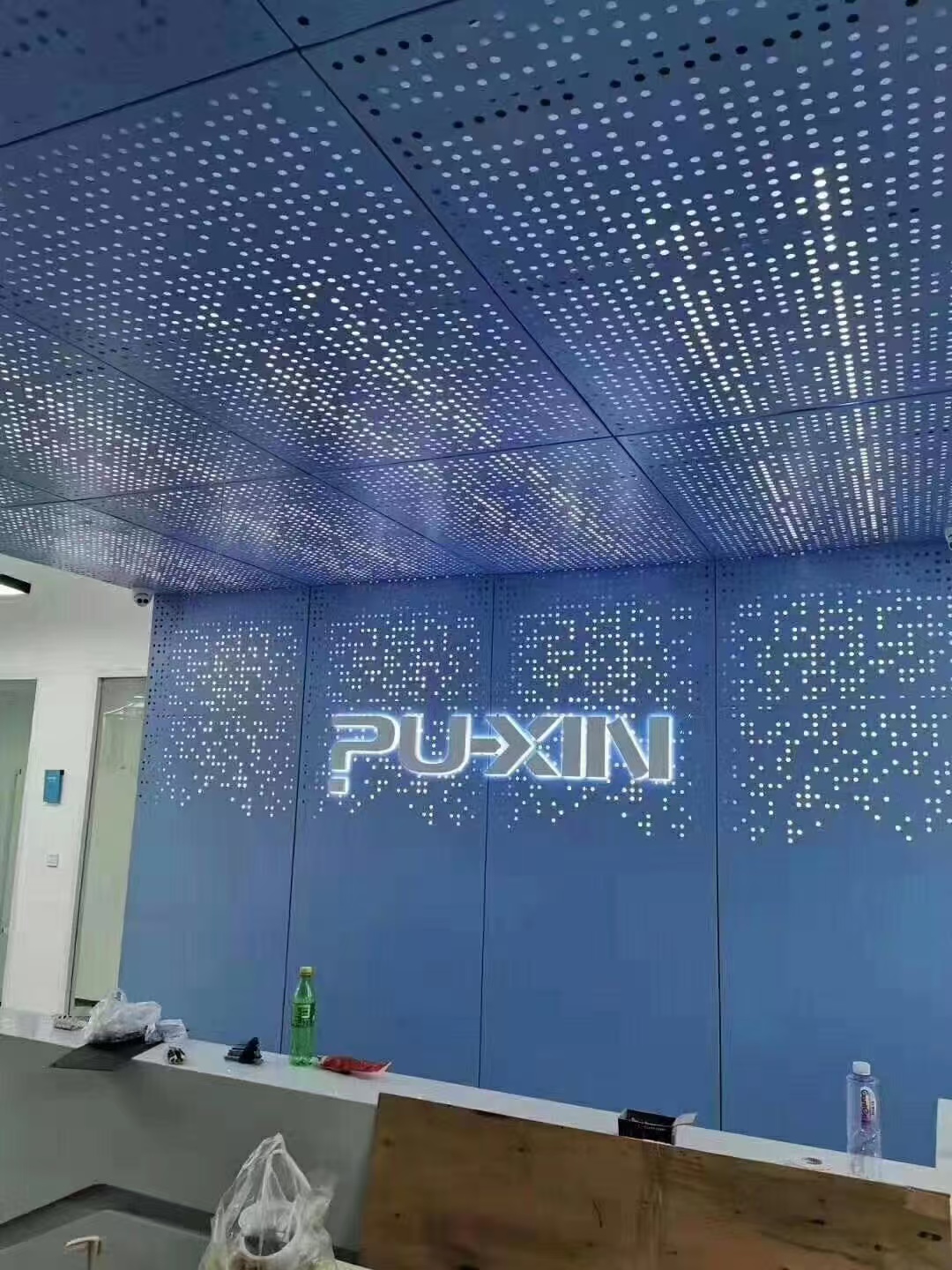
Decorative Perforated Panel Flatness Comparison by Material: Post-Punching Distortion, Residual Stress & Architectural Specification Guide
ecorative perforated metal panels are widely used for curtain walls, suspended ceilings, feature walls and supermarket fascia. Punching releases internal residual stress, which causes varying degrees of warping and undulation on finished panels. This guide compares residual stress and post-punch distortion across aluminum, galvanized steel and stainless steel. It covers material ranking, influencing factors, leveling processes and specification controls to prevent warping for perforated cladding and screens.
Perforated Box Hole Size Guide: Round Hole Diameter, Pitch & Open-Area Engineering Selection for Enclosure Housings
Perforated metal panels are widely adopted for electrical enclosures, equipment housings and machinery guards. The round hole diameter, center pitch and open area directly balance heat dissipation, dust ingress protection and mechanical rigidity. Improper hole parameters often lead to overheating, easy panel bending or insufficient dust resistance. This guide breaks down core engineering rules for round perforation design, compares typical parameter combinations and cites ISO and ASTM standards. It also includes real enclosure project cases, helping mechanical engineers and procurement teams make stable, cost-effective choices. ISO & ASTM compliant custom perforated sheets from Jintong Perforated Metal Factory.
Galvanized Perforated Metal Ceiling: Size Specification, Installation Standard & Anti-Rust Engineering Guide
alvanized perforated metal ceiling is widely used in commercial spaces, supermarkets, underground basements and public corridors. It balances decorative effect, sound absorption and ventilation performance. This guide covers size specs, installation norms and anti-rust engineering points. It explains why punched and cut edges corrode first, and gives scenario-based selection advice for dry indoor, basement and coastal projects, helping contractors avoid rust, deformation and acceptance issues.
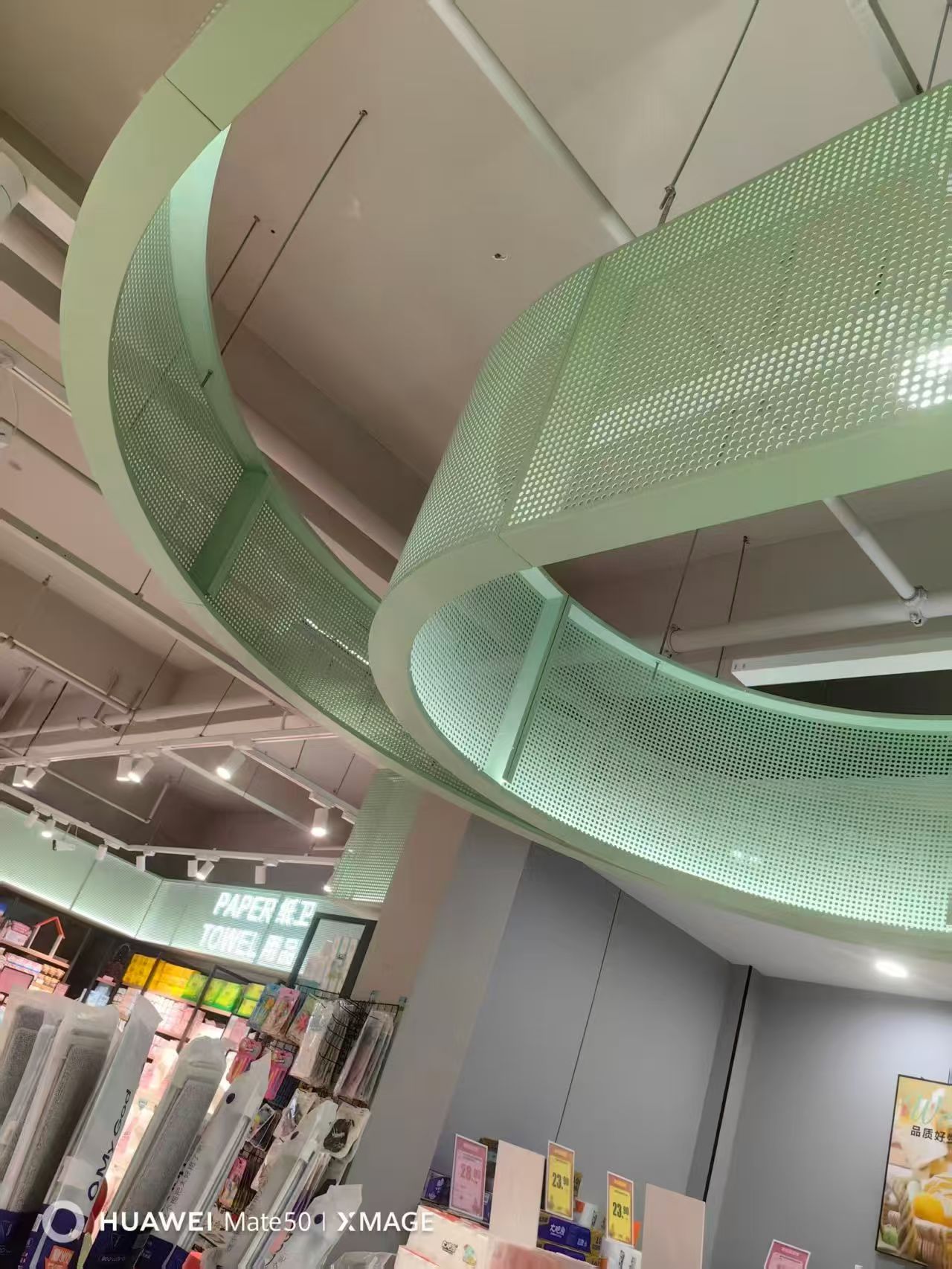
Supermarket Perforated Metal Panel Procurement Guide: Material Selection, Specifications, Surface Treatment, and Installation Quality Control
Supermarket perforated metal panels are used in shelving back panels, product display trays, ventilation screens, decorative partitions, and checkout counter guards. Unlike industrial perforated sheet, supermarket applications demand a careful balance of load-bearing capacity, appearance, corrosion resistance, flatness, and safety. The wrong material choice can lead to rust in fresh-food zones, sagging display trays, scratched product packaging, or costly replacement within a few years. This guide provides a deep, practical procurement framework covering cold-rolled steel with powder coating, galvanized steel, 304 stainless steel, and aluminum alloy perforated panels. It explains sheet thickness selection, hole diameter and pattern design, surface treatment options, dimensional tolerances, reinforcement methods, fabrication details, packaging and inspection requirements, and quotation/contract clauses. A real-world case study, FAQ, authoritative references, and a complete keyword set are included for procurement teams, supermarket fit-out contractors, and facility managers.
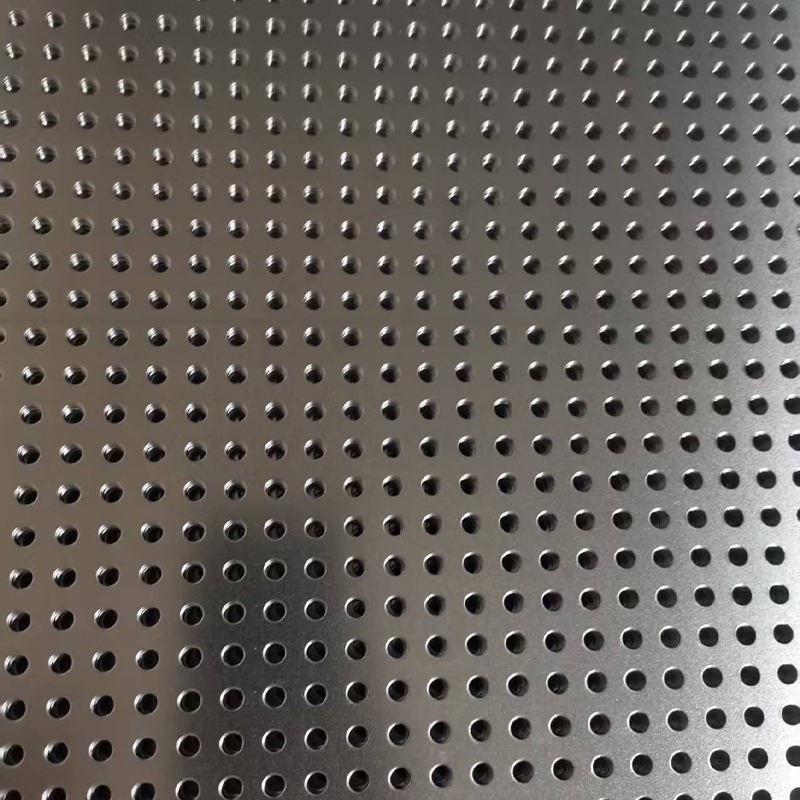
Will a Magnet Attract Stainless Steel Perforated Sheet? The Complete Guide to 201, 304, and 430 Magnetic Behavior
One of the most common misconceptions in the stainless steel industry is that “if a magnet sticks, it is not real stainless steel.” This belief has caused countless unnecessary disputes between buyers and suppliers, led to the rejection of perfectly good 304 material, and even resulted in costly project delays. The truth is that magnetic attraction in stainless steel is not a simple yes-or-no indicator of authenticity. It depends on the alloy’s crystal structure, its chemical composition, and — critically — the amount of cold working it has undergone during manufacturing. This guide explains why 304 stainless steel perforated sheet can become magnetic after punching and bending, why 201 is inherently more magnetic than 304, why 430 is always strongly magnetic, and what testing methods you should actually use to verify material grade. Whether you are a procurement manager sourcing perforated panels for a construction project, an engineer specifying material for a filtration system, or a distributor answering customer questions, this article will give you the scientific foundation to address the “magnet test” question with confidence
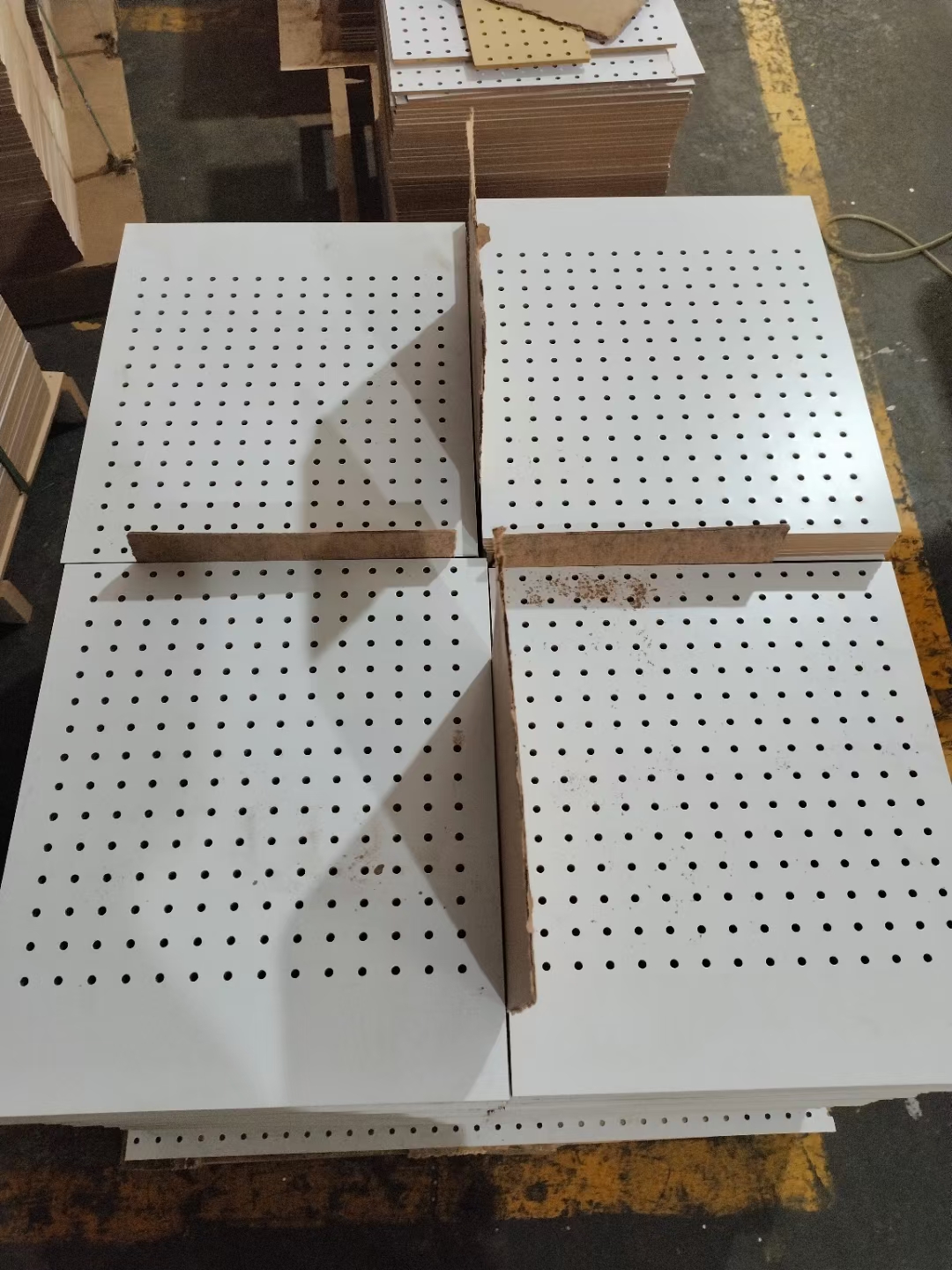
What Is MDF Really Made Of? Why Punch Holes in It? A Complete Guide to Perforated Medium Density Fiberboard for Acoustics and Decoration
Medium density fiberboard (MDF) is a widely used engineered wood product made from wood fibers, adhesive, and additives, pressed under high temperature and pressure. It is not solid wood. When perforated, MDF becomes a functional acoustic component through the Helmholtz resonance principle: each hole and the air cavity behind it form a small resonator that dissipates sound energy at specific frequencies. This guide explains what MDF is, why perforation works acoustically, what hole parameters deliver optimal absorption, how international standards rate performance, and how perforated MDF performs in real projects. It also covers decorative benefits, formaldehyde and fire safety, a customer case study, FAQs, authoritative references, and full contact information.
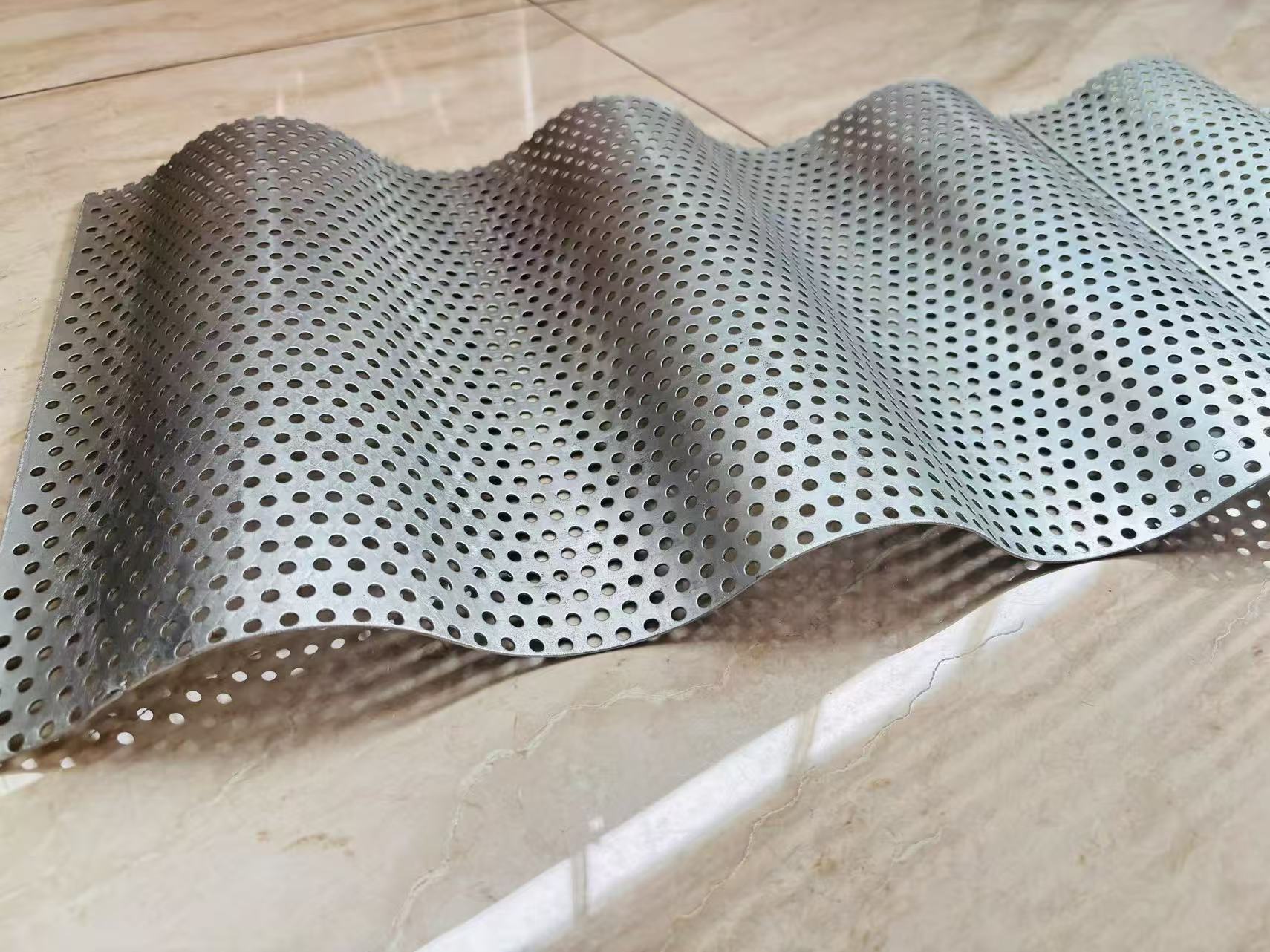
Exterior Wall Perforated Decorative Panels: Galvanized Steel vs. Aluminum vs. Stainless Steel — A Complete Comparison Guide
Exterior wall perforated decorative panels serve as both architectural envelopes and functional elements, providing ventilation, solar shading, visual screening, and acoustic control. The three dominant materials — galvanized steel, aluminum alloy, and stainless steel — differ significantly in weight, corrosion behavior, coating compatibility, formability, and total cost of ownership. Galvanized steel (SGCC) offers the lowest initial cost and high substrate strength, but its punched hole edges expose the steel core; once the zinc coating is breached, red rust spreads rapidly, making it unsuitable for coastal or high-humidity environments. Aluminum alloy (3003/5052) is the lightest option, highly formable, and with PVDF fluorocarbon coating delivers 20+ years of weather resistance; it is the mainstream choice for high-rise curtain walls and complex facades. Stainless steel (304/316L) provides the highest corrosion resistance, with 316L specifically suited for coastal and chemical environments; it is the most expensive and most difficult to form, but requires minimal maintenance. Scientific salt spray testing under ASTM B117 confirms that perforated metal outperforms expanded metal in long-term corrosion performance, and that galvanized perforated sheet can last up to 600 hours in salt fog, while carbon steel fails within 24–48 hours. Selection should be driven by environmental exposure, structural load, aesthetic requirements, and lifecycle cost. For standard urban high-rise facades, PVDF-coated aluminum is the recommended solution; for coastal or high-corrosion areas, 304/316L stainless steel is preferred; for inland low-rise storefronts and budget-sensitive projects, galvanized steel with heavy-duty coating and proper edge treatment may be acceptable, provided future maintenance is planned.
Supermarket Bulkhead Galvanized Perforated Metal Installation Guide: Deep Dive into Threaded Rod Suspension
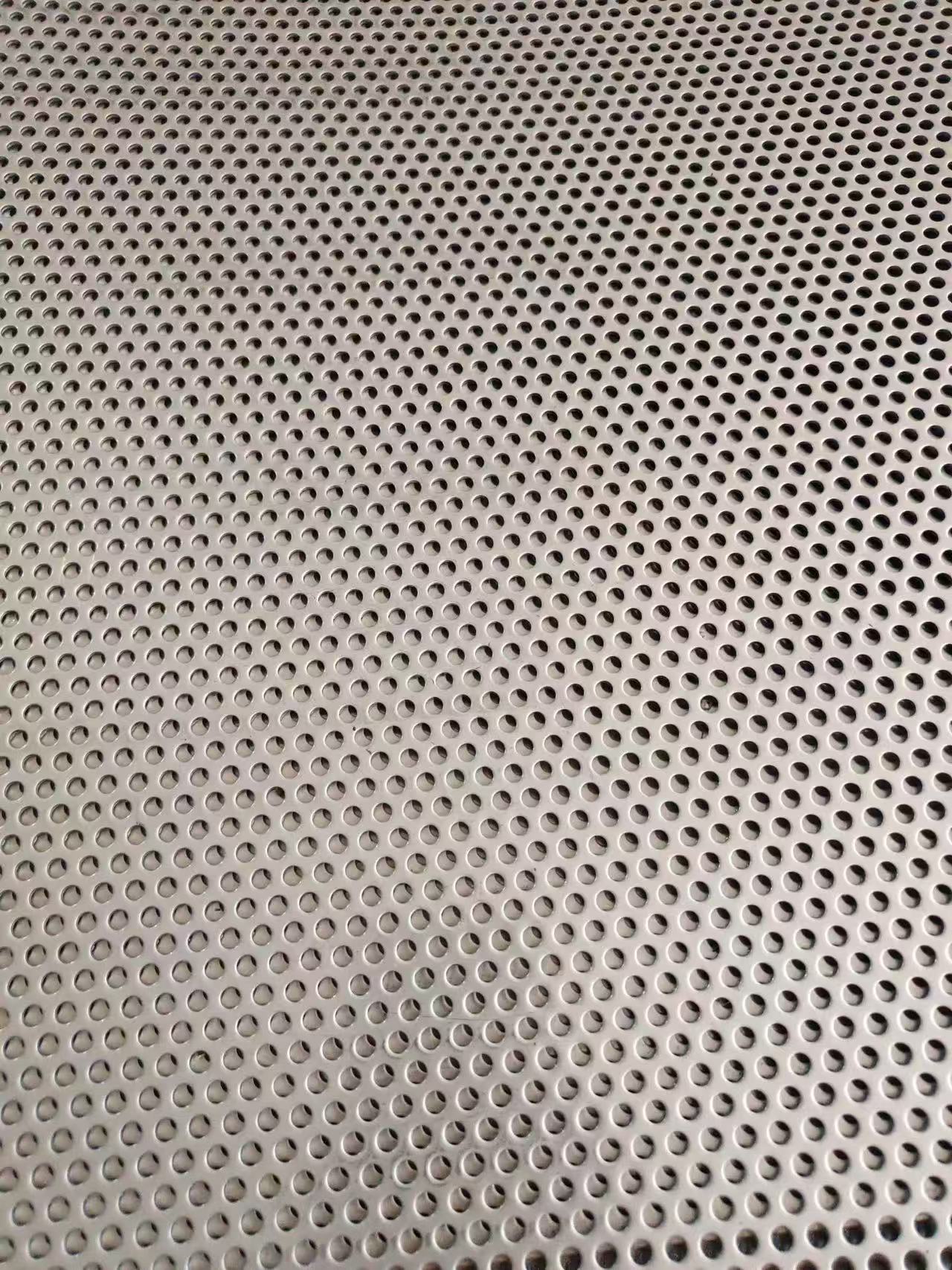
Galvanized perforated metal bulkheads are increasingly specified in supermarket renovations due to their structural rigidity, ventilation and acoustic properties, and long-term durability in humid, high-traffic environments. This guide provides a deep technical analysis of threaded rod suspension—the recommended method for long bulkheads with integrated LED strips and illuminated letters—and compares it with light steel keel suspension for shorter, lighter applications. The installation process is broken down into key stages: laser layout and positioning, chemical or expansion anchor fixing, precise leveling of galvanized square tube frames, hidden bracket fixing of perforated panels, protected wiring for lighting, and neat edge trim. Critical considerations are examined through a scientific lens, including galvanic corrosion prevention based on American Galvanizers Association (AGA) principles, material thickness selection (1.0–1.2 mm) for deflection control, and load verification for concentrated loads such as illuminated letters. The guide references authoritative standards—ASTM E674, ISO 10630, DIN 24041—and installation tolerance benchmarks from public works specifications. A real-world case study of a 12-store supermarket chain demonstrates how switching from wood veneer to galvanized perforated metal bulkheads reduced installation time and eliminated repair costs over three years. A quotation checklist, FAQ, and comprehensive keyword set are included for practical procurement and SEO purposes.
How to Select Expanded Metal by Mesh Range, Pattern, Supply Form and Performance
Expanded metal is available in micro, light, intermediate, heavy and grating mesh ranges and can be supplied in coils, sheets, custom blanks or finished panels. This guide explains the expanding process, raised and flattened forms, pattern size, strand width, thickness, open area, material options, conductivity, strength, fabrication and cost. It also shows how customers can match each mesh range to electronic enclosures, machine guards, architectural screens, baskets, filter supports and industrial walkways.
How a Custom Stainless Steel Perforated Sheet Solved Corrosion, Clogging, and Costly Rework
A fabrication contractor serving food-processing and architectural clients was losing time and money because its painted mild-steel screens corroded, trapped residue, and required frequent replacement. This case study explains how a custom stainless steel perforated sheet solution—engineered around hole pattern, open area, alloy grade, sheet thickness, edge treatment, and cleanability—reduced maintenance, improved appearance, and gave the customer a more reliable product for demanding indoor and outdoor applications.
Why Stainless Steel Perforated Panels Fail—and How the Right Factory Prevents Costly Rework
A curtain wall contractor received stainless steel perforated panels with misaligned holes, visible waves, sharp burrs, scratches, and costly installation delays. This detailed factory case study explains how application review, material verification, open-area calculation, controlled punching, leveling, deburring, bending analysis, inspection, and protective export packaging solved the customer’s problems and reduced sourcing risks.
Stainless Steel Perforated Sheet: How a Curtain Wall Buyer Solved Flatness, Burr, Corrosion, and Installation Problems
A curtain wall contractor experienced stainless steel perforated panels with visible waves, misaligned hole patterns, sharp burrs, scratches, inconsistent brushed surfaces, and installation delays. This in-depth guide explains how material grade, open area, punching stress, leveling, bending, finishing, inspection, and packaging influence final panel quality and how our factory solved the customer’s problems.